
The current landscape of quantum information processing is defined by a rigorous pursuit of stability, as traditional hardware architectures struggle to maintain coherence in the face of environmental noise. While neutral atoms trapped in optical lattices have long been a top contender for scalable quantum systems, they traditionally rely on dynamical tuning, a method requiring near-perfect control over the timing and intensity of atomic interactions to execute logic gates. This sensitivity means that even minor fluctuations in the local magnetic field or laser intensity can disrupt the delicate phase relationships between qubits, leading to computational errors that accumulate rapidly as circuits grow in complexity. Consequently, the industry is seeing a significant shift toward alternative control mechanisms that do not depend on the precision of a clock or the absolute stability of a power source. By moving away from these fragile, time-dependent protocols, researchers are laying the groundwork for a more resilient generation of quantum processors that can withstand the imperfections of real-world laboratory environments.
The emergence of geometric logic gates marks a departure from the “fine-tuning” era of quantum computing toward a philosophy of hardware that is inherently correct by construction. Instead of attempting to suppress every possible source of noise through external shielding or active feedback loops, this new approach utilizes the fundamental geometric properties of the quantum system itself to provide stability. By encoding information in ways that are protected by the topology or symmetry of the atomic states, engineers can perform operations that are naturally resistant to the jitter and drifts that typically plague quantum hardware. This transition is not merely a technical refinement but a fundamental reimagining of how quantum information is processed, where the physical laws governing the atoms themselves serve as the primary defense against decoherence. As these robust methods move from theoretical frameworks into practical implementations, they offer a clear path toward the fault-tolerant operations required for meaningful quantum advantage.
Leveraging Geometric Holonomy and Doublon States
The Mechanics of Geometric Protection
The recent breakthrough in gate stability centers on a phenomenon known as quantum holonomy, where a system’s final state is determined by the path it traverses through a parameter space rather than the time spent on that path. In this specific protocol, researchers utilize qubit doublons, which are configurations where two fermionic atoms are forced to occupy the same site within an optical lattice. As the lattice parameters are modulated, the system is guided through a closed loop that induces a specific geometric phase change. Because the resulting transformation depends entirely on the area enclosed by the loop and the geometry of the state space, the gate becomes fundamentally immune to common timing errors. If a laser pulse is slightly longer or shorter than intended, the outcome of the SWAP gate remains unchanged, provided the closed loop is completed, offering a level of robustness that dynamical gates simply cannot match in current hardware.
Building on this geometric foundation, the use of fermionic atoms provides a unique advantage due to the Pauli exclusion principle, which dictates how these particles interact at close range. When two fermions form a doublon, their wavefunctions must remain antisymmetric, a requirement that imposes rigid constraints on their collective behavior during the execution of a logic gate. The researchers designed the interaction protocol so that the dynamical phases—the ones most susceptible to environmental noise—cancel each other out exactly at the end of the operation. This leaves only the geometric contribution, which is inherently stable. This method essentially turns the natural repulsion and statistical rules of fermions into a tool for precision, ensuring that the information exchange between atoms is guided by the underlying physics of the lattice rather than the precision of the external control electronics. This creates a highly predictable environment where the gate success is guaranteed by the topology of the operation.
Symmetries as Physical Safeguards
The resilience of these geometric gates is further reinforced by the strategic application of time-reversal and chiral symmetries within the experimental setup. These physical principles do not just exist in theory; they serve as active safeguards that automatically correct for unwanted phase accumulations caused by external magnetic fields or laser frequency drifts. In a standard dynamical gate, these drifts would lead to a gradual loss of fidelity as the qubits drift out of alignment with the control pulses. However, by designing the gate to operate within a symmetric landscape, the system is forced to return to a balanced state where these errors are neutralized. This symmetry-protected approach ensures that even if the experimental environment is not perfectly isolated, the internal logic of the gate remains sound, effectively shielding the qubits from the decoherence that usually limits the depth of quantum circuits in modern processors.
Furthermore, the implementation of chiral symmetry helps suppress the specific types of noise that typically lead to information leakage into the environment. When the gate protocol maintains these symmetries, the quantum states are essentially trapped in a protected manifold where the most common error channels are energetically or geometrically forbidden. This allows the atoms to maintain their quantum superposition for longer durations, even while undergoing the intense interactions required for a two-qubit SWAP operation. By integrating these fundamental conservation laws into the gate architecture, the researchers have created a system where the stability is a direct consequence of the laws of physics. This approach shifts the burden of error suppression from the software layer to the hardware itself, allowing for a more streamlined and efficient computational process that does not require the constant, resource-intensive monitoring characteristic of earlier quantum systems.
Achieving High Fidelity at Scale
Experimental Validation on a Massive Scale
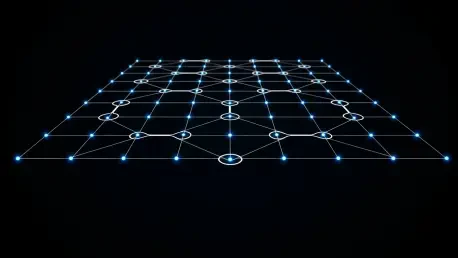
Theoretical stability was recently put to the ultimate test using a large-scale optical lattice that managed to host over 17,000 atom pairs simultaneously. This scale is particularly significant because it demonstrates that the geometric protection afforded by qubit doublons is not a localized effect limited to a few isolated particles, but a robust phenomenon that can be parallelized across a massive ensemble. Performing a protected SWAP gate on such a large number of pairs at once confirms that the technique is fully compatible with the many-body environments necessary for simulating complex materials or chemical reactions. In these high-density lattices, the uniformity of the geometric gate ensures that every atom pair experiences the same high-quality operation, regardless of its specific position within the laser-generated web. This addresses one of the most persistent challenges in quantum scaling: the “inhomogeneity problem” where different qubits perform differently due to spatial variations in the hardware.
The success of this mass-scale operation also highlights the viability of neutral atom platforms for the next generation of quantum processors. By executing thousands of gates in a single cycle with high reliability, the researchers have shown that geometric control can overcome the traditional trade-off between qubit quantity and gate quality. In many other platforms, adding more qubits often introduces more noise and cross-talk, which degrades overall performance. However, because the geometric SWAP gate relies on the internal properties of the doublon state rather than external timing, it remains inherently local and less susceptible to the influence of neighboring atoms. This independence is crucial for building large-scale machines where thousands of operations must occur in tandem without interfering with one another. The ability to maintain such high standards of precision across a macroscopic ensemble represents a major leap forward in making quantum simulations practical for industrial and scientific applications.
Unprecedented Precision Benchmarks
The performance metrics of this geometric approach have set a new industry standard for two-qubit operations, reaching a loss-corrected amplitude fidelity of 99.91%. In the competitive field of quantum engineering, hitting this benchmark is a milestone of the highest order, as two-qubit gates are notoriously difficult to perfect due to the complexity of atomic interactions. This level of precision confirms that the geometric design effectively shields the atoms from the microscopic fluctuations and irregularities present in the lattice. Achieving 99.91% fidelity means that the gate is performing almost perfectly, with errors occurring so infrequently that they fall well within the thresholds required for many advanced error-correction codes. This level of reliability is what separates experimental prototypes from functional computers, providing the high-fidelity foundation needed to execute long sequences of logical operations without the quantum state collapsing into noise.
Beyond the raw numbers, the consistency of this fidelity across the entire lattice is what makes the achievement so impactful for future development. Standard dynamical gates often see their fidelity drop as they are applied to more qubits or as the system runs for longer periods, but the geometric gate maintains its integrity due to its “all-or-nothing” topological nature. This stability suggests that the geometric SWAP gate could become a universal building block for neutral atom processors, providing a reliable way to shuffle information around a chip. By proving that such high fidelity is possible in a large-scale system, the researchers have effectively de-risked one of the most difficult components of the quantum roadmap. This benchmark serves as a powerful validation of the “correct by construction” philosophy, showing that when the underlying physics is used correctly, the hardware can reach levels of precision that were previously thought to be impossible without extreme external cooling and isolation.
Future Integration and Scalability
Combining Gates with Topological Transport
A significant hurdle in the long-term viability of quantum architecture is the “connectivity problem,” which refers to the difficulty of moving quantum information between distant qubits without introducing noise. This research addresses this bottleneck by demonstrating that geometrically protected gates work seamlessly with topological pumping techniques. Topological pumping allows for the coherent transport of individual atoms across an optical lattice with extremely high fidelity, moving them from one site to another like beads on a wire. By combining this transport mechanism with the robust SWAP gates, engineers can envision a modular quantum processor where atoms are not stationary. Instead, they can travel across the lattice to interact with distant neighbors, performing high-fidelity gates at every stop along the way. This dynamic movement allows for a fully connected qubit network, which is essential for running complex algorithms that require widespread data exchange.
This synergy between movement and logic simplifies the overall design of quantum circuits by reducing the need for “swap chains,” which are sequences of many gates used just to move data. In traditional, static architectures, moving information across a chip can be incredibly “expensive” in terms of error accumulation, but with topological transport and geometric gates, the cost is significantly minimized. This allows for the creation of more flexible and efficient quantum compilers that can optimize the placement and movement of qubits in real-time. As the industry moves toward larger and more intricate processors, the ability to shuttle atoms around while maintaining their quantum state will be a defining feature of successful platforms. This approach essentially turns the optical lattice into a high-speed data bus, where the geometric gates act as the reliable switches that process the information as it flows through the system.
Reducing Error Correction Overhead
By constructing hardware that is inherently resistant to environmental noise, the demand for complex, software-based error correction is significantly mitigated. Currently, a vast majority of the computational power in a quantum system is diverted away from the actual algorithm and toward the “overhead” of identifying and fixing errors in the qubits. However, the inherent stability provided by geometric SWAP gates means that the raw error rate of the hardware is much lower to begin with. This allows researchers to redirect those precious computational resources toward running more advanced and useful algorithms, effectively increasing the “logical” power of the machine without needing to add millions of physical qubits. This shift represents a move toward more efficient quantum computing, where the focus is on the quality of the individual operations rather than just the sheer number of qubits on a chip.
Furthermore, the reduction in error-correction overhead simplifies the entire stack of quantum computing, from the low-level hardware control to the high-level software. When the hardware is reliable, the error-correction protocols can be less aggressive, which in turn reduces the latency of the system and speeds up the total execution time of a program. This efficiency is vital for time-sensitive applications, such as real-time optimization or complex chemical simulations. By integrating geometric protection into the heart of the processor, the path toward a functional, large-scale quantum computer becomes much clearer and less reliant on future breakthroughs in software. This strategy of “baking in” the error resistance at the physical level ensures that the system is robust from the ground up, providing a stable platform for the next decade of quantum software development and industrial application.
A New Philosophy for Quantum Logic
The success of the geometric SWAP gate offers a comprehensive blueprint that could theoretically be applied across various quantum platforms, including superconducting circuits and trapped ion systems. It represents a fundamental shift in perspective, where the natural behavior of particles—such as the antisymmetry of fermions—is treated as a valuable resource for stability rather than a hurdle to be overcome. This philosophy of using the intrinsic geometric and topological properties of matter to protect information marks a new era of quantum engineering. Instead of fighting against the laws of physics to keep a system stable, researchers are now learning to work with those laws to create gates that are naturally robust. This approach could lead to a variety of new “protected” gates that are custom-designed for different types of hardware, each utilizing the specific symmetries and statistics of their underlying particles to achieve maximum fidelity.
Looking forward, the integration of symmetry and geometry into information processing paves the way for a generation of truly fault-tolerant quantum computers. As these techniques are refined, the focus will likely move toward creating hybrid systems that combine the best aspects of different geometric protections to solve increasingly difficult problems. This work does more than just improve a single gate; it establishes a new standard for how we design the building blocks of quantum logic. By ensuring that the fundamental operations of a computer are shielded by the very geometry of the universe, the industry is moving closer to a world where quantum advantage is not just a theoretical possibility, but a daily reality. The shift toward “correct by construction” hardware is the most promising route to delivering the transformative power of quantum computing to fields as diverse as cryptography, materials science, and artificial intelligence.