
Current software development environments have transitioned from utilizing basic predictive text to deploying fully autonomous agentic frameworks that can generate entire modules from natural language prompts. This transformation, while promising unprecedented levels of efficiency and speed in product delivery, creates a significant divergence in how different levels of engineering talent interact with their tools. Senior architects find themselves elevated to a supervisory role, reviewing machine-generated pull requests with a critical eye, whereas entry-level professionals struggle to establish a foothold in an industry that increasingly values immediate output over long-term skill development. The core challenge lies in the fact that while artificial intelligence can replicate syntax with accuracy, it lacks the deep contextual understanding of system reliability that traditionally comes from years of debugging. The industry faces a critical juncture where the tools designed to assist developers might erode the foundational knowledge required to build robust software.
Navigating the Productivity Paradox
For seasoned engineers, the integration of agentic coding assistants serves as a massive productivity boost, allowing them to bypass the boilerplate and focus on high-level system design. These veterans possess the necessary technical intuition to identify when an AI agent produces a solution that is functional but architecturally unsound, such as an inefficient sorting algorithm or a logic gate that fails under specific edge cases. By leveraging these tools, a senior developer can accomplish in hours what previously took days, effectively acting as an editor-in-chief of code rather than a line-by-line author. This professional evolution requires a shift in mindset, where the primary skill becomes the ability to direct and verify the work of digital subordinates. However, this advantage is predicated on a pre-existing mastery of the stack, which allows the engineer to spot subtle hallucinations or “lazy” coding patterns—like unnecessary thread sleeps—that would otherwise bypass automated testing.
In contrast, early-in-career developers often encounter a phenomenon described as AI drag, where the reliance on automated tools hinders their ability to understand the underlying mechanics of the software. Without a solid foundation in computer science principles, a junior engineer may struggle to verify the integrity of machine-generated code, leading to the accidental inclusion of security vulnerabilities or non-performant scripts. When an agent provides a seemingly working solution, a novice may lack the critical skepticism needed to question whether that solution is generalized or merely a “patch” that will break under load. This reliance creates a cycle where the developer becomes a passive recipient of logic rather than an active problem solver, potentially stalling their professional growth and technical depth. Over time, this leads to the accumulation of technical debt, as subtle logical errors and zombie code are merged into production environments because the human reviewer lacked the expertise to intervene.
The Risk of Professional Hollowing
A noticeable trend in the current labor market involves a heavy prioritization of senior-level talent at the expense of entry-level roles, as companies seek the highest immediate return on their AI investments. Organizations are increasingly looking for AI-augmented seniors who can perform the work of multiple people, which has resulted in a significant contraction of available positions for recent graduates. Research from various institutions suggests that firms adopting generative AI have reduced their junior hiring rates, opting instead for a leaner workforce of experienced supervisors. While this strategy offers short-term financial gains and faster delivery cycles, it creates a demographic imbalance within engineering departments that could have long-lasting repercussions. If the bottom of the talent pyramid is removed, the industry loses its natural mechanism for cultivating the next generation of technical leaders. This shift effectively burns the bridge that has traditionally connected learning developers to expert-level proficiency.
This hollowing out effect poses a systemic risk to the software ecosystem, as the industry may eventually face a catastrophic shortage of experienced professionals capable of managing complex, legacy AI-integrated systems. If the pipeline for new talent is restricted, there will be no veteran engineers to mentor future generations or to step into leadership roles when current experts retire. Furthermore, the lack of junior perspectives can lead to a stagnation of ideas, as seasoned engineers may become overly reliant on established patterns that AI assistants are trained to replicate. The long-term health of the profession depends on a diverse mix of experience levels to ensure both innovation and stability. To mitigate this risk, companies must look beyond immediate productivity metrics and recognize that today’s junior developers are the essential architects of the coming decade. Neglecting this talent development today will inevitably lead to a brittle and expensive technical landscape in the very near future.
Restructuring Mentorship and Education
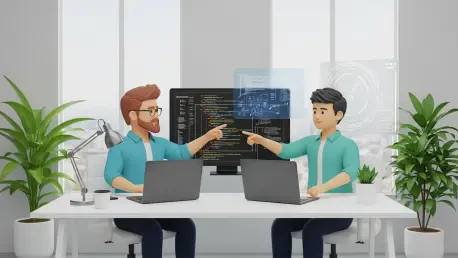
To prevent a total collapse of the talent pipeline, industry leaders suggest moving toward a preceptor-based organizational model where senior engineers are specifically evaluated on their mentorship abilities. In this environment, senior-junior pairs work together to guide AI agents, ensuring that the junior developer understands the rationale behind every architectural decision. This model transforms the role of the senior developer from a solitary power user into a teacher who uses AI output as a case study for learning. By forcing juniors to explain why an AI-generated solution works—or why it should be rejected—organizations can accelerate the learning curve while maintaining high standards of code quality. This structured approach ensures that the “why” of software engineering is not lost to the “how” of prompt engineering. Mentorship becomes a formal part of the technical career path, incentivizing the transfer of tacit knowledge that artificial intelligence simply cannot replicate through data alone.
Simultaneously, academic institutions must overhaul their computer science curricula to account for a world where AI-assisted coding is the standard rather than the exception. A hybrid educational model is required, where introductory courses prohibit the use of AI to ensure students build a deep understanding of logic, memory management, and syntax. Much like learning manual mathematics before using a calculator, these foundational skills are necessary for developing the critical thinking required to troubleshoot complex systems. In advanced courses, however, students should be taught how to manage AI agents as partners, focusing on verification, security auditing, and system integration. This balanced approach prepares graduates to be “agent supervisors” rather than just coders, giving them the tools to navigate a landscape where they must constantly validate machine output. By blending old-school rigor with modern toolsets, universities can produce engineers who are both highly productive and technically grounded.
Balancing Corporate Reality: The Path Forward
The transition toward an AI-driven engineering landscape was marked by a period of intense experimentation and significant organizational upheaval within major technology firms. While the theoretical benefits of mentorship and balanced hiring were widely discussed, the practical reality involved widespread restructuring as companies attempted to find the right ratio of human oversight to automated output. Many organizations discovered that treating AI as a simple replacement for human effort resulted in brittle software that failed to scale or adapt to changing business needs. Consequently, technical leaders began to re-emphasize the importance of human-in-the-loop systems, where the speed of AI was tempered by the scrutiny of experienced developers. This era demonstrated that while machines could generate vast amounts of code, the ultimate responsibility for safety, ethics, and long-term maintainability remained a uniquely human endeavor that required constant vigilance and a diverse talent pool.
Moving forward, the industry adopted a more holistic view of technical talent, recognizing that the most successful teams were those that integrated junior developers into AI-augmented workflows early and often. Engineers were encouraged to focus on high-level problem solving and architectural integrity, while coding assistants handled the repetitive implementation details. Organizations that invested in robust mentorship programs and hybrid educational partnerships saw a measurable increase in system reliability and employee retention. These firms successfully bridged the gap between rapid automation and sustainable growth, ensuring that their technical infrastructure was managed by a new generation of experts who were as comfortable with manual debugging as they were with AI orchestration. The focus shifted from merely producing code to delivering resilient, well-architected solutions that stood the test of time, proving that the future of engineering was defined not by the tools themselves, but by the skill of those who wielded them.