
The rapid proliferation of generative artificial intelligence has fundamentally altered the perceived trajectory of technical education, casting a long shadow over once-unassailable career paths. For nearly two decades, pursuing a degree in computer science was synonymous with achieving immediate professional security and high earning potential, yet the landscape in 2026 suggests a profound recalibration of student priorities. Recent enrollment data from major institutions, such as Arizona State University, reveals a startling trend where students are beginning to drift away from traditional software-centric majors. This cooling of interest does not necessarily indicate a lack of passion for technology, but rather a cautious pause as the industry grapples with the sheer efficiency of automated coding tools. As these models demonstrate an increasing ability to handle complex programming tasks, the academic community is forced to confront a difficult question regarding the long-term viability of a curriculum designed for a pre-AI world.
Shifting Trends in Technical Education
The Statistical Flight from Software
A granular analysis of recent enrollment cycles at the Ira A. Fulton Schools of Engineering demonstrates a clear and measurable move away from virtual engineering disciplines. Specifically, the Bachelor of Science in computer science program witnessed a substantial drop from 5,844 students to 5,008 within a single academic year, while software engineering tracks experienced a parallel decline from 1,347 to 1,086 learners. These figures represent a collective loss of over one thousand students in the computing sector, signaling that the initial “gold rush” of the coding era is facing a significant cooling period. While the total number of students entering engineering remains robust, the destination for that intellectual capital is migrating from the keyboard toward more tangible, physical systems. This shift suggests that the modern student is no longer viewing software development as the singular or most stable gateway to a prosperous middle-class life in the technology sector.
The primary catalyst for this migration is a palpable sense of anxiety regarding “systemization,” a term describing the corporate preference for using AI-driven tools to execute entry-level tasks. Students frequently express a deep-seated fear that they are no longer just competing with their high-achieving peers for prestigious internships, but rather against the near-instantaneous output of large language models. This uncertainty has fostered a perception that a degree focused primarily on writing syntax may not offer the same structural protection against automation as it did in the previous decade. Consequently, many prospective engineers are hesitant to invest four years of tuition into a specialty that feels increasingly susceptible to the rapid pace of algorithmic advancement. This psychological shift is reshaping the demographic makeup of engineering departments, as students seek out disciplines that promise a higher degree of human-centric indispensability.
The Rise of Physical Engineering Disciplines
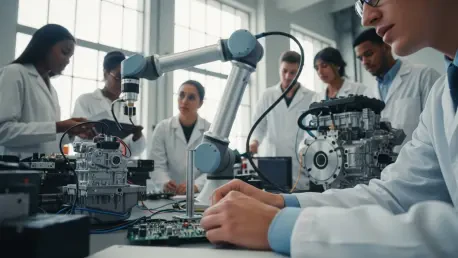
In stark contrast to the shrinking numbers in software-related fields, traditional engineering disciplines are witnessing a remarkable and unexpected renaissance. Mechanical engineering enrollment at major institutions has climbed from 2,795 to 3,287, while electrical engineering has seen a similar upward trajectory, rising from 2,825 to 3,252 students. This surge indicates a strategic pivot toward fields that involve the design and maintenance of physical hardware, which many perceive as being more insulated from digital automation. The physicality of these roles provides a sense of “AI-proofing” that virtual environments currently lack, as the complexity of interacting with the material world remains a high barrier for current AI systems. Students are drawn to the versatility of these majors, which span across critical sectors like aerospace, biomedical engineering, and renewable energy infrastructure.
The allure of these physical fields is further bolstered by the reality that AI serves as an augmentative tool in these contexts rather than a direct replacement for the professional. In mechanical or electrical engineering, an AI can certainly optimize a circuit board or simulate structural stress, but it cannot replace the human oversight required to manage physical manufacturing and real-world implementation. This balance of high-tech integration and manual expertise offers a compelling value proposition for students who prioritize job security in a volatile market. With starting salaries in these sectors often reaching the hundred-thousand-dollar mark, the return on investment feels more tangible and less threatened by the latest software update. As a result, the engineering landscape is becoming more balanced, with a renewed emphasis on the “hard” sciences that underpin our physical civilization.
Redefining Engineering in the AI Era
The Strategic Pivot of Academic Institutions
While the decline in raw enrollment numbers might seem alarming, university leadership argues that the global appetite for software is actually expanding rather than contracting. Faculty members point out that the current dip is influenced by a complex web of factors, including macroeconomic shifts and an increasing number of students entering college with “undeclared” status to delay specialization. Educators maintain that while the method of creating software is fundamentally changing due to AI integration, the total volume of code required by modern society continues to grow exponentially. The challenge for higher education is not to abandon computer science, but to evolve the curriculum beyond basic syntax instruction. Schools are now actively pivoting to produce “AI-literate architects” who possess the high-level critical thinking skills necessary to guide and audit automated systems.
To maintain relevance, academic institutions are introducing specialized AI degrees and integrated certificates designed to bridge the gap between traditional logic and modern machine learning. These new programs emphasize system design, ethics, and the management of large-scale data sets, shifting the focus from “writing code” to “solving problems” using a variety of sophisticated tools. This transition reflects a broader understanding that the role of the computer scientist is moving up the value chain, requiring a deeper grasp of how different technologies interact within a larger ecosystem. By embracing AI as a core component of the curriculum rather than a peripheral threat, universities aim to equip the next generation with the ability to leverage automation to achieve unprecedented levels of productivity. The goal is to ensure that a computer science degree remains a mark of elite problem-solving capability in an automated world.
Adapting to an Augmented Career Landscape
The ultimate takeaway from these shifting trends is that the future of technical work will be defined by adaptation and the mastery of “augmented” workflows. The decline in traditional computer science enrollment does not signal the death of the discipline, but rather a necessary correction as the market aligns with new technological realities. Future success will likely belong to those individuals who can effectively bridge the gap between human creativity and the raw efficiency of artificial intelligence, regardless of whether they work in a virtual or physical medium. Whether a student chooses to specialize in software architecture or mechanical design, the key to remaining indispensable lies in treating AI as a collaborative partner rather than a replacement. This mindset shift is essential for navigating a career landscape where the only constant is the rapid evolution of the tools available to the workforce.
The transition observed in 2026 suggests that the educational system is finally catching up with the practical needs of the modern economy. By focusing on the intersection of human judgment and machine speed, both students and institutions are preparing for a world where technical expertise is measured by one’s ability to orchestrate complex systems. The path forward involves a commitment to continuous learning and a willingness to abandon outdated methods in favor of more efficient, AI-assisted strategies. Ultimately, those who view these changes as an opportunity to expand their capabilities will find that the demand for skilled engineers—whether they work with code or steel—remains as high as it has ever been. The focus has moved from the mastery of a single tool to the mastery of the entire technological process.
The evolution of technical degrees toward an AI-integrated model provided a vital blueprint for professional longevity in a rapidly changing economy. Rather than retreating from technology, successful graduates leaned into the complexities of human-machine collaboration to solve global challenges. By prioritizing the development of architectural oversight and ethical judgment, the workforce ensured that human ingenuity remained the primary driver of innovation. These changes underscored the importance of an agile mindset, encouraging students to view their education as a foundation for lifelong adaptation. Ultimately, the integration of automation into the classroom empowered a new generation to transcend basic technical tasks and focus on high-impact strategic leadership. This transition successfully moved the industry from a state of anxiety to one of renewed purpose and expanded possibility.