
Oscar Vail is a seasoned technology expert who has spent years dissecting the evolution of mobile hardware and emerging open-source ecosystems. With a professional background rooted in robotics and high-performance computing, he brings a technical rigor to the consumer electronics world, often looking beneath the glass and metal to understand the manufacturing philosophies of industry giants. Today, he shares his perspective on the shifting standards of flagship smartphones, focusing on why some cutting-edge features remain elusive even in the most expensive handsets.
The conversation explores the technical and strategic reasons behind the current stagnation in battery and charging speeds, the physical complexities of magnet integration, and the security implications of tracking hardware. We also delve into the psychology of smartphone aesthetics and how brands manage the risk of bold design choices.
Silicon-carbon battery technology allows some devices to reach capacities between 7,000mAh and 9,000mAh, yet other flagships remain capped at 5,000mAh. What specific manufacturing hurdles prevent a broader shift to this high-capacity tech, and how does this capacity gap influence the long-term competitive landscape for premium smartphones?
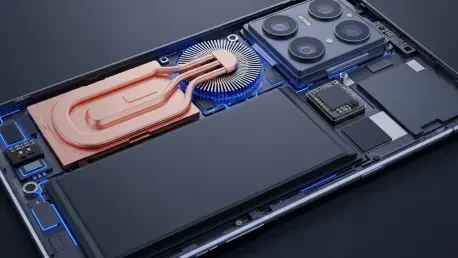
The transition to silicon-carbon is a major leap in energy density, but it requires a complete overhaul of the chemical stability protocols within a factory. While devices like the OnePlus 15 or Xiaomi 17 Ultra are already pushing toward that massive 7,000mAh to 9,000mAh range, many legacy manufacturers are hesitant because silicon anodes expand significantly more than traditional graphite during charge cycles. This expansion can lead to mechanical stress on the chassis or internal components if not managed with precision engineering. If a brand like Samsung sticks to 5,000mAh while rivals offer nearly double that, they risk losing the “power user” demographic who values multi-day longevity over brand loyalty. It creates a divided market where one segment prioritizes thinness and safety heritage, while the other pushes the absolute physical limits of what a pocketable device can store.
Built-in magnets allow for seamless accessory attachment, but many high-end handsets still require external cases to enable this feature. Why have most manufacturers been slow to integrate magnets directly into the phone chassis, and what technical trade-offs regarding internal spacing or wireless interference are involved in this decision?
Integrating a magnetic array directly into the chassis is a spatial nightmare for engineers who are already fighting for every cubic millimeter to fit larger camera sensors or cooling vapor chambers. When you look at the Pixel 10 series, they’ve managed to pull it off, but it requires careful shielding to ensure the magnets don’t interfere with the compass, the optical image stabilization of the lenses, or the induction coils for wireless charging. For many brands, the safer route is offloading that hardware to a case, which avoids the weight penalty and the risk of internal electromagnetic interference. However, this “case-required” approach feels like a compromise for users who want to enjoy the industrial design of their $1,000 device without hiding it behind plastic. It’s a classic battle between adding a convenient ecosystem of accessories and maintaining the structural integrity of the phone itself.
Some modern tracking networks can locate a device even when it is powered off, while others require the phone to be switched on. What underlying hardware or firmware is necessary to support tracking for a dead battery, and how does the absence of this feature impact the overall security value of a flagship?
To find a phone that is completely powered down, the device must have a specialized hardware abstraction layer that allows a low-power Bluetooth beacon to remain active, drawing a microscopic amount of “reserve” juice from the battery. Google’s Find Hub network on the Pixel is the gold standard here, whereas the Galaxy S26 still requires the device to be switched on, even if it doesn’t have an internet connection through SmartThings Find. The absence of this “powered-off” tracking is a significant security vulnerability because a thief’s first instinct is almost always to shut the phone down immediately. Without that persistent hardware-level beacon, the window for recovery closes the moment the screen goes dark. It’s a frustrating gap in a premium device’s security suite, especially when the software infrastructure to support it is already being developed.
While several brands now offer 100W or 120W wired charging, other top-tier models have seen more modest upgrades to only 60W or remain at 25W. Can you explain the relationship between high-wattage charging and long-term battery degradation, and what practical steps should engineers take to balance rapid speeds with hardware longevity?
High-wattage charging, such as the 120W speeds seen in some Chinese flagships, generates an immense amount of heat, and heat is the absolute enemy of lithium-ion longevity. When you pump that much current into a cell, you risk accelerating the formation of dendrites, which permanently reduces the battery’s ability to hold a charge over a two or three-year period. Engineers at more conservative companies often cap speeds at 25W or 60W to ensure the battery retains 80% of its health after several hundred cycles, prioritizing the long-term user experience over the “wow” factor of a 15-minute charge. To find a middle ground, we are seeing more dual-cell battery designs that split the incoming current, effectively charging two smaller batteries at once to keep temperatures manageable. It’s a delicate dance of thermal management, and for many users, the jump from 45W to 60W is a step in the right direction without crossing into the “danger zone” of extreme heat.
Smartphone color palettes often stick to conservative neutrals like silver and violet rather than adopting flashy shades like bright orange. How do brands decide between “safe” colors and bolder “statement” options, and what metrics suggest that offering exclusive store-only colors is an effective strategy for driving direct sales?
Color selection is heavily dictated by supply chain logistics and resale value data; neutral tones like Black or Silver Shadow tend to sell consistently across all demographics and regions. When a brand skips a “flashy” color like the Cosmic Orange seen on Apple’s latest Pro models, they are often playing it safe to avoid leftover inventory of a divisive shade. However, exclusive colors like Pink Gold or Sky Blue serve as a powerful tool for “direct-to-consumer” sales because they bypass third-party retailers and carriers. By offering a unique aesthetic that you can only get on the official website, manufacturers can capture a higher profit margin and collect more valuable first-party data on their customers. It turns a simple aesthetic choice into a strategic funnel that moves buyers away from the convenience of a local shop and into the brand’s own digital ecosystem.
What is your forecast for the Samsung Galaxy S26 series?
I believe the S26 series will be remembered as a bridge toward a more radical shift in 2027, rather than a revolutionary moment in its own right. While the Ultra model’s new Privacy Display and the bump to 60W wired charging are welcome refinements, the series overall feels like it is waiting for the silicon-carbon revolution to reach a state of mass-production stability. We are seeing a “slow and steady” philosophy from Samsung that prioritizes the refinement of the One UI ecosystem and AI integration over raw hardware breakthroughs like the 7,300mAh batteries found in some competitors. My forecast is that while it will remain a sales powerhouse due to its reliable support cycle and display quality, it will face its toughest competition yet from brands that are willing to take bigger risks on physical hardware specifications. For the consumer, it’s a phone built for reliability and professional use, but it may leave the enthusiasts feeling like the most exciting innovations are happening elsewhere.