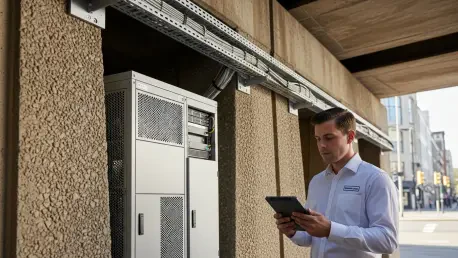

Tokyo’s relentless pursuit of digital efficiency has reached a pivotal juncture where the demand for local data processing far exceeds the physical space available in its hyper-dense urban core. A high-profile Japanese consortium, led by Tokyu Corporation and Tokyu Railways, is spearheading an ambitious pilot project to transform the dead space beneath elevated railway tracks into high-performance digital hubs. Beginning in June 2026, the group plans to deploy small-scale, modular data centers along the Oimachi Line to test the feasibility of localized edge computing. This initiative addresses the massive surge in generative AI applications and IoT connectivity that requires processing power to be as close to the end-user as possible. By placing server racks in unconventional locations, the city aims to solve the chronic land shortage that has traditionally hindered technological expansion. This project represents more than just a spatial experiment; it is a fundamental rethink of how a megacity integrates its physical and digital infrastructure to maintain its competitive edge in a rapidly evolving global economy.
Overcoming the Limitations of Urban Real Estate
Repurposing Transit Corridors for Digital Growth
The choice to utilize the spaces beneath elevated railways is a strategic masterstroke designed to circumvent the prohibitive costs of Tokyo’s property market. Traditional data center construction requires massive footprints and specialized buildings, but the modular approach allows for a flexible, distributed network that fits within the existing urban fabric. These modular units are essentially self-contained ecosystems that house cooling, power supply, and server hardware in a compact, ruggedized enclosure. By leveraging the vast network of tracks owned by Tokyu Railways, the consortium can bypass the typical hurdles of land acquisition and zoning that often delay critical tech infrastructure projects by years. This decentralized model aligns with the modern shift toward edge computing, where data is processed locally to reduce latency. As urban centers continue to densify, the ability to reclaim underutilized “gray space” becomes a vital strategy for maintaining the low-latency connections required by next-generation telecommunications and autonomous systems.
Economic Implications of the Land Gap
Economic pressures in the Japanese capital have reached a point where traditional infrastructure development is no longer viable for many technology firms. Property prices in the central districts rose by nearly 70% in recent years, forcing developers to look for creative alternatives to the massive, centralized server farms located in the outskirts. The “land gap” represents a significant barrier to the deployment of 5G and generative AI, both of which require high-speed data turnover near commercial hubs like Shibuya and Ginza. By installing modular units directly under the railway tracks, the consortium effectively eliminates the need for expensive new real estate while utilizing infrastructure that already exists. This approach not only lowers the initial capital expenditure but also shortens the time-to-market for new digital services. The success of this model could trigger a broader trend across other global metropolises, where transit authorities might become significant players in the digital real estate market, leasing their under-track spaces to cloud providers and telecommunications companies looking to expand their reach.
Technical Endurance and Network Integration
Addressing Vibration and Thermal Stability
Placing sensitive server equipment in the immediate vicinity of active railway lines presents a unique set of engineering challenges that the June 2026 pilot is specifically designed to solve. The constant mechanical vibrations from passing trains, combined with high levels of acoustic noise and varying outdoor temperatures, create a harsh environment that would normally be catastrophic for high-end silicon. To counter these effects, the modular units are equipped with advanced vibration-dampening systems and specialized sound insulation layers. Thermal management is another critical focus, as the cooling systems must remain efficient even when subjected to the heat traps common under concrete railway viaducts. Engineers are monitoring how these systems perform in real-time to ensure that the server hardware remains within safe operating parameters. If the trial demonstrates that modern hardware can survive the rigors of an active transit corridor, it will prove that the physical stressors of the city are no longer an obstacle to digital expansion. This level of durability is essential for the reliability of edge computing nodes that handle mission-critical tasks.
Leveraging Existing Fiber for High-Speed Connectivity
One of the most overlooked advantages of using railway corridors for data centers is the pre-existing availability of high-capacity fiber optic networks. For decades, transit companies have utilized fiber for their own internal communications and signaling systems, meaning the “last mile” of connectivity is already in place. This allows the new modular data centers to plug directly into a high-bandwidth backbone without the need for extensive excavation or new cabling across city streets. The immediate integration into the network enables extremely low-latency communication, which is the primary requirement for real-time AI processing and high-density IoT environments. Furthermore, the proximity to power substations that feed the railway lines provides a potential avenue for streamlined energy access, though power stability remains a key area of testing. The synergy between physical transportation and digital data transfer creates a robust ecosystem where the railway serves as both a literal and metaphorical carrier of information. This integration ensures that the digital capacity of the city grows in lockstep with its physical movements, creating a more responsive and interconnected urban environment.
Future Directions and Strategic Recommendations
The initial testing phase provided several key insights that suggested the necessity of a standardized approach to urban infrastructure integration. Stakeholders observed that modularity was the most effective way to scale digital capacity without disrupting the daily operations of the transit network. For cities looking to follow Tokyo’s lead, the primary recommendation involved establishing clear regulatory frameworks for shared utility spaces to ensure safety and maintenance access. It was found that the integration of digital services into existing physical structures required close cooperation between civil engineers and IT specialists from the earliest design stages. Moving forward, urban planners should prioritize the inclusion of high-capacity power and cooling conduits in all new transit developments to future-proof the city against the ever-increasing demand for compute power. The project demonstrated that the successful repurposing of underutilized urban assets was not only a technical achievement but also an economic imperative for modern megacities. By treating the city’s physical framework as a multi-layered platform for both people and data, planners effectively paved the way for a more resilient and technologically advanced urban future.