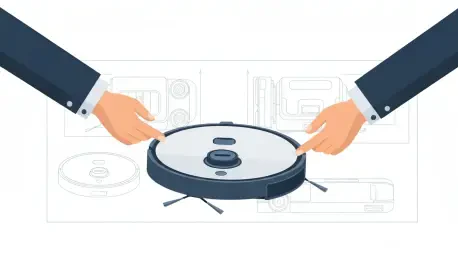

The familiar whir of a Roomba completing its cleaning cycle has become a comforting sound in millions of households, a symbol of automated convenience that operates on a foundation of trust between consumer and company. But as these smart devices diligently mapped and tidied floors, a significant corporate shift was taking place behind the scenes. The news of iRobot’s acquisition following a Chapter 11 bankruptcy filing has left many loyal customers wondering about the future of their trusted cleaning companions. The central question is clear: will these intelligent vacuums continue to receive the support they need, or is their operational future in jeopardy?
A New Owner While Your Roomba Was Working
For countless users, the news of iRobot’s financial turmoil and subsequent acquisition by Chinese contract manufacturer Picea came as a surprise. The transition raises immediate and practical concerns for anyone who owns a Roomba. Questions about warranty claims, the functionality of the essential iRobot companion app, and the availability of future software updates have emerged as top-of-mind issues. The fear is that a change in ownership, especially one born from bankruptcy, could leave existing products unsupported, effectively turning a sophisticated piece of technology into an inert appliance.
The anxiety is understandable, as modern smart devices rely heavily on a connected ecosystem of cloud services and software support to function correctly. Without continued updates to its operating system and app, a Roomba could lose its mapping capabilities, scheduling features, and overall intelligence. This dependency makes the company’s long-term stability crucial, and the recent corporate restructuring has placed that stability under a microscope, prompting a direct response from the company’s leadership to reassure its customer base.
The Corporate Dust-Up: Understanding the iRobot Acquisition
The path to this acquisition was paved with financial challenges. iRobot, once a dominant name in the robotic vacuum market, faced increasing competition and economic pressures that ultimately led the company to seek Chapter 11 bankruptcy protection. This legal process is designed to allow a company to restructure its finances and operations while continuing to do business. For iRobot, it culminated in an acquisition agreement that would provide the capital needed to move forward.
The new owner, Picea, is not an unfamiliar entity to iRobot. As a contract manufacturer, Picea had already been an integral part of iRobot’s supply chain for a significant period. This established relationship is a critical component of the transition, as Picea possesses intimate knowledge of iRobot’s products and manufacturing processes. This connection distinguishes the acquisition from a hostile takeover, positioning it instead as a strategic partnership aimed at leveraging existing synergies for future growth.
Your Roomba’s Future, Today: Immediate Guarantees for Owners
In the face of customer uncertainty, iRobot’s leadership has moved swiftly to provide concrete assurances. CEO Gary Cohen has explicitly confirmed that the company will continue to honor all existing product warranties. This guarantee ensures that customers who recently invested in a Roomba or have time remaining on their coverage will not be left without recourse in the event of a product malfunction, providing a critical layer of consumer protection during this transition.
Beyond physical hardware support, the digital brain of the Roomba is also secure. Cohen stated that the iRobot companion app, which is essential for scheduling, mapping, and controlling the vacuums, will remain fully functional. Furthermore, the company is committed to rolling out necessary firmware and software updates for its entire product line. This commitment is vital, as it dismisses any speculation that the devices would cease to function or lose their smart capabilities following the corporate handover.
Straight from the Source: iRobot’s CEO on Stability and Strategy
The core message from iRobot’s leadership is one of continuity. CEO Gary Cohen has emphasized a “business as usual” approach, aiming to minimize disruption for both employees and customers. This pledge is intended to project stability and signal that the foundational aspects of the brand—its products, support, and mission—will remain intact despite the change in ownership. The goal is to navigate the post-acquisition period with a steady hand, ensuring a seamless experience for the millions who rely on its products.
Looking ahead, the company’s product strategy will prioritize dependability over a feature-centric “arms race” with competitors. Cohen articulated a customer-first philosophy, focusing on delivering stable and reliable products that effectively meet consumer needs. This approach suggests a deliberate shift away from adding an ever-expanding list of features for marketing purposes and a renewed focus on the quality and performance that originally established Roomba as a household name.
Beyond the Acquisition: What’s Next for Roomba Innovation?
The pre-existing relationship between iRobot and Picea is expected to significantly smooth the transition and accelerate future development. Having already collaborated on iRobot’s most recent product lineup, the two companies are not starting from scratch. Instead, they are building on a familiar and productive partnership. This alignment has reportedly enabled them to begin co-developing new products and accessories almost immediately, bypassing many of the integration challenges that typically accompany corporate acquisitions.
This groundwork is already translating into a tangible product roadmap. Cohen revealed that the first new launches under the new ownership structure are slated for release in the spring of 2026. This forward-looking plan signals a strong commitment to continued innovation and market competition, particularly in fast-evolving regions like Europe. By upgrading current models and introducing new ones, iRobot aims to maintain its relevance and meet the growing demands of the smart home technology market.
The acquisition of iRobot by its long-time partner Picea initially raised valid concerns among a dedicated customer base. However, the explicit guarantees from the company’s leadership regarding warranties and software support provided immediate and necessary reassurance. The strategic focus on reliability over superfluous features, combined with a clear roadmap for new products, suggested that the transition was less about disruption and more about stabilization. Ultimately, the move was positioned as a way to ensure the Roomba’s legacy of innovation and dependability continued well into the future.