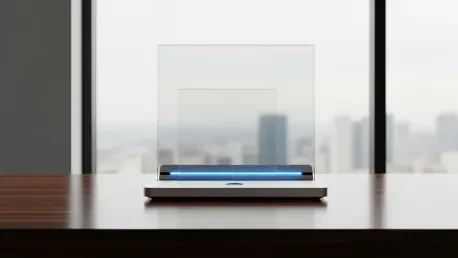

The relentless expansion of the global datasphere has forced engineers to confront the inherent instability of magnetic and electronic storage media, which inevitably succumb to bit rot and physical degradation within a few decades. To address this looming crisis of digital amnesia, researchers have turned toward one of the most stable materials known to humanity: glass. Project Silica, an ambitious initiative focused on archival technology, has demonstrated that data can be etched into the internal structure of glass plates using ultra-fast lasers. Unlike traditional hard drives or magnetic tapes that require specific temperatures and periodic replacements, these glass slabs remain structurally intact for thousands of years. This technological leap promises to preserve the collective knowledge of civilization without the constant energy consumption required by current data centers. However, moving this innovation from a specialized laboratory setting into the mainstream enterprise market remains a complex challenge involving economics, physics, and infrastructure.
Evolution of Material Science in Optical Archiving
Transitioning from Fused Silica to Borosilicate
Transitioning from expensive fused silica to more common borosilicate glass represented a pivotal moment in making this technology economically feasible for large-scale operations. Fused silica offers incredible purity and thermal resistance, but its high production costs made it an unlikely candidate for widespread industrial adoption in the storage sector. By shifting the research focus toward borosilicate—the same durable material used in laboratory glassware and high-end kitchenware—scientists managed to reduce material costs significantly while maintaining a high degree of durability. While this transition successfully lowered the barrier to entry, it introduced a new set of technical trade-offs regarding the density of the stored information. Borosilicate glass currently supports a lower data density than its more expensive predecessor, meaning that while the material is cheaper, the total volume of data stored per square inch is reduced. Balancing these financial savings with the physical limitations of the medium has become a central theme in the current development cycle.
The shift to borosilicate also necessitated a fundamental reevaluation of how laser pulses interact with different chemical compositions within the glass matrix. Researchers discovered that while the material is more cost-effective, its structural response to femtosecond laser bursts differs from the nearly pure silicon dioxide found in fused silica. This variation required the recalibration of the optical systems used to create the three-dimensional voxels that represent binary data. Despite these adjustments, the fundamental advantage of borosilicate remains its ubiquity and the established manufacturing pipelines that already exist globally. By leveraging a material that is already mass-produced for other industries, the path toward a hardware ecosystem for glass storage became slightly more defined. Nevertheless, the reduced data density means that more physical plates are required to store the same amount of information, a factor that complicates the design of the robotic libraries intended to manage these archives in a real-world data center environment.
Precision Encoding Through Femtosecond Lasers
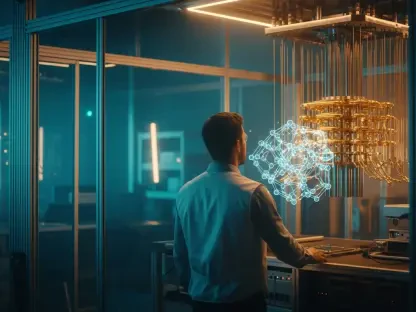
The technical foundation of glass-based storage relies on the use of femtosecond lasers to create permanent physical changes within the glass at a microscopic scale. These lasers emit pulses that last only a quadrillionth of a second, allowing for incredible precision without generating the kind of heat that would crack or distort the surrounding material. By focusing these pulses at specific depths within the glass plate, engineers can create three-dimensional structures known as voxels. These voxels are not merely holes; they are complex deformations that change how light passes through the glass. This method allows for the stacking of hundreds of layers within a single thin sheet of glass, vastly exceeding the capacity of traditional optical discs like DVDs or Blu-rays. The stability of these internal structures is what gives the medium its legendary longevity, as the data is literally part of the glass itself rather than a magnetic charge or a sensitive chemical layer that could easily degrade over time.
Reading the data back requires a sophisticated combination of high-speed microscopy and machine learning algorithms that interpret the patterns of light as it passes through the etched voxels. Because the data is stored in three dimensions, the reading system must precisely focus on the correct layer and depth to retrieve the information accurately. Recent advancements have pushed the limits of this technology to include up to 258 layers of data in a single plate, a feat that showcases the incredible potential for high-capacity archiving. However, the complexity of this optical hardware means that the drive units themselves are currently far more expensive and larger than a standard hard drive or tape drive. This equipment requires vibration-isolated environments and extremely precise alignment to function correctly. While the glass plates themselves are nearly indestructible and very cheap to store once written, the initial investment in the laser encoding and microscopic reading hardware remains a significant barrier for all but the largest enterprises.
Overcoming Practical Limitations for Global Implementation
Addressing the Bottleneck of Write Speeds
One of the most significant hurdles preventing glass storage from achieving commercial parity with existing technologies is the relatively slow speed at which data can be written. Even with recent improvements that pushed peak write speeds to approximately 65.9 Mbps, the process remains glacially slow compared to the multi-gigabit speeds common in modern flash storage and high-end magnetic tape systems. For perspective, at current speeds, filling a single 4.8TB glass disc would require more than 18 continuous days of laser encoding. This throughput bottleneck makes glass storage entirely unsuitable for hot or warm data tiers where information must be saved and accessed rapidly. Instead, the technology is being positioned strictly for “cold storage” applications, such as preserving historical records, legal documents, or genomic data that may not be touched for decades. The physics of the femtosecond laser interaction imposes a hard limit on how fast these voxels can be formed without compromising the integrity of the glass.
Engineers are currently exploring parallelization as a potential solution to this throughput crisis, utilizing multiple laser beams simultaneously to write data across different sections of the glass plate. While this approach could theoretically multiply the write speeds by the number of active beams, it also introduces immense complexity into the optical path and significantly increases the cost of the hardware. The alignment of multiple femtosecond beams with sub-micron precision is a daunting task that requires advanced optoelectronics and real-time feedback loops. Without a breakthrough in either the laser technology itself or the sensitivity of the glass medium, the write speed will continue to relegate glass storage to a very specific niche. For the technology to move beyond the laboratory, it must reach a point where the cost-per-gigabyte-per-second of throughput is competitive with magnetic tape, which currently dominates the archival market due to its proven reliability and much higher write speeds for bulk data transfers.
Commercial Viability and Long-Term Strategic Shifts
The recent decision by major research teams to conclude the internal development phases of glass storage projects and share their findings with the broader scientific community marks a strategic pivot. While some industry observers viewed this as a sign of the technology reaching a dead end, others interpreted it as a transition from experimental physics to an open-source engineering challenge. By making the research public, the foundational knowledge required to build glass storage systems is now available to smaller startups and academic institutions that might find more creative ways to solve the remaining hardware challenges. This shift suggests that the primary developers believe the core science is settled, but the path to a commercial product requires a more diverse ecosystem of innovators. The focus has moved from proving that data can be stored in glass to determining how to build the specialized robotic libraries and laser arrays needed to operate at a planetary scale.
For glass storage to eventually replace or supplement magnetic tape in the enterprise, the industry must develop standardized formats and interoperable hardware. Currently, the proprietary nature of the research means that a plate written by one experimental system cannot be read by another. The establishment of industry standards will be a critical next step in moving this technology from the research lab into the data center. Furthermore, the environmental benefits of glass—specifically the elimination of the need for climate-controlled warehouses—must be weighed against the high energy cost of the femtosecond lasers used for writing. As data centers face increasing pressure to reduce their carbon footprint, the passive nature of glass storage becomes a very attractive selling point. However, the total cost of ownership over a 50-year period remains theoretical, as no glass storage system has yet been deployed in a production environment long enough to validate these economic models against the established performance of the magnetic tape industry.
The research community successfully transitioned glass storage from a theoretical concept to a proven method for millennial-scale data preservation. By demonstrating that borosilicate glass could serve as a durable and cost-effective medium, the project addressed the primary concern of material scarcity. However, the practical application of this technology remained limited by the slow throughput of laser encoding and the high cost of the necessary optical hardware. Future development efforts focused on the parallelization of laser arrays to increase write speeds and the standardization of voxel formats to ensure long-term compatibility across different hardware generations. Organizations looking to preserve critical archives for centuries moved toward pilot programs that tested the integration of glass plates into existing robotic tape libraries. These initial steps paved the way for a hybrid archival strategy where glass served as the ultimate fail-safe for the most valuable human records, while more traditional media continued to handle the daily demands of global data management and retrieval.