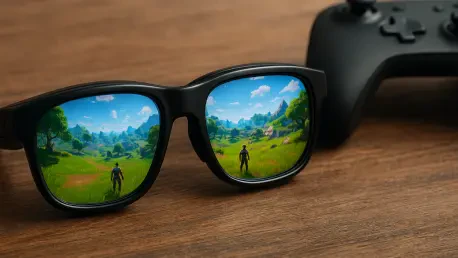

The realization of high-fidelity virtual reality on portable hardware has long been hindered by the technical friction between proprietary ecosystems and open-source operating systems. However, the emergence of the community-driven xreal-linux project marked a turning point for enthusiasts seeking to leverage Xreal 1S glasses beyond simple screen mirroring. By introducing a specialized driver that functions within the Linux environment, developers successfully transformed these lightweight display glasses into a functional three-degrees-of-freedom SteamVR headset. This breakthrough specifically targeted the Steam Deck platform, utilizing the Bazzite distribution to provide a seamless bridge between handheld gaming and immersive virtual environments. While the hardware was originally designed as a personal monitor, the software intervention allowed it to interpret head rotation data, effectively placing the user inside the game world. This development represented a significant milestone for the open-source community, proving that specialized hardware could be repurposed through sophisticated reverse engineering and dedicated driver development efforts.
Hardware Integration and Data Transmission Protocols
The technical sophistication of the xreal-linux driver became evident through its intricate handling of the Xreal 1S hardware, which the system identified as a complex USB 2.0 device. Detailed engineering analysis revealed that the glasses utilized nine distinct interfaces, ranging from virtual Ethernet pairs to various Human Interface Device channels. To facilitate communication, the driver established a localized DHCP server on the glasses, creating a dedicated network pathway for streaming high-speed sensor data. This architecture allowed the system to bypass standard display limitations, treating the glasses as a peripheral capable of bidirectional communication rather than just a passive output device. By isolating these data streams, the software maintained a stable connection even during intensive gaming sessions. This method of utilizing virtualized networking for sensor feedback highlighted a creative solution to the limitations of standard video protocols, ensuring that the hardware remained responsive under the demanding requirements of a real-time virtual reality environment.
Reliable head tracking necessitated an exceptionally high data throughput to eliminate the motion sickness often associated with latent visual updates in VR systems. The driver achieved this by capturing inertial sensor data at a frequency of approximately 1,400 records per second, providing the SteamVR compositor with nearly instantaneous updates on the user’s orientation. This high-speed telemetry was essential for the three-degrees-of-freedom experience, where every slight tilt or rotation of the head needed to be reflected in the virtual camera. Because the software was built using the Steam Runtime SDK, it maintained high compatibility with the underlying Linux kernel, ensuring that the heavy processing of sensor packets did not interfere with the primary game engine. The precision of this data stream allowed the Xreal 1S to maintain a smooth visual flow, bridging the gap between mobile display technology and dedicated virtual reality hardware. Such granular control over the sensor polling rate demonstrated the project’s commitment to delivering a high-quality user experience.
Technical Constraints and Practical Implementation
Managing the visual output required the driver to implement a specialized display mode that differed significantly from the standard 16:9 or 16:10 aspect ratios used for desktop mirroring. Upon the initiation of a SteamVR session, the software forced the Xreal 1S glasses into a 3840×1080 side-by-side configuration. This specific resolution was critical for delivering unique, offset perspectives to each eye, which in turn generated the depth perception necessary for a stereoscopic virtual reality environment. By overriding the default firmware settings of the glasses, the driver ensured that the visual field was correctly calibrated for VR optics, preventing the distortion that typically occurs when stretching standard flat images. Once a session ended, the driver automatically reverted the glasses to their standard display settings, a process that showcased the deep integration with the Linux display stack and provided a level of automation usually reserved for officially supported hardware platforms.
Despite the successes in connectivity and display management, the project encountered significant hurdles related to long-term orientation stability, specifically regarding yaw drift. This phenomenon, characterized by the gradual rotation of the virtual horizon away from the user’s actual physical position, resulted from an unusable magnetometer within the sensor array. Without a functional magnetometer to provide a consistent magnetic north reference, the driver struggled to maintain absolute orientation over extended periods of time. This required users to periodically center their view manually to correct the alignment of the virtual world. While the inertial sensors provided excellent short-term tracking at 1,400 records per second, the lack of a secondary stabilization source highlighted the inherent limitations of the Xreal 1S hardware when repurposed for VR. Addressing this drift remained a primary focus for the development community, as they sought software-based filtering techniques to mitigate the errors introduced by internal sensor noise.
The successful deployment of the xreal-linux driver established a clear blueprint for expanding the utility of display-centric wearables within the Linux ecosystem. Early adopters found that utilizing the AppImage format provided a straightforward method for testing the driver on Bazzite-based systems without altering the core filesystem. Users who sought to implement this solution were encouraged to verify their hardware’s USB connectivity and ensure that their Steam Deck was configured for desktop mode to facilitate the necessary driver hooks. Looking ahead, the focus shifted toward optimizing the sensor filtering algorithms to combat persistent tracking inaccuracies and investigating the potential for third-party positional tracking solutions. The lessons learned from this project suggested that community-led initiatives remained a driving force in bridging hardware gaps. These efforts paved the way for more integrated VR experiences on handheld platforms, proving that the synergy between open-source software and versatile hardware could redefine the boundaries of mobile computing.