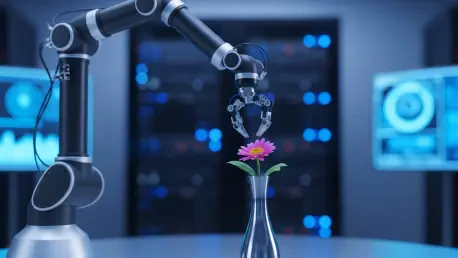

Recent studies into the intersection of cognitive science and generative modeling reveal a fascinating paradox where machines consistently outperform the average human in divergent thinking tasks while simultaneously hitting an invisible ceiling when attempting to match the profound emotional resonance of high-level creative masters. This discrepancy suggests that while silicon-based intelligence has successfully decoded the mechanics of ideation, the essence of artistic genius remains tethered to the complexities of the human experience. We are currently witnessing a definitive pivot from questioning if machines can create to analyzing the fundamental quality and intent of their output. This shift forces a reexamination of the creative spark, distinguishing between the mathematical probability of a “good” idea and the visceral necessity of expression that defines the human condition. As the landscape of production changes, the value of the final product increasingly depends on the depth of its origin rather than just the aesthetic polish of its presentation.
Biological Motivation vs. Machine Logic
The Influence of Lived Experience
Human creativity operates as a sophisticated survival mechanism, frequently emerging from the depths of personal struggles, physical sensations, and the complex web of interpersonal relationships that define our existence. The most enduring works of art, from classical literature to contemporary visual masterpieces, do not exist in a vacuum; they are visceral responses to the specific pressures of being alive and cognizant. When a poet describes grief, the words are weighted by the actual experience of loss, creating a bridge of empathy between the creator and the audience. This biological motivation ensures that every stroke of a brush or line of code in digital art carries a specific intent rooted in the creator’s unique history. Because humans use creativity to map out the contours of their own condition, the resulting output possesses an inherent authenticity. It is this depth of personal investment that allows human art to resonate across different cultures and eras, as it speaks to shared biological realities.
Biological Roots of Creative Expression
The necessity of art as a means of processing trauma or celebrating triumph provides a layer of complexity that purely algorithmic processes cannot currently replicate. Masterpieces are often born from a search for beauty amidst chaos, serving as a functional tool for the artist to navigate their mental landscape. This process is deeply personal and idiosyncratic, meaning that no two human creators would respond to the same stimulus in exactly the same way. The specificities of one’s physical health, geographical location, and social upbringing coalesce to form a unique creative voice that is impossible to standardize. In this context, the value of the artwork is inextricably linked to the humanity of the person who produced it. While a machine can generate an image of a sunset, it does so without the biological awe that a human feels when witnessing the end of a day. This distinction between feeling and simulating is what maintains the lead for gifted artists over the most advanced technological systems.
Judgment and the Illusion of Novelty
The Quality Filter and Fixation Bias
The “paradox of fluency” represents one of the most significant technical hurdles currently facing generative systems, as they can produce an overwhelming volume of ideas but lack the inherent taste to distinguish greatness from mediocrity. While a human artist might discard hundreds of sketches based on a subjective sense of intuition and cultural relevance, an algorithm treats every statistically probable outcome with equal validity unless restricted. Research into modern large language models and image generators shows that while they excel at divergent thinking, they often gravitate toward the most conventional or frequent patterns found in their training data. This fixation bias means that even when a machine provides a wide variety of options, many of those options lack the subtle subversion of tropes that characterizes high-level human innovation. Without a built-in quality filter grounded in cultural understanding, the machine remains a prolific but unselective producer, requiring a human to act as the ultimate judge of value.
The Limits of Sophisticated Synthesis
This dynamic inevitably leads to the perception of artificial intelligence as a “sophisticated remixer” rather than a truly original thinker capable of breaking new conceptual ground. Because these models are built upon the totality of existing human knowledge, their creative range is fundamentally limited by the boundaries of what has already been documented and uploaded. They synthesize and blend previous ideas with incredible speed, yet they struggle to offer a perspective that is genuinely fresh or challenging to the status quo. This phenomenon often results in what critics describe as “secondhand emotions,” where the machine describes complex states like heartbreak or joy by aggregating thousands of human descriptions without having ever felt them. The output is a derivative approximation of human sentiment, a collage of existing expressions that can feel hollow upon closer inspection. While the technical execution may be flawless, the lack of an original perspective prevents the work from achieving the status of truly revolutionary art.
Productivity and the New Creative Workflow
Accelerating Human Potential
Despite the philosophical debates surrounding the nature of originality, these technological advancements are fundamentally reshaping the productivity landscape for creative professionals and hobbyists alike. By lowering the barriers to entry for technical execution, generative tools allow individuals with limited formal training to produce work that meets professional aesthetic standards in a fraction of the time. For example, a writer who struggles with visual composition can use neural networks to generate high-quality concept art for a novel, effectively bridging the gap between imagination and realization. This democratization of the creative process means that the focus is shifting away from the grueling labor of initial execution toward the higher-level tasks of conceptualization and direction. Data suggests that this partnership significantly boosts the volume of output, enabling a more iterative and experimental approach to design. As the technical “heavy lifting” is automated, the human role evolves into one of an architect.
The Professional Role: Human as Curator
For seasoned experts in their respective fields, the primary value of artificial intelligence lies in its ability to act as a high-speed brainstorming partner that can bypass the “blank page” problem. Instead of spending hours searching for an initial spark, a professional designer can generate fifty variations of a logo in minutes, using those outputs as raw material for further refinement and polishing. This collaborative workflow creates a system where the machine provides the breadth of possibilities while the human expert provides the depth of judgment and emotional resonance. The professional’s role becomes that of a curator who identifies the one diamond in the rough and then uses their specialized skills to perfect it. This synergy ensures that the final product maintains a human soul while benefiting from the efficiency and variety offered by algorithmic generation. Ultimately, this integration allows for a higher standard of creative work to be produced at a pace that was previously impossible, marking a new era of artistic development.
The Existential Gap in Artificial Art
Consciousness and the Value of Presence
The core of the divide between biological and artificial creativity resides in the search for a shared consciousness, which serves as the primary reason why humans engage with art in the first place. When a person views a painting or reads a poem, they are fundamentally looking for a connection with another mind, seeking to understand a perspective different from their own across time and space. There is a profound sense of presence involved in knowing that another living being struggled with the same questions of existence while creating the work. AI-generated content often lacks this “ghost in the machine,” leading to a sense of emptiness that can be difficult to quantify but is clearly felt by the audience. Without an actual person behind the data points, the work becomes a sterile exercise in aesthetics rather than a meaningful communication between souls. This human connection is the foundation of cultural value, making the presence of a conscious creator an essential component of art that truly matters on a global scale.
Future Considerations: The Human Luxury
As the presence of machine-generated content increased across all media channels, the focus eventually shifted toward preserving the unique value of the human touch as a premium asset. Industry leaders and artists alike recognized that while algorithms could simulate beauty, they could never replicate the stakes involved in a life lived with the knowledge of its own mortality. Consequently, organizations began implementing “human-certified” labels to distinguish work that originated from authentic biological experience, turning human creativity into a luxury commodity. This trend encouraged creators to lean further into their personal histories and idiosyncratic flaws, as these elements became the very proof of their humanity. The strategic move forward involved integrating these tools not as replacements, but as scaffolding for more ambitious human projects that prioritized emotional depth. By treating technology as a partner rather than a competitor, the creative community established a new standard where the most valued work was that which explored the depths of the heart.