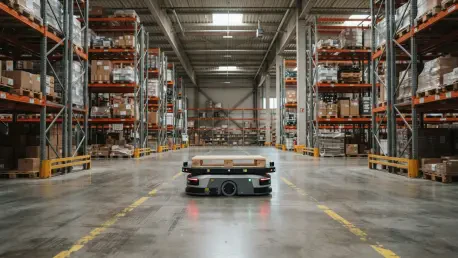

The relentless pressure of global e-commerce has forced logistics providers to confront a critical breaking point where traditional manual labor can no longer keep pace with the sheer volume and unpredictability of consumer demand. This environment is characterized by fluctuating labor availability, an explosion of diverse packaging types, and increasingly complex mixtures of stock-keeping units that challenge even the most efficient distribution centers. To address these systemic issues, Berkshire Grey recently announced significant AI-driven upgrades across its robotic automation portfolio, powered by the proprietary BG Pilot software platform. This strategic move aims to provide a unified intelligence layer that allows robotic systems to perceive, decide, and act with enterprise-grade reliability. By leveraging over a decade of operational data and billions of robotic picks, the platform transforms standard warehouse hardware into adaptive, intelligent assets that function effectively in high-volume settings.
The Integration of Physical AI: Enhancing Operational Reliability
Within this new framework, specific system enhancements such as the Scoop system utilize advanced perception models to process real-time 3D data, enabling robots to autonomously unload trailers while identifying obstructions that require human intervention. This capability is essential for modern logistics, where the physical variability of incoming freight often slows down intake processes and creates bottlenecks. Simultaneously, the Stride system focuses on intelligent orchestration by dynamically coordinating product flow and labor resources to meet shifting demand and shipping priorities throughout the workday. By synthesizing machine learning with a vast proprietary dataset, these systems navigate unpredictable real-world variables that previously hindered full automation. The goal is to create a seamless operational environment where robots can handle the heavy lifting while maintaining the flexibility to adjust to sudden changes in order volume.
Beyond trailer unloading and orchestration, the Core system applies machine learning to precision packing, optimizing box selection and item placement to maximize space utilization while ensuring product protection. This level of optimization is particularly relevant as shipping costs rise and sustainability goals demand more efficient use of materials and transportation space. Berkshire Grey reported a 65% increase in new business opportunities over the last six months of 2026, signaling a robust market appetite for automation that integrates into existing operations without requiring extensive retraining. This surge in demand reflects a broader trend toward “Physical AI,” where intelligent software is applied to physical robotic systems to handle sophisticated warehouse workflows. Organizations are recognizing that the ability to process diverse product assortments with minimal manual oversight is no longer a luxury but a fundamental necessity for maintaining a competitive edge.
The transition toward BG Pilot-powered systems established a new benchmark for industrial scalability, proving that efficiency depended on a software layer’s ability to navigate unpredictable variables. Decision-makers who prioritized early adoption of these Physical AI platforms effectively mitigated the risks associated with global commerce volatility and rising consumer expectations. They achieved this by integrating intelligent hardware that provided both immediate relief for labor-intensive tasks and long-term data insights for operational refinement. Ultimately, the successful deployment of these systems required a shift in perspective from viewing robots as static tools to recognizing them as evolving, intelligent assets. The focus moved toward creating a cohesive ecosystem where software and hardware worked in tandem to resolve the structural challenges of the modern warehouse. Future considerations involved how this intelligence could extend beyond the warehouse floor to optimize the entire global supply chain.