
The transformative power of community-driven software development has reached a new zenith with the recent breakthroughs in translating classic flat-screen titles into fully immersive spatial computing environments. While official developers often move on to new intellectual properties, the modding community continues to breathe fresh life into legendary franchises through projects that exceed the scope of professional updates. The latest milestone in this journey centers on “Portal 2 VR Enriched,” an ambitious initiative that has successfully bridged the gap between traditional keyboard-and-mouse gaming and the tactile reality of modern virtual reality headsets. This evolution is particularly evident in the recent inclusion of standalone fan campaigns, which offer a depth of narrative and mechanical complexity rarely seen in unofficial expansions. By focusing on high-fidelity interaction, these updates provide players with a reason to return to the sterile halls of Aperture Science through a new perspective.
Narrative Integration and Spatial Mechanics
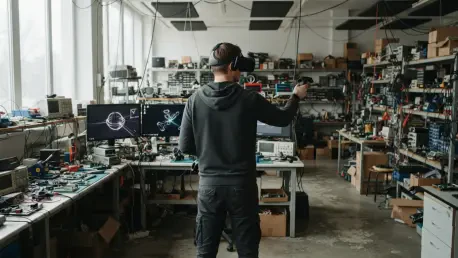
The release of version 1.2.0 marks a significant turning point for the project by introducing comprehensive support for “Portal Stories: Mel,” a narrative prequel that has long been celebrated for its challenging puzzles and professional-grade storytelling. Unlike standard modifications that simply overlay a camera view, this update meticulously aligns the vintage portal gun with the player’s physically tracked hand, creating a direct link between real-world movement and in-game actions. To assist with the transition from traditional aiming to spatial targeting, the developers implemented a specialized aiming ring that facilitates precise object interaction during the early, high-pressure sequences of the campaign. This level of technical integration ensures that the unique aesthetic of the prequel—featuring its distinct color palette and mid-century laboratory design—remains intact while benefiting from the added immersion of 360-degree vision and hand-tracked depth for modern enthusiasts.
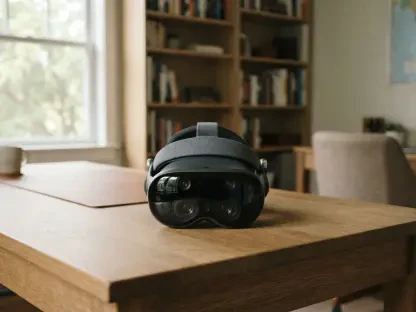
Achieving this level of immersion requires a precise combination of specific software prerequisites and modern hardware capabilities to ensure the experience remains fluid and nausea-free for the user. Because the mod functions as an enhancement layer rather than a standalone product, players must possess the original Steam version of the base game, as the community project does not distribute protected game files or assets. The computational demands are notably higher than those of the original release, requiring a robust PC VR configuration to handle the real-time stereoscopic rendering of complex physics and lighting. Benchmarks conducted on contemporary systems, such as those utilizing the Meta Quest 3 paired with an RTX 4070 graphics card, demonstrate that while the performance is impressive, the overhead of virtual reality still requires significant computational resources. This hardware barrier ensures that the fidelity of the environments is maintained without sacrificing the frame rate necessary for a stable experience.
Performance Requirements and Technical Hurdles
Despite the impressive strides made in environmental translation, users should approach the current iteration of the campaign support with an understanding that it remains a sophisticated work in progress. The creator has focused primary validation efforts on the introductory sequences and the initial set of test chambers, meaning that later portions of the game may exhibit unpredictable behavior or performance dips. One of the primary technical hurdles stems from the specific architectural choices made in the prequel, which utilizes far more complex lighting and shadow-casting objects than the base game’s standard assets. To mitigate potential frame drops, players often find it necessary to engage in manual optimization by adjusting anti-aliasing levels and resolution scaling within the VR interface. This balancing act between visual clarity and smooth motion is a hallmark of high-end modding, requiring a proactive approach to settings management that differs from the plug-and-play nature of official releases.
The successful integration of such a dense narrative expansion into the VR ecosystem establishes a clear blueprint for how legacy content can be preserved and improved through decentralized innovation. For those seeking to explore this virtual prequel, the focus shifted from simple curiosity to a systematic optimization of their personal hardware environments to accommodate the demanding lighting effects. Enthusiasts recognized that the path forward involved contributing to community bug trackers and sharing configuration profiles that maximized stability on newer headsets. This collective effort demonstrated that the longevity of classic titles relied less on corporate remasters and more on the technical ingenuity of a dedicated user base. Looking ahead, the focus remains on refining the physics interactions within the later chapters of the campaign to ensure a consistent level of quality throughout the entire playthrough. This project provides a compelling reason for the industry to reconsider the potential of fan content.