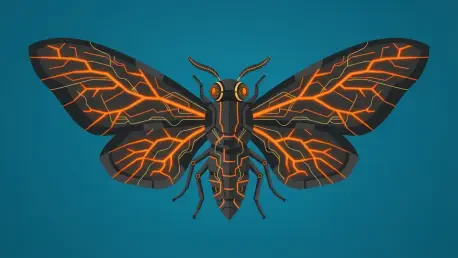

This work in soft robotics highlights a trend toward self-healing machines where the internal fluid is as vital for adaptation as the controlling algorithms. Conventional mechanical engineering often prioritizes rigid frames and predefined components that remain static throughout their operational lifespan. However, the emergence of this moth-shaped prototype signifies a departure from such limitations, introducing a system where the hardware can essentially evolve after leaving the assembly line. Developed through a collaboration between the University of Tartu and the Italian Institute of Technology, this robot features a transparent, 3D-printed body integrated with an intricate network of microscopic veins. These channels serve as a vascular system for artificial blood, a chemical medium that facilitates structural changes. By utilizing nitinol shape-memory wires for actuation, the machine mimics the delicate movements of biological insects while maintaining a level of structural plasticity.
The Chemical Foundation: Mechanics of Biological Growth
The core mechanism driving this internal metamorphosis relies on a sophisticated chemical reaction within the robot’s structure. This artificial blood contains a specific precursor known as pyrrole, which is allowed to seep from the vascular network into the surrounding transparent plastic of the body. When researchers or environmental factors expose certain areas of the wing to ultraviolet light, a localized chemical reaction is triggered. The pyrrole undergoes polymerization, transforming into polypyrrole, which is a highly conductive plastic. This material effectively grows into place, bridging gaps and creating functional electronic pathways. To facilitate data transmission, the robot’s frame is pre-threaded with microscopic gold wires that connect to these newly formed conductive patches. This integration allows the robot to bridge the gap between organic-style growth and digital processing, turning a simple plastic shell into a complex, sensing organism capable of responding to external stimuli.
Once these sensors have matured, the robot gains the ability to perceive its surroundings through changes in electrical resistance. In a series of controlled laboratory experiments, the moth-inspired device demonstrated the capacity to detect varying intensities of ultraviolet light with high precision. Upon sensing the light, the robot responded through pre-programmed behaviors, such as illuminating an integrated LED or initiating a rhythmic flapping motion using its shape-memory alloy components. This functionality proves that grown hardware can perform just as reliably as traditional, factory-installed sensors. Interestingly, findings from the research team indicated that these sensors are remarkably durable, remaining fully operational even after months in storage. Moreover, the sensitivity of the patches actually improved with repeated exposure, as residual chemicals within the wing continued to react and refine the conductive pathways, echoing the way biological systems strengthen through use.
Strategic Adaptation: Deploying in Unpredictable Environments
This development introduces a paradigm shift known as site-specific adaptation, which is crucial for the deployment of robotics in extreme or high-stakes environments. From 2026 to 2030, the demand for autonomous systems in disaster recovery and space exploration is expected to surge, requiring machines that can handle unpredictable terrain. In such scenarios, engineers often struggle to anticipate every possible environmental challenge or sensor requirement a robot might face. By enabling a machine to grow its own sensors in response to specific conditions, designers can deploy versatile platforms that tailor their physical capabilities to the immediate mission. A robot landed on a distant planet, for example, could develop specialized light sensors to navigate a specific atmospheric thinness without needing a massive array of heavy, pre-installed equipment. This flexibility reduces the overall payload and increases the likelihood of mission success in unmapped territories.
The advancement of circulatory robotic systems suggested a future where the distinction between hardware and software became increasingly blurred. To capitalize on these findings, researchers aimed to refine vascular networks to serve dual purposes, such as utilizing artificial blood for both sensor growth and high-density energy storage. This approach pointed toward a modular strategy where operators could flush veins with new chemical precursors to grow different sensor types as mission parameters changed. For organizations invested in robotics, the takeaway involved prioritizing materials that supported physical reconfiguration rather than relying solely on fixed components or complex algorithms. This research established that the path to true autonomy required a holistic view of the machine as a living entity. By embracing these self-building systems, the industry prepared for a new era where robots were not merely manufactured but were instead nurtured to adapt to the complexities of an ever-changing world.