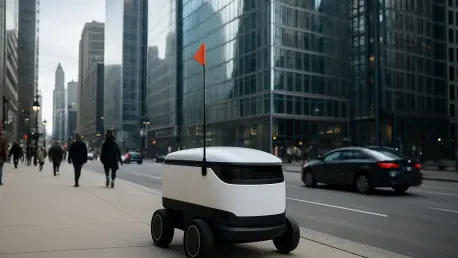

The deployment of delivery robots by Coco and Serve Robotics has triggered a legal battle over whether High-Definition cameras and LiDAR sensors violate the Illinois Biometric Privacy Act. This litigation, filed in Cook County, marks a pivotal moment for urban automation as the convenience of sidewalk delivery collides with strict privacy regulations. Plaintiffs Mitchell Breidinger and Barry Schain argue that these autonomous machines, while touted as efficient and eco-friendly solutions for the final stage of logistics, effectively operate as mobile surveillance platforms. The core of their complaint revolves around the alleged unauthorized collection of facial geometries and other unique physical identifiers when customers interact with the robots to retrieve their orders. This shift from a promising pilot program to a high-stakes courtroom drama highlights the growing tension between rapid technological advancement and the fundamental right to individual privacy in the public square today.
Legal Challenges and Privacy Allegations
The legal framework anchoring these lawsuits is the Illinois Biometric Information Privacy Act, one of the most stringent privacy laws in the United States. Under this act, companies are strictly prohibited from collecting, storing, or sharing biometric identifiers such as scans of facial geometry or handprints without first providing written notice and obtaining informed consent. The plaintiffs allege that the delivery companies have bypassed these requirements entirely, treating the public’s biometric data as a resource to be harvested at will. This case is significant because it challenges the industry standard of using high-resolution sensory suites in public thoroughfares. If the court finds that environmental mapping for navigation overlaps with biometric identification, it could set a massive legal precedent. For Chicago residents, the outcome will determine whether they can walk their own streets or interact with automated services without their physical likeness being converted into a digital asset.
The Mechanics: Unauthorized Data Collection
The mechanics of the alleged data collection involve a combination of laser-based LiDAR pulses and high-definition camera arrays. As a customer approaches the robot to enter an unlock code, the suit of sensors is claimed to perform a detailed scan of the person’s facial structure and hand dimensions. This interaction creates a high-fidelity 3D map that the plaintiffs argue is far more intrusive than simple motion detection or obstacle avoidance.
Rather than treating the human as a generic object, the lawsuits claim the systems are capable of distinguishing unique physical traits. These biometric markers are allegedly stored in a manner that allows for the identification of individuals across different delivery instances. This process essentially creates a digital fingerprint of every customer, linking their physical body to their purchase history and residential address, all without a single signed waiver or disclosure.
Secondary Exploitation: Training Artificial Intelligence
A deeply concerning aspect of the litigation is the claim that this harvested data is being sold or shared with third-party entities. Specifically, the lawsuits mention that biometric profiles are utilized to train advanced machine learning models for developers like OpenAI. This secondary exploitation suggests that the delivery robots are acting as conduits for a larger data-mining operation, where the physical features of residents become training data for commercial AI products.
This monetization of human biometrics without consent represents a fundamental shift in how public data is handled by private tech firms. The plaintiffs argue that using private citizens to refine global AI models is a breach of both legal ethics and statutory requirements. By turning the sidewalk into a laboratory for data extraction, these companies are accused of profiting from the unique identities of people who never agreed to participate in any technological trial.
Corporate Defense and Rising Public Friction
Coco and Serve Robotics have responded to these allegations with a firm denial, characterizing the legal actions as a misunderstanding of autonomous technology. The defense centers on the argument that the data collected is purely navigational and necessary for the safe operation of the robots in a chaotic urban environment. According to the companies, the cameras and LiDAR sensors are designed to ensure that the robots do not collide with pedestrians, pets, or infrastructure. They assert that the systems do not have the capability—nor the intent—to identify specific individuals or create permanent biometric records. This perspective frames the lawsuit as a threat to the safety and efficiency of the logistics industry, which relies on these sensors to navigate the last mile of food delivery. For the firms, the technology is a benign tool for environmental awareness, providing a sustainable alternative to traditional delivery vehicles while maintaining high safety standards.
Navigational Intent: A Case for Safety
To support their defense, the companies highlight the restrictive nature of their data retention policies and the specific ways in which sensory information is shared. They maintain that imagery from the start and end of delivery trips is not included in any broader datasets shared with partners. Instead, they claim to provide only generalized hazard information to accessibility platforms, which helps individuals with visual impairments navigate the city more safely and efficiently.
This collaboration with apps like BlindSquare is presented as a public service that justifies the use of advanced sensors on public sidewalks. The companies argue that the benefits of creating a safer, more accessible urban landscape far outweigh the perceived risks of data collection. By focusing on the utility of the data for safety and societal benefit, they aim to distance themselves from the surveillance narrative and prove that their operations are in full compliance.
Public Friction: Infrastructure and Accessibility Challenges
Beyond the legal arena, the pilot program has faced significant scrutiny due to operational failures that have impacted city infrastructure. Reports of robots damaging bus shelters and obstructing narrow walkways have led to a decrease in public support and increased calls for tighter oversight. These physical disruptions, combined with the privacy concerns, have prompted city officials to reconsider the long-term viability of the autonomous delivery model on public sidewalks.
To move forward, stakeholders should have implemented mandatory transparency reports and strict limits on data persistence. Future regulations necessitated the use of local processing to ensure that sensitive physical data never left the robot’s hardware. By prioritizing privacy-by-design and establishing a clear community feedback loop, the city council attempted to balance innovation with public trust. These actions were vital to ensuring that new technology served the citizens rather than exploiting them.