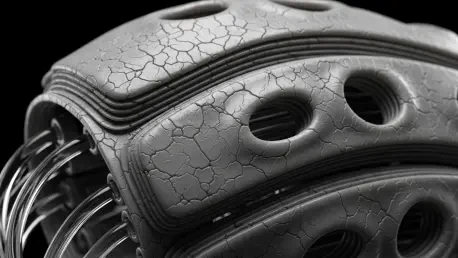

The immense biological complexity of the elephant trunk serves as a masterclass in organic engineering, blending extreme strength with a degree of precision that allows the animal to uproot trees or delicately pluck a single blade of grass. For decades, researchers have focused on the intricate muscle arrangements within these appendages, yet recent breakthroughs have shifted the spotlight toward the skin architecture as a primary driver of mechanical efficiency. The skin of an elephant is not merely a passive protective layer; rather, it is a highly specialized multi-layered system that dictates how the trunk stretches, bends, and manipulates various objects. By analyzing the interplay between the thick, wrinkled epidermis and the underlying dermis, scientists have uncovered a blueprint for a new generation of soft robotics that can replicate high-degree-of-freedom movements without the need for complex internal skeletal structures. This shift in perspective allows for the development of machines that are both more durable and significantly more agile.
The Biological Blueprint: Structural Mechanics of the Wrinkled Epidermis
The specialized topography of elephant skin, characterized by deep-set wrinkles and microscopic cracks, provides the necessary surface area for extreme elongation and contraction. Unlike human skin, which distributes tension relatively evenly, the dorsal skin of an elephant trunk contains significantly more folds than the ventral side, facilitating an asymmetrical stretching capability. This natural bias allows the trunk to curve and coil with minimal energy expenditure, as the skin itself acts as a series of integrated bellows. Engineering teams are currently leveraging these observations to design robotic “skins” made from pleated elastomers that mimic this structural anisotropy. By varying the thickness and frequency of these folds, it is possible to program specific movement patterns into the material itself, reducing the reliance on digital controllers to manage every minor adjustment. This approach effectively offloads the computational burden to the physical architecture of the robot.
Beyond the macroscopic folds, the microscopic interface between the dermal and epidermal layers plays a critical role in how the skin handles mechanical stress during heavy lifting. In African elephants, the skin is notably more rigid and deeply fissured than in their Asian counterparts, a distinction that influences the specific tactile capabilities and protective qualities of the trunk. These fissures serve as reservoirs for moisture and mud, but from a mechanical standpoint, they prevent the propagation of tears and distribute localized pressure across a wider surface area. In the realm of industrial automation, incorporating similar cross-linked microstructures into synthetic membranes can enhance the longevity of soft grippers used in harsh chemical or high-temperature settings. By mimicking the dermal papillae—the finger-like projections that anchor the epidermis to the dermis—engineers have developed layered composite materials that do not delaminate even under extreme shear force during heavy tasks.
Industrial Implementation: Strategic Integration in Soft Robotics Design
The transition from rigid-link robots to bio-inspired soft systems represents a fundamental shift in how the industry approaches human-robot interaction and safety. Utilizing the architectural principles of elephant skin, developers have moved toward creating “embodied intelligence” where the physical properties of the machine handle the complexities of contact. This involves the use of specialized 3D-printing techniques to create lattices that vary in density, much like the varying thickness of elephant hide. When these bio-mimetic skins are integrated with pneumatic or hydraulic actuators, the resulting movement is fluid and organic, lacking the jerky transitions characteristic of traditional motor-driven joints. Furthermore, the inclusion of embedded sensor networks within these wrinkled synthetic skins allows for high-fidelity tactile feedback, enabling the robot to “feel” its surroundings and adjust its grip force in real time, which is essential for medical surgical procedures.
Industrial leaders and roboticists successfully identified that the secret to the elephant trunk’s versatility lay in the synergistic relationship between its muscular core and its complex outer envelope. This realization prompted a move away from over-engineered internal mechanisms toward a more holistic, skin-centric design philosophy. To capitalize on these advancements, organizations began investing in multi-material additive manufacturing and advanced polymer science to recreate the non-linear elasticity observed in nature. The field of robotics subsequently moved beyond simple replication of form to a deep functional mastery of biological mechanics. Stakeholders recognized that the standardization of these bio-mimetic skins for modular robotic platforms was essential for rapid deployment in search and rescue missions where adaptability is paramount. Future initiatives were directed toward self-healing synthetic membranes that could autonomously repair punctures, ensuring that soft robots maintained their integrity.