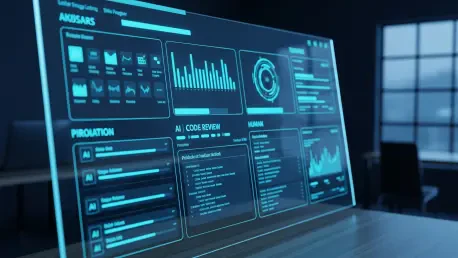

As artificial intelligence agents have evolved into standard contributors within the modern development stack, the historical bottleneck of software creation has shifted decisively from the act of writing code to the rigorous process of reviewing it. For years, the industry measured productivity by the speed at which developers could commit new lines of logic, but the proliferation of AI-assisted tools has rendered this metric nearly obsolete. In the current landscape of 2026, the challenge lies in the sheer volume of pull requests that require human validation, leading to a phenomenon where automated output far outpaces manual oversight. This imbalance has forced a fundamental redesign of the primary workspace where code is scrutinized and approved. By transforming the traditional dashboard into a prioritized management hub, the latest platform updates aim to restore balance to the software development lifecycle. Rather than scrolling through an endless list of notifications, engineers now interact with a system designed to highlight critical paths and urgent dependencies first. This transition ensures that human intuition is applied where it is most necessary, preventing the software delivery pipeline from becoming a victim of its own automated success and maintaining a steady flow of high-quality releases.
Streamlining Workflow Through Intelligent Organization
Customization: Tailoring the Developer Experience
The introduction of Saved Views represents a strategic departure from static repository management, offering a dynamic way for contributors to filter their daily tasks according to specific priority levels. Previously, developers often relied on a chaotic collection of browser bookmarks or manual search queries to track their active work, leading to significant context switching and lost time. The new interface allows users to pin customized views directly to their dashboard, ensuring that the most relevant data is always visible upon login. This system is particularly beneficial for those working across multiple repositories or participating in large-scale open-source projects where the noise level can be paralyzing. By allowing for the creation of unique tabs based on parameters like author, label, or status, the platform effectively turns a generic inbox into a personalized mission control center. This level of customization ensures that no critical update remains buried under less significant notifications, providing a clear and actionable path for every working session.
Beyond individual customization, the system now incorporates a series of smart defaults that anticipate the needs of both solo contributors and large engineering teams. These pre-configured views are designed to categorize work into logical buckets, such as items requiring immediate attention or those that have successfully passed all automated continuous integration checks. For a senior engineer responsible for overseeing several junior developers, these defaults provide an instant snapshot of where their expertise is most needed at any given moment. This intelligent sorting mechanism significantly reduces the cognitive load associated with triaging a backlog of pull requests. Furthermore, the inclusion of team-specific filters ensures that collective responsibilities are clearly delineated, preventing the common issue where shared tasks are overlooked because no specific individual was assigned. By providing a structured starting point for every session, the platform helps maintain a consistent pace of delivery even as project complexity and the volume of incoming code changes continue to grow exponentially.
Search Capabilities: Navigating High-Volume Repositories
Navigating the increasingly dense landscape of software contributions requires more than just visual filters; it demands a robust set of power-user tools that facilitate rapid interaction. The redesigned search syntax now supports complex boolean logic, enabling developers to filter results across an entire organization or specific team clusters with surgical precision. This is complemented by the integration of ergonomic keyboard shortcuts, such as the ‘j’ and ‘k’ keys commonly found in high-efficiency text editors, which allow for lightning-fast movement through the inbox. These enhancements are not merely cosmetic; they are essential for managing the high scale of modern repositories where dozens of pull requests may be opened in a single hour. By minimizing the reliance on mouse-driven navigation, the interface caters to the needs of professional developers who prioritize speed and efficiency in their daily routines. Such features ensure that the technical debt of managing one’s own inbox does not become a barrier to actual engineering, allowing teams to focus on problem-solving.
A particularly noteworthy addition to the search arsenal is the specialized filter designed to track involvement beyond simple authorship or direct assignment. The ‘review-involves’ query allows developers to surface any pull request where they have provided comments, requested changes, or were mentioned in a discussion, regardless of whether they are the primary reviewer. This provides a comprehensive view of a developer’s total footprint within a project, ensuring that follow-up actions are never forgotten. In large organizations where collaboration is fluid, this level of visibility is crucial for maintaining accountability and ensuring that conversations reach a resolution. The ability to filter for specific teams within a global search further enhances this capability, allowing leads to monitor the overall health of their department’s contributions. By providing these granular controls, the platform addresses the reality of modern software development, which is increasingly characterized by cross-functional teams and overlapping responsibilities across multiple codebases.
Addressing the Impact of AI on Software Delivery
Operational Visibility: Monitoring the Machine
As the industry adapts to the presence of AI-authored content, the need for clear operational visibility has become a top priority for engineering leadership. The updated dashboard now formally recognizes the role of AI agents, allowing users to filter for contributions generated by tools like Copilot or other automated coding assistants. This functionality treats these digital agents as integrated members of the development team, whose output requires the same level of scrutiny—and sometimes more—than that of their human counterparts. The decision to label and filter AI content specifically reflects a growing awareness that automated code, while produced quickly, can often introduce subtle architectural inconsistencies if not properly monitored. By surfacing these contributions clearly, the platform enables teams to apply specific review protocols to AI-generated pull requests. This distinction is vital for maintaining high standards of code quality and ensuring that the speed of AI does not come at the expense of long-term system stability and organizational security.
The data-driven insights provided by the new inbox also target the human element of the review crisis, specifically the common psychological hurdle known as the bystander effect. When pull requests are assigned to broad teams rather than specific individuals, they often linger in the queue as team members assume that someone else will take the lead. The redesigned interface counters this by clearly separating individual review requests from general team assignments, providing a clearer picture of personal responsibility. This transparency helps engineering managers identify where work is truly stalling, whether it be due to a lack of individual bandwidth or a lack of clarity in ownership. Recent industry trends suggest that while AI has nearly doubled the volume of merged requests, the average time taken to complete a review has spiked significantly. By providing tools that highlight unassigned or stagnant items, the platform helps teams reclaim lost time and ensure that the increased velocity of code production is matched by efficiency.
Strategic Integration: Future-Proofing Review Cycles
Effective software delivery in 2026 relies on the ability to distinguish between routine boilerplate updates and the high-level architectural decisions that require deep human expertise. The new inbox architecture supports this by allowing developers to quickly triage minor fixes, such as dependency updates or documentation changes, so they can dedicate more time to complex logic reviews. This strategic prioritization is essential as the sheer scale of modern applications continues to expand, making it impossible for a single human to review every single line of code with the same degree of intensity. By using automated status checks and tailored views to clear the noise, engineers can focus their cognitive energy on the parts of the codebase where human intuition and historical context are irreplaceable. This shift toward a more nuanced review process ensures that the most critical components of the system receive the attention they deserve. Ultimately, the goal is to create a sustainable workflow where technology assists the reviewer rather than overwhelming them.
The transition toward a redesigned pull request experience established a new standard for how modern engineering teams managed the complexities of AI-assisted development. By moving beyond the simple chronological list of updates, the platform provided a framework that addressed the immediate bottlenecks caused by rapid code generation. Organizations that adopted these advanced organizational tools reported a significant reduction in the time spent on manual triaging, allowing their developers to return to high-value creative tasks. This evolution proved that the solution to the challenges posed by artificial intelligence was not to slow down production, but to build better systems for human oversight. Moving forward, the focus shifted toward further integrating automated validation with human decision-making to create a seamless end-to-end pipeline. This approach successfully balanced the need for speed with the necessity of quality, ensuring that software ecosystems remained robust in an era of unprecedented scale. The dashboard finally acted as a bridge between the raw output of machines and the strategic vision of engineers.