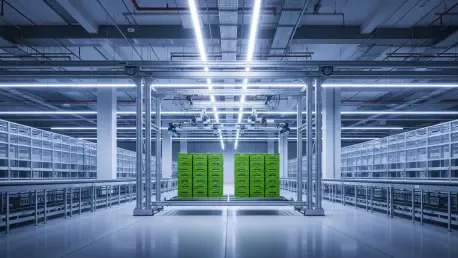

The logistical dance required to move fresh produce from a central hub to the dining tables of a major metropolitan area involves a level of precision that leaves no room for human error or mechanical delay. In the Oranienburg distribution center, which serves the vast Berlin region, this complexity is managed through an ambitious partnership between the German retail giant REWE and the intralogistics specialist Cimcorp. This facility has become a focal point for the industry, demonstrating how the “Dreamfield” robotic solution can handle the grueling demands of perishable goods with unmatched efficiency. By moving away from traditional warehousing methods, the site manages to process a staggering volume of inventory while maintaining the strict hygiene and speed requirements that fresh food demands. This technological shift is not merely an upgrade in equipment; it is a fundamental reimagining of how the supply chain functions in an era where consumer expectations for freshness are at an all-time high and the labor market remains increasingly tight.
Technical Infrastructure and Systematic Flow
Hardware Architecture: The Gantry Advantage
The physical layout of the Oranienburg facility represents a radical departure from the cramped, shelf-heavy environments of the past by utilizing an innovative open-floor design. At the heart of this structure is a gantry robot system that operates from above, traversing the entire floor space to pick and stack crates with surgical precision. This overhead configuration is specifically designed to eliminate the common pitfalls of traditional storage, such as hard-to-reach corners or floor-level obstructions that naturally collect dust and organic debris. Because the robots handle the movement of crates across a flat, unobstructed surface, the facility can maintain a level of cleanliness that is vital for food safety. The lack of complex racking also means that the entire operation is more transparent and accessible, allowing for rapid visual inspections and simplified maintenance schedules. This design choice ensures that the facility remains a sterile and efficient environment, directly contributing to the overall quality and safety of the produce being distributed to the public.
By removing the need for traditional forklift paths and static shelving, the facility maximizes its vertical and horizontal footprint, allowing for a much higher density of inventory. The gantry robots are capable of rapidly re-shuffling stacks to access specific items, meaning that the system can adapt to changing inventory levels without requiring physical reconfiguration of the building. This flexibility is essential in the fresh food sector, where seasonal fluctuations can drastically change the volume and variety of goods handled on a weekly basis. Furthermore, the simplicity of the hardware minimizes the risk of mechanical wear and tear, as there are fewer moving parts compared to complex conveyor belts or automated storage and retrieval systems. This structural robustness is a key factor in why retailers are increasingly looking toward gantry solutions to stabilize their logistics. The result is a system that not only moves faster but also operates with a level of reliability that human-operated machinery simply cannot match in a high-pressure environment.
Software Management: Precision and Redundancy
The physical movements of the robots are governed by a sophisticated Warehouse Control System (WCS) that acts as the central nervous system for the entire distribution operation. From the moment a pallet of fresh produce arrives at the loading dock, the software takes over, registering every crate and assigning it a specific location based on real-time data. To ensure that consumers always receive the freshest possible items, the system utilizes advanced inventory logic such as First In, First Out (FIFO) and First Expired, First Out (FEFO). By tracking expiration dates and arrival times with absolute accuracy, the software eliminates the guesswork that often leads to food waste in manual warehouses. This digital oversight allows the facility to maintain a constant, fluid movement of goods, ensuring that no item sits on the floor longer than necessary. The integration of this software into the daily workflow has effectively digitized the freshness cycle, making it a measurable and controllable metric for the retail chain.
Beyond just managing inventory, the software is designed with a heavy emphasis on operational continuity and the prevention of system-wide failures. In a high-stakes environment where a single hour of downtime can lead to significant financial losses, the “Dreamfield” solution incorporates multiple layers of redundancy. For instance, the system is divided into independent robot cells and features dual transfer cars, ensuring that if one component requires maintenance, the rest of the facility can continue to operate at near-peak capacity. The WCS constantly monitors the health of every robot and sensor, providing predictive maintenance alerts that allow technicians to address potential issues before they cause a stoppage. This proactive approach to system management creates a secure supply chain that store managers can rely on, regardless of the time of day or the volume of the order. The synergy between intelligent software and redundant hardware provides a level of operational security that is becoming the new gold standard for the international fresh food industry.
Operational Impact and the Human Element
Maximizing Throughput: The Freshness Factor
Speed is the ultimate currency in the world of perishable goods, and the Oranienburg facility has set a new benchmark by processing up to 650,000 units every single day. This massive throughput is not just about raw numbers; it is about the radical reduction in the time it takes for a head of lettuce or a crate of berries to travel from the supplier to the store shelf. By automating the sorting and picking processes, the facility has dramatically shortened the window between order placement and delivery, which directly translates into extra days of shelf life for the consumer. This efficiency fosters a high level of trust between the distribution center and the retail managers who depend on these shipments. When store owners know exactly when their produce will arrive and can be certain of its quality, they can manage their own inventory more effectively, reducing the likelihood of empty shelves or overstocking. This reliability is the foundation of a modern retail strategy that prioritizes quality over sheer volume.
The impact of this high-speed automation extends to the very end of the consumer experience, where the visual and nutritional quality of the produce is most apparent. In the traditional logistics model, every hour spent in a warehouse was an hour lost to the natural aging process of the food, but the Oranienburg facility has effectively halted this trend through sheer mechanical velocity. The precision of the robotic arms also ensures that delicate items are handled with consistent care, preventing the bruising and damage that often occurs during manual handling. This reduction in physical damage, combined with the shortened logistics cycle, means that the food arriving at the market is in peak condition. For the retailer, this leads to fewer customer complaints and less unsalable waste, which bolsters the bottom line. The ability to move such a high volume of goods with such extreme care is a testament to how robotics has transformed the fundamental economics of the fresh food market, making it more efficient and less wasteful.
Workforce Evolution: Solving the Labor Crisis
One of the most profound shifts triggered by the adoption of robotics in logistics is the fundamental change in the nature of warehouse work and the roles of employees. Historically, working in a fresh food distribution center was a physically grueling task that involved lifting heavy crates in temperature-controlled environments, leading to high turnover and chronic injury. By automating these repetitive and ergonomic-heavy tasks, the Oranienburg facility has successfully transitioned its workforce from manual laborers into technical system overseers. Employees who once spent their days performing back-breaking labor are now trained to manage the Warehouse Control System, monitor robotic performance, and handle quality assurance. This shift has not only made the workplace safer but has also made it more attractive to a new generation of workers who are looking for roles that involve technology and process management. The change in job description has been a vital tool for recruitment in a highly competitive market.
This evolution of labor also addresses the persistent challenge of the shrinking labor pool that has plagued the logistics sector for years. As the demand for rapid delivery increases, the number of people willing to perform traditional warehouse work has steadily declined, creating a bottleneck that threatened the stability of the supply chain. Automation provides a sustainable solution by allowing the existing workforce to do more with less physical effort, while the technology handles the heavy lifting. The result is a more stable and resilient team that is less prone to burnout and workplace accidents. Furthermore, the increased focus on technical skills provides employees with career advancement opportunities that were previously unavailable in the manual logistics model. By investing in robotic solutions, companies are essentially investing in a more sustainable human resource strategy that prioritizes employee well-being and long-term retention. This creates a virtuous cycle where technological progress and workforce satisfaction go hand in hand.
Strategic Growth and Sustainability
Resource Optimization: Reducing the Carbon Footprint
The environmental implications of automated logistics are becoming increasingly significant as retailers strive to meet ambitious sustainability goals and reduce their overall carbon footprint. In the Oranienburg facility, the precision of the robotic picking process allows for the creation of perfectly optimized pallets, which maximize every square inch of space inside a delivery truck. When pallets are built with mathematical accuracy, trucks can carry more goods per trip, which naturally leads to a reduction in the total number of vehicles on the road. This optimization directly lowers fuel consumption and greenhouse gas emissions, making the entire distribution network more environmentally friendly. Furthermore, the efficiency of the robotic system reduces the energy required to light and climate-control the facility, as the robots can operate with high precision in environments that would be less comfortable for human workers. These small incremental savings across a massive operation add up to a substantial reduction in the environmental impact.
In addition to transportation and energy savings, the reduction of food waste is perhaps the most significant environmental contribution of robotic logistics. Because the system ensures that produce is moved quickly and handled gently, a much higher percentage of the inventory actually reaches the consumer in edible condition. Every ton of food that is saved from the landfill represents a massive saving in the water, land, and energy that were used to grow, harvest, and transport that food in the first place. By tightening the logistics loop, the “Dreamfield” solution addresses the global issue of food loss at its source, demonstrating that industrial efficiency and environmental stewardship are not mutually exclusive. As retailers look for ways to align their operations with modern ecological standards, the integration of robotics offers a clear and measurable path forward. The Oranienburg facility serves as a real-world example of how technology can be harnessed to create a supply chain that is both economically profitable and ecologically responsible for the long term.
Scalable Solutions: Building Resilient Supply Chains
The successful implementation of large-scale automation in the Berlin region provided a roadmap for how modern logistics could adapt to the complexities of urban demand. The transition to robotic systems allowed the facility to achieve a level of operational resilience that was previously unattainable, ensuring that the flow of fresh goods remained constant even during periods of high market volatility. Industry leaders observed that the modular nature of the “Dreamfield” technology facilitated easier expansions and upgrades, making it a versatile tool for future-proofing distribution networks. This strategic shift was characterized by a move away from reactive troubleshooting toward a proactive, data-driven management style that prioritized consistency and long-term growth. The integration of advanced software and robust hardware demonstrated that the most effective way to secure the supply chain was to invest in systems that reduced human dependency while enhancing human capability.
The transformation at the Oranienburg distribution center established that the marriage of robotics and fresh food logistics was a vital component of modern retail success. This approach allowed for a significant reduction in waste and an improvement in workplace safety, which ultimately benefited the consumer, the employee, and the environment alike. Retailers who adopted these automated strategies found themselves better positioned to handle the stresses of a changing economic landscape and an increasingly demanding customer base. The lessons learned from this facility highlighted the importance of choosing flexible, scalable solutions that could grow alongside the business. As the industry continued to evolve, the focus shifted toward refining these robotic processes to reach even higher levels of efficiency. The Oranienburg project stood as a testament to the fact that embracing automation was no longer an optional luxury, but a necessary step for any organization committed to providing fresh, high-quality food to a growing population.