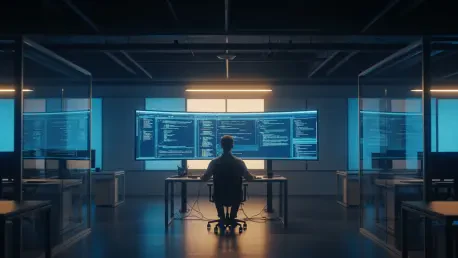

The image of a software engineer hunched over a terminal, meticulously weighing the trade-offs of every memory allocation or loop structure, has increasingly become a relic of a bygone era. Today, the profession is witnessing a rapid transformation that many experts are calling a de-skilling epidemic, driven by the ubiquitous integration of Generative AI into the daily development pipeline. This shift represents a move away from the engineer as an artisan builder toward a role that looks more like an administrative supervisor of black-box systems. As automated agents take over the heavy lifting of code generation, the underlying technical expertise that once defined the field is beginning to thin. Professionals now find themselves operating within a paradigm often described as vibe-coding, where the emphasis is on the general intent and aesthetic of a prompt rather than the structural integrity of the output. This detachment creates a significant distance between the developer and the logic of the software, turning high-level engineering into a series of copy-paste operations and real-time meeting transcriptions. While productivity metrics might suggest a golden age of efficiency, the long-term stability of the craft remains in a precarious state as the artisanal nuances of coding are traded for the convenience of rapid, machine-led execution.
The Atrophy of Technical Skill
The Erosion: Manual Mastery
Heavy reliance on AI tools causes the muscles of execution to wither over time, leaving even experienced developers struggling with fundamental tasks that were once second nature. A developer who once navigated complex data structures with ease may find themselves unable to implement a simple tree in Java without digital assistance from an LLM or an integrated copilot. This loss of hard skills is particularly concerning because these manual competencies have traditionally served as the gatekeepers of industry quality and professional intuition. When the machine does the thinking, the human brain stops forming the neural pathways required for deep problem-solving, leading to a state where the practitioner is hostage to the tool. Without the constant practice of manual syntax construction, the ability to spot subtle errors in logic or memory management begins to fade, effectively lowering the floor of technical competence across the board.
The degradation of manual mastery is not merely a matter of convenience; it represents a fundamental break in the apprenticeship model that has sustained software engineering for decades. In the past, the act of typing out code served as a meditative process that forced the developer to internalize the logic of the system they were building. By removing this physical and mental engagement, the industry is creating a generation of developers who understand what code does but not necessarily how it works at a granular level. This superficiality is a liability during system-wide outages or when working on legacy codebases where AI agents lack the necessary context to provide accurate solutions. As the reliance on these assistants deepens, the professional intuition required to navigate unforeseen technical hurdles continues to weaken, leaving the workforce vulnerable to the limitations of the very software they use to produce their own work.
The Fire: Programming as a Linguistic Exercise
Programming is essentially a linguistic exercise that requires constant practice to maintain fluency in the various syntaxes and paradigms that define modern computing. By delegating the writing process to AI, engineers remove the fire in which their technical wits were once sharpened through manual debugging and grueling problem-solving sessions. Just as a foreign language atrophies without frequent use, the ability to analyze and write code manually is a use-it-or-lose-it skill that is currently being sacrificed for the sake of short-term productivity gains. The immediate satisfaction of seeing a generated block of code function correctly often masks the reality that the developer has learned nothing from the interaction. Over time, this lack of intellectual friction results in a stagnant skill set that is unable to adapt when the underlying technology stack undergoes a significant shift or when the AI produces hallucinated logic.
This linguistic decay is exacerbated by the fact that the developer no longer participates in the dialectic of the compiler or the interpreter in the same way. In a traditional workflow, the feedback loop between writing code and seeing it fail provided a rigorous education that reinforced best practices and discouraged sloppy thinking. In the current era, the AI acts as a filter that smooths over these necessary failures, providing a polished facade that can hide a multitude of structural sins. When engineers stop struggling with the language, they stop growing as thinkers, leading to a workforce that is proficient in managing prompts but deficient in the foundational logic that powers the digital world. The result is a quiet crisis of competence where the speed of delivery is prioritized over the depth of understanding, ultimately leading to a more fragile software ecosystem that lacks the resilience of human-crafted logic.
The Supervisory Paradox
The Barrier: Technical Intuition and Oversight
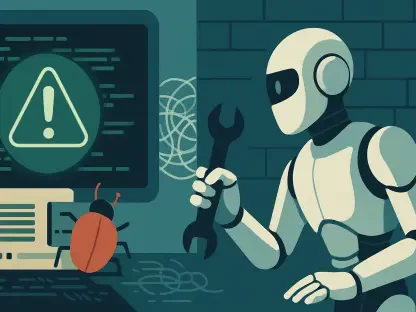
The effectiveness of an AI supervisor is strictly limited by their own underlying technical knowledge, creating a technical ceiling for developers who are fluent in prompting but poor in actual coding. This paradox ensures that an engineer can never truly evaluate the quality of a machine-generated solution that exceeds their own current understanding of the problem space. When an AI agent generates flawed logic or tangles a repository with spaghetti code, a de-skilled engineer lacks the fundamental tools and mental models necessary to intervene and fix the situation effectively. This leads to a dangerous feedback loop where low-quality code is accepted simply because the supervisor lacks the discernment to see its flaws. The ability to audit an automated system requires a level of mastery that is increasingly difficult to achieve when the starting point for every project is a machine-generated template.
In high-stakes environments like major technology firms or financial institutions, the inability to manage complex system failures becomes a significant liability for the organization. Senior engineers with fossilized intuitions built before the AI era can still see through machine errors, but the newer generation may never develop that same level of critical discernment. This growing gap between code-rich veterans and code-poor newcomers threatens the long-term integrity of massive, mission-critical codebases that require deep architectural understanding. If the supervisor cannot mentally simulate the execution of the code they are approving, they are essentially flying blind, relying on the hope that the AI was trained on similar enough data to avoid a catastrophic error. This reliance on statistical probability rather than deterministic logic marks a profound departure from the rigorous standards of traditional engineering.
The Risk: Professional Disruption and Abstraction
The shift toward AI-driven development has triggered a violent pruning of the workforce, particularly threatening junior and mid-level roles that were once the training grounds for future leaders. As autonomous agents become more capable of handling implementation within a full application context, the entry-level positions that once allowed juniors to learn by doing are rapidly disappearing. This creates a reality where engineers are essentially training the very systems that are designed to replace their specific functions, leading to a hollowing out of the professional hierarchy. Without a clear path from novice to expert, the industry faces a talent vacuum where the next generation of senior architects fails to materialize because they never spent the necessary years in the trenches of manual implementation. This disruption is not a standard evolution but a fundamental reorganization of what it means to have a career in tech.
While computer science has always moved toward higher levels of abstraction, the current AI shift is fundamentally different from previous transitions like the move from assembly to Python. Earlier movements replaced one method of manual coding with another more efficient one, but they still required the practitioner to understand the underlying logic of the program. The AI era, by contrast, often removes the requirement to understand the implementation entirely, representing a tectonic shift that could leave the industry led by a class of supervisors unable to oversee the systems they manage. This total abstraction separates the creator from the creation, leading to a future where software is produced by machines and overseen by humans who lack the technical vocabulary to describe how it works. This professional disconnect poses a long-term risk to the safety and reliability of the global digital infrastructure, as the deep knowledge required to fix broken abstractions is slowly lost to history.
The Strategic Response: Rebuilding Technical Depth
To address the challenges posed by de-skilling, many organizations recognized the need to pivot toward more rigorous internal certification programs that emphasized manual proficiency alongside AI utilization. Senior engineers advocated for a return to peer-reviewed sessions where code was explained line-by-line without the aid of automated prompts, ensuring that the mental models of the workforce remained robust. Successful firms adopted a policy where juniors were required to complete their first year of projects using minimal AI assistance, forcing them to build the foundational skills necessary for later supervisory roles. These measures helped bridge the gap between machine efficiency and human intuition, allowing the industry to maintain its technical integrity while still benefiting from the speed of modern automation. Educational institutions also adjusted their curricula to focus more heavily on system architecture and low-level logic that AI models often struggled to comprehend accurately.
By prioritizing the preservation of the craft, the technology community ensured that the next generation of developers was equipped not just to prompt machines, but to fundamentally understand them. These efforts proved essential in maintaining the security and reliability of the massive digital infrastructures upon which society relied, as they prevented the total fossilization of technical knowledge. The industry realized that while AI could generate code, it could not replicate the creative problem-solving and ethical considerations of a seasoned human engineer. Consequently, the role of the developer evolved into a hybrid position where the machine handled the repetitive syntax while the human focused on the high-level design and rigorous auditing of the output. This balanced approach allowed the craft of coding to survive in a new form, ensuring that the artisan’s spirit remained at the heart of software engineering even in a world dominated by generative systems.