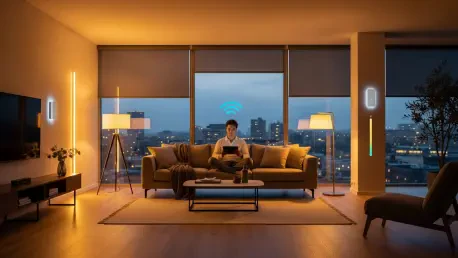

The dream of a fully automated living space once required extensive electrical work and permanent structural modifications that excluded a vast portion of the population from enjoying modern conveniences. For years, the smart home market functioned as an exclusive club where membership was determined by property ownership and the willingness to endure invasive construction projects. However, the current landscape has undergone a dramatic transformation as manufacturers prioritize non-permanent installations that cater to the modern mobile lifestyle. This shift toward no-drill technology represents a fundamental democratization of home automation, allowing residents to upgrade their environments without picking up a power drill or risking their security deposits. By focusing on adhesive mounts, tension rods, and battery-powered components, companies are removing the friction that once defined the industry. This evolution ensures that sophisticated features like automated lighting are no longer reserved for high-end homeowners but are available to everyone who desires a smarter life.
Removing Entry Barriers: The Shift toward Accessible Home Automation
For decades, the most significant obstacle to adopting home automation was the perceived and actual cost of professional installation alongside the potential for permanent damage to window frames or walls. Renters, who make up a substantial segment of the urban population, found themselves particularly disadvantaged because standard lease agreements typically prohibit any alterations that involve drilling or permanent fixtures. Even for homeowners, the prospect of hiring a contractor to wire motorized blinds or install smart security sensors often meant the labor costs surpassed the price of the gadgets themselves. This created a stagnant market where innovation was throttled by the physical limitations of the building materials and the legal constraints of property management. The emergence of high-quality, no-drill alternatives has finally broken this cycle by offering a path to automation that requires zero tools and leaves no evidence of installation once the hardware is removed.
Innovative engineering has replaced the traditional screw-and-bracket method with sophisticated tension-based mounting systems that secure heavy components through lateral pressure alone. These systems are designed to fit snugly within existing window frames or doorways, utilizing high-grade rubberized grips and telescoping rods that provide a rock-solid foundation without a single hole being bored. Such designs allow users to unpack a product and have it fully operational in less than ten minutes, which is a staggering improvement over the multi-hour professional setups of the past. Furthermore, the portability of these devices adds a new layer of value to the purchase; when a resident decides to relocate, they can simply compress the mounting hardware and take their smart investment with them to a new home. This move from permanent infrastructure to personal property has fundamentally changed how consumers perceive the value of smart hardware, treating it more like an appliance than a renovation.
Optimizing the Interior Environment: Efficiency and Safety Benefits
Accessibility in the smart home sector is not just about the ease of installation but also about providing functional benefits that improve the quality of life for diverse households. No-drill motorized shades, for example, often incorporate advanced honeycomb or cellular fabric designs that act as a high-performance thermal barrier between the window glass and the room. This structural design traps air in distinct pockets, creating an insulating layer that significantly reduces heat transfer during both the peak of summer and the depths of winter. By stabilizing indoor temperatures, these smart systems allow users to lower their reliance on energy-intensive HVAC units, leading to a measurable reduction in monthly utility costs that helps the technology pay for itself over time. For individuals living in older apartments with poor insulation, this specific application of no-drill technology provides a vital solution that was previously unavailable without major structural upgrades.
The impact of these automated systems extends into the realms of personal health and household safety, areas where traditional window treatments often fall short of modern standards. By integrating light sensors and scheduled routines, no-drill smart shades help residents regulate their circadian rhythms through precise control of natural light exposure, which is essential for maintaining consistent sleep hygiene. In a household environment, the transition to motorized, no-drill units also addresses a critical safety vulnerability by completely eliminating the need for manual pull cords. These dangling cords have historically posed a significant strangulation risk to curious toddlers and pets, leading to various safety regulations that have pushed the industry toward cordless designs. By combining these safety features with the ease of a tool-free setup, manufacturers are providing families with a comprehensive solution that ensures the home remains a secure sanctuary without compromising on style.
Establishing a Resilient Ecosystem: Strategic Implementation and Outcomes
From 2026 to 2028, the market prioritized seamless integration with established digital ecosystems rather than forcing users into proprietary silos. Most modern no-drill devices were built to be compatible with industry-standard protocols and platforms like Tuya or Smart Life, which facilitated immediate connection to voice assistants such as Amazon Alexa and Google Home. This interoperability was crucial because it allowed beginners to start small with a single device and gradually expand their smart home network as their needs or budget allowed. Because these devices often utilized Zigbee or Thread connectivity, they provided a reliable and low-latency experience that did not bog down the local Wi-Fi network, ensuring that commands were executed instantly. This focus on open standards and easy pairing processes effectively lowered the technical knowledge required to build a complex, responsive home environment.
The shift toward no-drill technology redefined how residents interacted with their living spaces by removing the most persistent barriers to entry in the home automation market. For those who sought to enhance their environments, the first step involved assessing specific needs, such as light control or thermal efficiency, before selecting devices compatible with their existing smartphones. Consumers successfully navigated the market by prioritizing products that utilized universal protocols like Matter or Zigbee, which ensured that their new hardware worked harmoniously with future additions. It was helpful to maintain a centralized hub or app that consolidated various devices, reducing the friction of managing multiple third-party interfaces. By choosing reputable brands that offered transparent warranties and clear installation guides, users avoided the pitfalls of low-quality imitations. Ultimately, the adoption of these non-permanent solutions allowed for a more flexible and personalized home that evolved alongside the user.