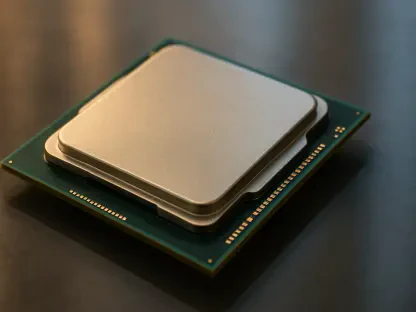

The rapid evolution of the Internet of Things into the realm of Physical AI represents a fundamental shift in how digital systems interact with our tangible world. While earlier iterations of technology focused primarily on the basic connectivity of everyday objects to the cloud, the emergence of Physical AI has fundamentally redefined the relationship between digital intelligence and the material world. Today, the priority has moved beyond mere data collection toward the creation of systems capable of perceiving, reasoning, and acting within physical environments without constant human intervention. This transformation requires a sophisticated blend of high-performance computing and robust mechanical engineering to ensure that autonomous agents can navigate the complexities of real-world variables safely. As industries integrate these advanced capabilities, the focus sharpens on the necessity for reliable decision-making at the point of action rather than waiting for a remote server to process critical instructions in high-stakes moments.
Navigating the Complexity: The System of Systems Architecture
Modern autonomous hardware no longer functions as a collection of isolated components but rather as a highly integrated system of systems that mimics biological sensory coordination. Engineers must now synchronize high-resolution cameras, sophisticated LiDAR arrays, and complex motor controllers in real time to allow a device to understand and move through its surroundings effectively. This shift has rendered traditional modular design obsolete, as the latency introduced by fragmented communication between parts can lead to catastrophic failures in high-stakes environments like surgical suites or busy warehouses. Success in this era depends on a holistic architectural strategy where every layer of the technology stack, from the silicon to the application software, operates in perfect concert. This integration ensures that a robot can process visual data and adjust its mechanical torque in milliseconds, reflecting a level of responsiveness that was previously impossible. Such a unified approach is essential for scaling sophisticated automation across various sectors.
Achieving this level of synergy requires developers to adopt advanced simulation environments that can accurately model the physical stressors a device will face during its operational life. By creating digital twins that account for gravity, friction, and variable lighting, teams can refine the interplay between AI models and physical actuators before a single prototype is manufactured. Furthermore, the convergence of hardware and software design means that specialized neural processing units are being tailored to specific mechanical tasks, optimizing the flow of information across the entire device. This tight coupling of physical and digital layers allows for a more intuitive form of machine intelligence that feels less like a programmed sequence and more like a reactive behavior. As these systems grow more complex, the ability to manage the massive influx of sensor data without overwhelming the central processor becomes the primary benchmark for engineering excellence. This methodology ensures that physical agents can handle unpredictable human environments with precision.
Maximizing Operational Efficiency: The Power of Edge Intelligence
One of the most persistent challenges in the development of Physical AI involves maintaining high-level computational power within devices that must operate for years on a single battery charge. The historical reliance on cloud-based processing is rapidly fading as developers embrace edge intelligence to execute complex machine learning tasks directly on low-power silicon. This transition to local processing significantly reduces the energy overhead associated with constant data transmission and eliminates the latency issues inherent in remote server communication. By running inference models locally, a device can remain in a deep-sleep state until a specific acoustic or visual trigger is detected, at which point it activates only the necessary subsystems to respond. This selective activation is crucial for industrial sensors located in remote areas where frequent battery replacement is logistically impossible. Consequently, the focus of semiconductor design has shifted toward maximizing TOPS per watt to meet these requirements.
Beyond energy savings, localized intelligence offers a profound improvement in data privacy and operational resilience for mission-critical infrastructure. When a device processes its own sensory input without uploading it to a centralized server, the surface area for potential data breaches is drastically minimized, which is a vital consideration for medical devices and smart home security systems. This decentralized model also ensures that the hardware remains fully functional even in environments with poor or nonexistent network connectivity, such as underground mines or high-altitude research stations. As machine learning models become more compact and efficient, even the smallest microcontrollers are now capable of performing sophisticated pattern recognition that once required a full server rack. This democratization of intelligence allows for the deployment of vast fleets of autonomous tools that can coordinate with one another locally, creating a mesh of smart agents that are as robust as they are energy-efficient.
Defining Future Readiness: Security and Reliability as a Standard
As the role of AI-driven hardware expands from passive monitoring to active physical intervention, the consequences of a software glitch have shifted from being a minor inconvenience to a potential safety hazard. To address this risk, the industry is increasingly moving away from monolithic operating systems toward microkernel architectures that provide strict isolation between different software tasks. In such a design, the failure of a non-essential service, such as a user interface or a diagnostic logger, cannot interfere with the core kernel functions responsible for physical motion or emergency braking. This compartmentalization ensures that even if one part of the system experiences a critical error, the machine remains under control and can initiate a safe shutdown procedure. This level of reliability is non-negotiable for autonomous vehicles and robotic surgical assistants where a single millisecond of unresponsiveness can have life-altering repercussions. Developers are prioritizing deterministic execution to ensure commands are processed reliably.
The maturation of the industry throughout the period from 2026 to 2028 was defined by a decisive move toward decentralized intelligence, which effectively addressed the latency and cost barriers that restricted large-scale autonomy. Industry leaders shifted their focus toward a software-first mindset, ensuring that the physical chassis of a machine could support multiple generations of AI models without requiring expensive hardware replacements. This approach allowed for the continuous improvement of device capabilities through remote updates, which extended the economic value of every deployed unit. Moving forward, organizations prioritized the standardization of communication protocols to ensure seamless interoperability between different robotic fleets and sensor networks. Investing in robust edge-native architectures became the primary path for maintaining a competitive edge in an increasingly automated world. Engineers succeeded in bridging the gap between digital logic and physical reality, creating a foundation for systems that were not only smarter but also inherently more secure.