
Maintaining a presence in low Earth orbit requires a relentless cycle of mundane checks and logistical balancing that often hinders the scientific potential of expensive human crews. As orbital habitats become more complex, the reliance on manual labor for basic infrastructure upkeep is proving to be a bottleneck for deep-space exploration and commercial expansion. To address this challenge, Icarus Robotics has unveiled its flagship autonomous platform, JOY, a free-flying robot designed to navigate the interior of the International Space Station independently. This initiative represents a fundamental shift in how space agencies approach station management, moving away from labor-intensive manual workflows toward a more integrated, robotic-driven ecosystem. By partnering with KULR Technology Group for specialized power solutions, Icarus aims to prove that autonomous systems can handle the heavy lifting of orbital maintenance safely and efficiently. This effort is not merely a technical demonstration but a strategic pivot toward sustainable long-term habitation.
Redefining Station Operations and Human Utility
Delegating Routine Maintenance: The Shift to Automation
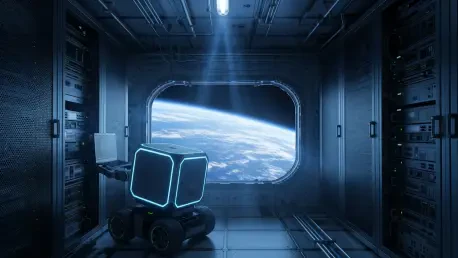
The JOY robot functions as a production-ready autonomous assistant that navigates the complex interior of the International Space Station without direct human guidance. Utilizing advanced visual and spatial sensors, the platform can move freely through the pressurized modules to perform repetitive, time-consuming tasks that currently occupy a significant portion of an astronaut’s schedule. By delegating infrastructure maintenance and mundane operational duties to a robotic unit, the station can function more like a modern smart facility, where background logistics are handled by automated systems rather than the crew.
This transition allows for a scalable orbital environment where robots handle the busywork, ensuring that the station remains operational around the clock with minimal oversight. When the burden of daily chores is removed from the flight manifest, the efficiency of station operations increases exponentially. This allows the orbital laboratory to maintain its peak performance levels without requiring constant intervention from ground control or the on-board personnel. The integration of such technology ensures that every component of the station is monitored and serviced by a tireless, data-driven entity.
Maximizing Scientific Output: Reclaiming Astronaut Time
Time remains the most expensive resource in space, with the cost of maintaining a single human crew member estimated at roughly $130,000 per hour. Currently, much of that time is spent on basic survival activities, health maintenance, and administrative chores rather than groundbreaking science. By handing these “dull and dirty” jobs over to the JOY platform, astronauts can shift their focus back to high-value research and complex mission objectives. This shift significantly improves the return on investment for space agencies and private partners by maximizing the scientific output of the crew.
The reallocation of human cognitive energy toward complex experiments and biological studies represents a major leap in orbital productivity. Instead of spending hours checking air filters or inventorying supplies, specialists can dedicate their expertise to refining manufacturing processes in microgravity or conducting pharmaceutical research. This approach fundamentally changes the economics of space travel, as the human presence becomes a driver for innovation rather than a maintenance necessity. By optimizing every minute spent in orbit, the overall progress of space exploration moves at a much faster pace.
Technical Reliability and Safety Architecture
Powering Orbital Mobility: High-Density Energy Systems
The technical success of these robots depends heavily on reliable power, leading Icarus to choose KULR Technology Group’s specialized battery systems for the platform. These KULR ONE Space units are favored because of their extensive flight heritage, having already been validated through NASA’s Artemis lunar missions. The batteries offer high energy density while remaining lightweight, which is essential for minimizing launch costs and maximizing the robot’s flight time between charges. This specialized hardware ensures that the JOY robot can operate continuously without frequent power-related downtime.
Furthermore, by utilizing domestic engineering and production, the project ensures a secure and reliable supply chain for mission-critical hardware. The integration of flight-proven battery tech reduces the risk of mission failure by utilizing components that have already withstood the harsh environment of space. The partnership between Icarus and KULR demonstrates a commitment to utilizing the most robust technology available, ensuring that the robot can perform its duties reliably over multiple mission cycles. This synergy between robotics and energy storage is the backbone of the next generation of autonomous orbital logistics.
Safety Engineering: Mitigating Risks in Pressurized Environments
Safety is the top priority when operating high-energy electronics near a human crew, especially since NASA classifies large battery systems as potentially catastrophic. To meet strict safety standards, the battery incorporates passive propagation resistance technology. This design ensures that if a single battery cell fails or overheats, the event is contained, preventing a fire from spreading to adjacent cells. This level of protection allows the JOY robot to operate safely within the pressurized, oxygen-rich environment of the space station without risking the lives of the astronauts.
Implementing such rigorous safety protocols is necessary because any thermal event in a closed environment could have devastating consequences for the station’s life support systems. The passive propagation resistance provides a hardware-level guarantee of safety that does not rely on active cooling or external software intervention. By neutralizing the threat of thermal runaway, the development team has created a platform that can coexist with humans in tight quarters. This engineering philosophy sets a new benchmark for how robotic systems should be integrated into manned habitats, prioritizing crew safety above all else.
Strategic Evolution of Orbital Autonomy
Phased Integration: Moving Toward Full Independence
The rollout of the JOY robot follows a cautious, step-by-step approach to ensure long-term success and build trust within the aerospace community. During the JOYRIDE-1 mission, the robot will be crew-tended, meaning astronauts will manually plug the unit into power sources to charge it. This phase allows the team to build an operational history and prove the robot’s reliability in a real-world setting before moving to the next level of complexity. It serves as a testing ground for the software and hardware integration within the station’s unique environmental conditions.
Once the system has established a solid track record and passed further safety clearances, future versions will transition to autonomous docking and self-charging. This incremental rollout strategy reduces the initial complexity and allows for data-driven adjustments based on actual orbital performance. By proving the platform’s utility in a controlled, supervised manner, the team ensures that the path toward full independence is paved with verified successes. This phased approach also allows the crew to become comfortable working alongside a free-flying robot, establishing a collaborative dynamic that is essential for future operations.
Future Implications: Scaling the Off-World Economy
The successful integration of autonomous robotics established a new baseline for how orbital habitats were managed and sustained. This transition proved that delegating maintenance tasks to robots effectively lowered the operational barriers for commercial space stations and private research facilities. By utilizing flight-proven power systems and safety protocols, the project demonstrated that robotic labor was both safe and economically viable for long-duration missions. Stakeholders looked toward the future by standardizing docking interfaces and software protocols to allow for cross-platform robotic cooperation across different station modules.
Future considerations focused on the implementation of multi-unit robotic swarms that could handle larger construction projects in orbit. This evolution suggested that the next logical step was the development of modular robots capable of self-repair and material handling in open-space environments. The data gathered during the initial missions provided the insights necessary to scale these systems for lunar gateway operations and beyond. As the industry moved forward, the reliance on robotic assistants became a standard requirement for any sustainable human presence among the stars, ensuring that exploration remained the primary focus of orbital crews.