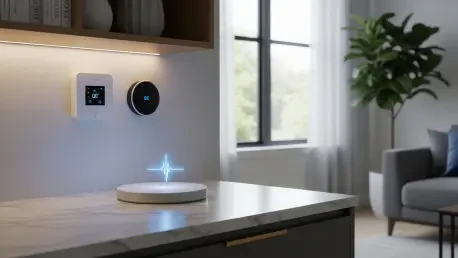

The traditional interaction model where users speak isolated commands to a plastic cylinder is rapidly fading into technological history as generative intelligence takes center stage. In this current landscape, the integration of Gemini AI into the smart home ecosystem represents a fundamental shift from a reactive assistant to a proactive orchestrator of daily life. For years, users tolerated the rigid syntax required to dim lights, but the arrival of sophisticated large language models has introduced a level of nuance previously reserved for human conversation. This transformation involves a profound understanding of intent, context, and the subtle relationships between different household devices. As the digital and physical worlds continue to merge, the ability of a home system to reason through complex requests—such as preparing a room for a specific mood or managing energy consumption—has become the standard for modern living, ensuring that technology serves the resident with unprecedented efficiency.
Cognitive Reasoning and Personalized Interaction
Intent Recognition: Moving Beyond Scripted Responses
Gemini AI brings a level of cognitive depth that allows the smart home to interpret vague or multi-part instructions with remarkable precision. Instead of requiring a specific phrase to trigger a routine, the system now analyzes the semantic meaning behind a user’s words, allowing for a more natural flow of communication. For example, telling the assistant that the kitchen is a mess after a dinner party can now trigger a sequence of events including activating the robot vacuum, brightening the task lights, and setting a reminder to take out the trash. This shift toward intent-based processing means that the technology adapts to the human, rather than forcing the user to learn a specific vocabulary. Furthermore, the AI can now handle follow-up questions without needing the wake word repeated, maintaining the context of the conversation across several minutes. This continuity makes the interaction feel like a genuine dialogue, reducing the friction that previously hindered the adoption of smart automation.
Memory Persistence: Foundations of Proactive Assistance
Another significant leap forward involves the implementation of long-term memory and pattern recognition that respects user privacy while enhancing utility. Unlike earlier versions of home assistants that treated every interaction as a fresh start, the current iteration of Gemini can remember past preferences and apply them to future scenarios. If a resident consistently asks for the thermostat to be lowered during a specific television show, the AI identifies these recurring patterns and begins to suggest or automate these adjustments before they are even requested. This proactive nature is supported by on-device processing which ensures that sensitive behavioral data remains within the local network whenever possible. By synthesizing information from various sensors—such as motion detectors and ambient light meters—the system constructs a comprehensive understanding of the household’s rhythm. This leads to a personalized environment where the home essentially learns the lifestyle of its occupants, maximizing comfort.
System Orchestration and Device Interoperability
Seamless Integration: The Impact of Unified Communication
The role of Gemini AI extends far beyond simple voice control, acting as the central intelligence that bridges the gap between disparate hardware manufacturers and protocols. With the widespread adoption of the Matter standard, the AI can now orchestrate a symphony of devices that were previously siloed within their own proprietary applications. This creates a unified experience where a smart oven from one brand can communicate seamlessly with a ventilation system from another, all managed through the reasoning capabilities of the central hub. The AI does not just flip switches; it monitors the state of the entire home to ensure optimal performance and safety. For instance, if the system detects an unusual power draw while the occupants are away, it can cross-reference this with historical data to determine if there is a potential fault. This level of cross-device coordination transforms a collection of gadgets into a cohesive, intelligent environment that requires minimal manual intervention to maintain.
Future Implementation: Strategies for a Smarter Living Space
Reflecting on the rapid advancements in home intelligence, it became clear that the most successful implementations were those that prioritized architectural flexibility and data security. To fully capitalize on the capabilities of Gemini, early adopters focused on building a robust network infrastructure that could handle the high data throughput required for real-time AI processing. They also prioritized devices that supported universal protocols, ensuring that the central intelligence had unfettered access to every corner of the domestic ecosystem. Looking ahead, homeowners must consider conducting a thorough audit of their current hardware to identify bottlenecks that might limit the effectiveness of generative reasoning. Investing in high-quality sensors and ensuring a reliable mesh Wi-Fi network were essential steps for those looking to transition to an autonomous home. This proactive approach allowed users to bypass the frustrations of fragmented systems, creating a space where technology anticipated needs.