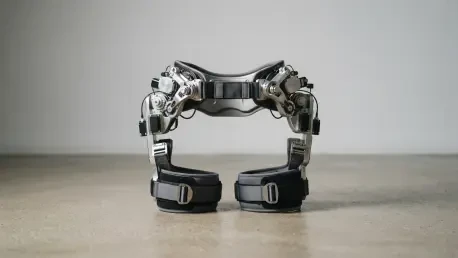

Bilateral hip-targeted robots are frequently utilized in Parkinson’s disease research to directly influence stride length and cadence in patients experiencing mobility decline. This specific application represents a broader paradigm shift in neurorehabilitation, where the focus has moved from heavy, tethered machinery toward lightweight, portable wearable robots. In the current landscape of 2026, these non-weight-bearing lower-limb robots are revolutionizing how clinicians approach gait impairments. Unlike the bulky exoskeletons of the past that required overhead suspension systems to carry a patient’s weight, modern devices are engineered for ambulatory individuals who can walk but struggle with biomechanical inefficiencies. These systems integrate sophisticated sensors and low-profile actuators that provide mechanical assistance at critical moments in the gait cycle. By targeting specific joints like the hip, knee, or ankle, these robots aim to restore normative movement patterns, effectively bridging the gap between clinical intervention and functional independence. This evolution signifies a move toward more personalized, community-integrated technology that adapts to the user’s natural environment rather than forcing the user into a sterile, laboratory-bound setting.
Distinguishing Assistive and Rehabilitative Outcomes
The evaluation of wearable robotics requires a formal distinction between two types of robotic impact: assistive and rehabilitative effects. Assistive effects describe the real-time improvements in gait performance that occur while the individual is actively wearing the device. These changes are often categorized into immediate assistive effects, which appear during the very first encounter with the machine, and adaptive assistive effects, which emerge as the user learns to synchronize their biological movements with the robot’s power delivery. For many patients, the feeling of motor-driven torque assisting their stride can be initially jarring, but the nervous system typically adapts within several sessions. This synchronization is crucial because the goal is not for the robot to replace the user’s effort, but to augment it in a way that minimizes metabolic cost and maximizes stability. When a device is tuned correctly, the user and the machine operate as a single biomechanical unit, allowing for faster walking speeds and longer distances than the user could achieve unassisted.
Conversely, rehabilitative effects refer to the lasting changes in an individual’s unassisted walking ability after a period of robot-assisted training has concluded. These effects are the primary goal of neuroplasticity-focused therapy, aiming to leave the patient better off even when the technology is removed. While making a person walk faster while wearing a device is a significant achievement, the true measure of clinical success is whether those gains persist in daily life. Research indicates that rehabilitative gains are driven by repetitive, high-quality movement patterns that the robot helps facilitate. By ensuring that every step taken during a therapy session adheres to a normative kinematic profile, the robot helps “teach” the brain and spinal cord how to move efficiently again. However, the transition from assistive success to sustained rehabilitative improvement remains complex, as it requires the nervous system to retain these patterns without the continuous mechanical cues provided by the wearable device.
Stroke Recovery: Targeted Ankle Intervention Research
Stroke remains the most heavily researched condition in the field of wearable robotics, accounting for nearly seventy percent of the existing clinical literature. The consensus among researchers indicates a strong emphasis on unilateral assistance, reflecting the hemiparetic nature of post-stroke gait where one side of the body is significantly more affected than the other. The ankle joint has emerged as the most frequent target for these interventions, primarily to address two debilitating issues: paretic propulsion and foot clearance. Paretic propulsion refers to the inability of the stroke-affected limb to push off the ground effectively, while foot clearance issues lead to “toe drag” during the swing phase, which is a major cause of trips and falls. Wearable robots designed for the ankle can provide a burst of power during push-off and active dorsiflexion to lift the toes, significantly improving safety and walking efficiency. These devices allow stroke survivors to practice gait patterns that would be impossible to achieve through traditional physical therapy alone.
Despite the clear benefits of ankle-targeted robots, the data also reveals a high level of inter-individual variability among stroke survivors. Not every patient responds to robotic assistance in the same way, suggesting that a “one-size-fits-all” mechanical intervention is often insufficient. For instance, while robotic assistance can increase the range of motion in the ankle joint, it does not always lead to a more efficient metabolic state or a faster walking speed for every user. In some cases, the user’s nervous system may struggle to integrate the external force, leading to a “fighting” effect where muscle activity actually increases to resist the robot’s movement. This variability highlights the necessity for control algorithms that can be customized to the specific muscular and neural profile of each survivor. Moving forward, the industry is shifting toward more intelligent systems that can detect this resistance and adjust torque levels in real time to better align with the user’s unique biomechanical needs.
Cerebral Palsy: Addressing Pediatric Growth and Coordination
In the context of cerebral palsy, the research focus shifts toward bilateral interventions, as conditions like diplegia often affect both lower limbs simultaneously. These interventions predominantly target the knee and ankle to address “crouch gait,” a common deficit characterized by excessive knee flexion and a lack of upright stability. Wearable robots for this population are designed to provide extension assistance, helping the child maintain a more normative posture during the stance phase of walking. A significant finding in recent studies is the “kinematic chain” effect, where providing mechanical assistance at the knee often produces beneficial ripple effects at the hip and ankle. This suggests that localized robotic intervention can improve global gait patterns by correcting the primary biomechanical bottleneck. By promoting a more upright stance, these robots also reduce long-term strain on the joints, potentially delaying or preventing the secondary orthopedic complications that often arise as children with cerebral palsy reach adulthood.
Beyond providing simple movement assistance, many pediatric studies are now exploring the use of resistance-based training to improve muscle force-generating capacity. By having the robot provide mechanical resistance rather than assistance, the device acts as a sophisticated strength-training tool that challenges the muscles in a functional context. This approach is particularly promising for children who have the neural coordination to walk but lack the raw muscular strength to maintain an efficient gait. However, a major hurdle in this area is the engineering of devices that can accommodate the rapid physical growth and anatomical diversity of children and adolescents. A robot that fits a ten-year-old perfectly may be unusable six months later, necessitating modular and adjustable designs. The development of scalable hardware that can grow with the patient is currently a top priority for engineers working in pediatric neurorehabilitation, as it ensures that the benefits of robotic therapy can be maintained throughout the critical years of physical development.
Managing Parkinson’s Disease: Mobility and Environmental Challenges
Research into Parkinson’s disease consistently utilizes bilateral hip-targeted robots to influence stride length and cadence, which are the two primary areas of decline in this population. Because Parkinson’s affects the basal ganglia’s ability to regulate internal timing, patients often experience a shortening of steps and an increase in step frequency, leading to an unstable and inefficient gait. Robotic assistance at the hip can provide a mechanical “rhythm” that helps the user regulate movement, effectively acting as an external pacer. The evidence suggests that the effectiveness of these robots is closely tied to the baseline severity of the disease, with patients at different stages of the Hoehn and Yahr scale showing varying levels of responsiveness. For those in the early to middle stages, the robot can significantly improve walking speed and endurance, allowing for greater participation in social and physical activities that are essential for maintaining overall health and slowing disease progression.
One of the most promising applications of wearable robotics in Parkinson’s care involves the management of “Freezing of Gait,” a sudden and distressing inability to move the feet despite the intention to walk. Emerging studies indicate that wearable robots can help “break” or even prevent these freezing episodes by providing a sudden mechanical cue or a burst of torque that triggers a stepping response. This is particularly valuable in unpredictable outdoor environments where environmental triggers, such as doorways or crowds, often induce freezing. However, the synthesis of current research points out a major limitation in this subfield: the relative lack of large-scale control groups. To move this technology from the research lab to standard clinical practice, it is necessary to conduct more rigorous trials that compare robotic interventions directly against traditional physical therapy. Establishing specific scenarios where a robot outperforms a human therapist will be key to securing insurance coverage and wider clinical adoption for patients dealing with complex movement disorders.
Identifying Gaps: Sclerosis and Spinal Cord Injury Research
The current body of research identifies multiple sclerosis and incomplete spinal cord injury as significantly underrepresented areas within the wearable robotics landscape. In multiple sclerosis, the primary challenge is the extreme heterogeneity of the disease; lesions in different parts of the central nervous system result in vastly different gait pathologies, from balance issues to localized muscle weakness. Most current studies apply a standardized knee-targeted approach, which often fails to address the specific coordination deficits of the individual. This “one-size-fits-all” methodology is particularly problematic for a progressive disease where the patient’s needs may change from month to month. To address this, the industry must move toward phenotype-specific recruitment in clinical trials, grouping patients by their specific gait deficit—such as foot drop or knee instability—rather than their general medical diagnosis. This would allow for the development of more targeted robotic interventions that address the actual functional limitations of each patient.
In the case of incomplete spinal cord injury, the research is even more sparse, and there is a critical lack of granular biomechanical data to explain how robots interact with damaged neural pathways. While robots can help maintain joint health and provide some functional gains, the mechanism by which they facilitate neural recovery is not yet fully understood. There is a pressing need for studies that combine robotic gait training with advanced imaging or electrophysiological monitoring to see how the spinal circuits respond to mechanical assistance. Furthermore, many individuals with spinal cord injuries require a higher level of balance support than current non-weight-bearing robots provide. Future developments must focus on hybrid systems that offer both joint assistance and stability cues without returning to the bulky, restrictive designs of previous generations. Bridging these gaps will require a multidisciplinary approach involving neurologists, engineers, and physical therapists to ensure that the technology meets the complex needs of those with severe neurological damage.
Neural Integration: Personalization Through AI and BCIs
The integration of Brain-Computer Interfaces represents the next frontier in the evolution of wearable robotics, moving the field toward a more intuitive and restorative form of therapy. By using sensors to decode the user’s motor intention, these robots provide assistance that is perfectly timed with the individual’s own neural signals. This “intention-contingent” assistance synchronization leverages Hebbian plasticity—the biological principle that neurons which fire together, wire together. By ensuring that the mechanical movement of the limb matches the electrical activity in the brain, these devices help to rewire damaged neural circuits more effectively than passive assistance ever could. This transition moved the wearable robot from being a simple assistive tool into a truly restorative therapeutic device, capable of facilitating long-term neural recovery. The shift toward this level of integration required massive leaps in signal processing and sensor reliability, but the results in early clinical trials showed a significant improvement in the rate of functional recovery.
Furthermore, the implementation of “human-in-the-loop” optimization allowed control algorithms to automatically adjust assistance based on real-time feedback from the user’s metabolic rate and muscle activity. This meant that the robot no longer operated on a fixed program but instead evolved alongside the user during every session. If the system detected that the user was becoming fatigued, it increased torque to prevent a breakdown in gait quality; conversely, if the user showed signs of improvement, the robot gradually reduced its assistance to encourage more active participation. This dynamic adjustment was crucial for maximizing the rehabilitative potential of each session. To ensure continued progress, clinicians and engineers established standardized protocols regarding the intensity of robotic training and the specific metrics used to define success. These actionable steps paved the way for wearable robotics to move beyond the laboratory and into the daily lives of millions, providing a permanent path toward functional recovery and independent mobility.