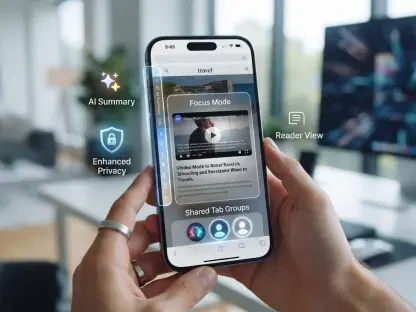

The traditional boundaries between hardware and software have effectively dissolved following the announcement of iOS 27, which marks the most significant architectural shift in the history of the Apple ecosystem by placing generative artificial intelligence at its very core. This update moves beyond the iterative improvements of previous years to establish “Apple Intelligence” as the primary interface through which users interact with their digital lives across the entire device lineup. Rather than a collection of disparate applications, the operating system now functions as a unified, proactive environment designed to anticipate needs and streamline complex workflows automatically. By leveraging a strategic collaboration with industry leaders in large language models, the technology giant has successfully transformed its virtual assistant into a deeply integrated agent capable of nuanced reasoning and cross-application execution. This shift signals a departure from the command-based interactions that defined the last decade, favoring a more intuitive partnership where the device understands context and intent.
Evolutionary Dynamics: Interaction and Intelligence
The Evolution: The Persistent Siri Agent
The introduction of a standalone application for the virtual assistant represents a fundamental departure from the ephemeral pop-up interfaces that previously limited user engagement and productivity. This new dedicated space adopts a conversational layout similar to iMessage, utilizing persistent chat bubbles that allow individuals to maintain an ongoing dialogue with the underlying artificial intelligence. By preserving the history of requests and responses, the system enables users to refer back to previous information or resume complex tasks without having to re-establish the context of the conversation. This design philosophy acknowledges that human-computer interaction is no longer a series of isolated commands but a continuous process of refinement and collaboration. Furthermore, the integration of advanced natural language processing allows the assistant to handle follow-up questions with a high degree of accuracy, mimicking the flow of a real conversation while executing tasks across the system with unmatched speed.
Interaction Continuity: Cross-Device Synchronization
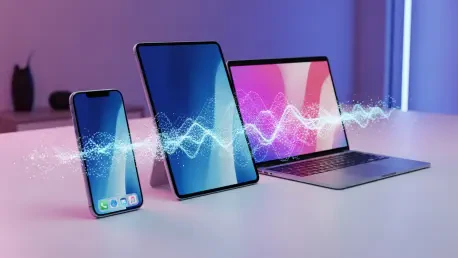
Seamless continuity across the entire hardware ecosystem ensures that the intelligence residing on the iPhone is equally accessible and informed on the iPad and Mac through advanced iCloud synchronization. When a user initiates a multi-step project or a detailed inquiry on one device, the state of that interaction is instantly mirrored across all other logged-in hardware, allowing for a frictionless transition between different physical environments. This persistent memory is crucial for maintaining the “Apple Intelligence” framework, as it ensures the assistant remains aware of recent activities and preferences regardless of the specific screen being used at any given moment. Consequently, the digital partner becomes a ubiquitous presence, moving beyond the confines of a single handset to become a cohesive layer that binds the various elements of the user’s digital life together. This synchronization strategy not only enhances convenience but also reinforces the utility of the broader ecosystem as a single, unified computing platform for all tasks.
Design Paradigms: Aesthetics and Efficiency
Visual Innovation: Liquid Glass and UI Dynamics
Visual innovation in this latest software iteration is characterized by the “Liquid Glass” design language, which creates a sophisticated aesthetic of depth and translucency across the entire user interface. A primary manifestation of this style is found in the Dynamic Island, where the assistant now resides as a “Search or Ask” bubble that expands elegantly into a translucent window when providing detailed results or suggestions. Users are granted unprecedented control over the visual presentation, including a dedicated transparency slider that adjusts the intensity of the glass effects to suit individual lighting conditions or personal preferences. Beyond aesthetics, the vocal output of the assistant has been enhanced with granular parameters that allow for the adjustment of speech pace and tonal expressiveness. These customization options ensure that the interaction feels more natural and less like a mechanical response, bridging the gap between human communication and digital execution in a way that feels organic and highly personalized for every user.
Integrated Workflow: Generative Tools and Automation
Core system functions now benefit from integrated “Write with Siri” and “Ask Siri” capabilities, which provide powerful generative text and analysis tools directly within native applications like Mail and Notes. These features allow for the immediate drafting of professional correspondence, the summarization of lengthy academic documents, or the creation of complex automation shortcuts using nothing more than natural language requests. Additionally, a new intelligent utility for managing financial transactions leverages optical character recognition to scan physical receipts with remarkable precision. Once a document is scanned, the system can automatically identify individual costs and assign them to specific contacts within the user’s directory, facilitating the immediate distribution of payment requests via Apple Pay. This level of functional integration demonstrates how artificial intelligence is being used to solve practical, everyday challenges by removing the manual steps typically required for administrative tasks in a fast-paced environment.
Strategic Pathways: Implementation and Future Standards
Media Capabilities: Generative Editing and Content Search
The reimagined Photos application introduced a suite of sophisticated editing tools powered by the local generative model, enabling users to modify their visual media with unprecedented ease and creativity. Features such as distraction removal and perspective reframing allowed for the professional-level adjustment of images through simple descriptive prompts rather than complex manual controls. Furthermore, the search functionality within the library was overhauled to support generative queries, meaning users could locate specific memories by describing the visual content or emotional context of a photo. Alongside these creative advancements, the operating system introduced robust parental controls that offered guardians more precise oversight regarding digital boundaries and screen time management. These safety measures were designed to ensure that the power of generative intelligence was balanced with responsible usage, providing a secure environment for younger users to explore the new capabilities of their mobile devices as the ecosystem matured.
Operational Guidance: Hardware Gaps and Performance Standards
The transition to this advanced software necessitated a significant evaluation of hardware capabilities, as the computational demands of local generative artificial intelligence created a noticeable performance gap across the device lineup. While compatibility was maintained for older models such as the iPhone 11 for basic system updates, the most sophisticated elements of the Apple Intelligence framework were reserved for the iPhone 15 Pro and subsequent iterations. This restriction was primarily driven by the need for high-performance neural engines capable of processing complex data on-device to uphold stringent privacy standards. Consequently, users who sought the full conversational experience and advanced media tools found it necessary to upgrade to more modern hardware. The rollout of the public beta allowed early adopters to test these boundaries, while the official release in September provided a standardized experience for the broader population. This strategic hardware requirement underscored the shift toward more powerful edge computing solutions.
Future Considerations: Ecosystem Evolution and Mastery
Following the successful deployment of these features, the focus moved toward establishing long-term protocols for integrating AI-driven workflows into professional and creative environments. Organizations were encouraged to update their internal digital security policies to account for the increased use of generative text and automated data processing within native applications. Furthermore, users were advised to familiarize themselves with the new conversational paradigms to ensure they could leverage the assistant for complex logistical planning and high-level content creation. The emphasis shifted from manual application management to a more strategic model of digital oversight, where the device functioned as an intelligent partner in daily productivity. As the ecosystem continued to evolve, the integration of these tools served as a foundation for future advancements in augmented reality and predictive computing. Ultimately, the adoption of this technology represented a permanent change in the relationship between humans and their personal devices.