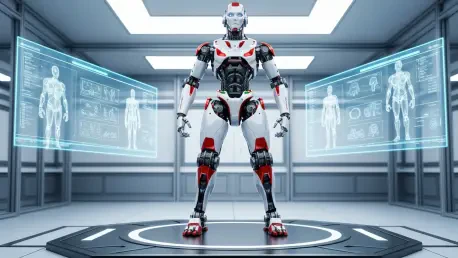

In a move poised to reshape the European deep tech landscape, Generative Bionics has successfully closed a landmark €70 million funding round, marking one of the most substantial investments in the continent’s burgeoning humanoid robotics sector. The Italian company, a spin-off from the renowned Italian Institute of Technology (IIT), attracted a formidable consortium of investors led by CDP Venture Capital’s Artificial Intelligence Fund. This powerful coalition, which includes strategic international and corporate partners such as AMD Ventures, Duferco, Eni Next, RoboIT, and Tether, signals profound confidence in the company’s vision to pioneer a new generation of intelligent, human-centric robots. This capital infusion not only validates two decades of advanced research but also provides the necessary fuel to transition from the laboratory to full-scale industrial deployment, positioning Generative Bionics as a major contender on the global stage.
The Vision and Technology Behind the Investment
Intelligent Humanoids for Industry
The primary mission fueled by this significant investment is the accelerated development and deployment of intelligent humanoid robots designed and manufactured entirely in Italy. Generative Bionics is targeting high-value industrial sectors where the integration of advanced robotics can yield transformative results, including manufacturing, logistics, healthcare, and retail. The robots are specifically engineered to undertake tasks that are characterized by high intensity, potential hazards, or monotonous repetition, which are often physically taxing and unsafe for human workers. By offloading these duties to capable robotic counterparts, the company aims to dramatically improve workplace safety, operational efficiency, and overall productivity. This strategic focus reflects a broad industry consensus that the most immediate and impactful applications for humanoid robots lie in augmenting and revolutionizing industrial and commercial workflows, creating a safer and more efficient environment for the human workforce.
This new paradigm is centered on a future where humanoid robots and humans collaborate seamlessly, enhancing both cognitive and physical capabilities within the industrial ecosystem. The vision extends beyond simple automation; it is about creating a synergistic partnership where robots handle the strenuous and dangerous aspects of a job, freeing human workers to focus on tasks requiring critical thinking, creativity, and complex problem-solving. In a manufacturing setting, for example, a humanoid could manage heavy lifting and precise, repetitive assembly in a hazardous area, while a human counterpart oversees quality control and process optimization from a safe distance. In logistics, these robots could navigate vast warehouses to retrieve and transport goods, reducing physical strain on employees and accelerating fulfillment processes. This collaborative model is designed not to replace human labor but to elevate it, fostering a more resilient, productive, and ultimately more human-centric industrial future.
A Strategic Path to Market
The technological backbone of Generative Bionics is not a recent breakthrough but the culmination of two decades of pioneering research and sophisticated prototyping at the Italian Institute of Technology. The company holds exclusive licenses to a portfolio of core technologies developed at IIT, including critical advancements from the Physical AI program. The humanoid platform is constructed upon three distinct yet interconnected technological pillars derived from foundational IIT projects like iCub, ergoCub, and iRonCub. The first pillar is an advanced sensory network, equipping the robots with extensive arrays of tactile and force sensors. This technology is indispensable for enabling safe, nuanced physical interaction with the environment and human collaborators. The second pillar is its innovative “Physical AI” architecture, a system that allows the robots to learn directly from physical interactions and environmental feedback, moving beyond rigid, pre-programmed routines toward genuine adaptability and intuitive operation. The final pillar consists of sophisticated AI algorithms designed to ensure robust performance even in extreme and unpredictable conditions, such as high-temperature environments or challenging outdoor settings.
With the €70 million in capital secured, Generative Bionics is embarking on a meticulously planned strategic roadmap to transition from a research-focused entity to a full-scale commercial enterprise. The funds will be strategically allocated across three critical areas to drive this transformation. A significant portion will support the continued advancement of their proprietary Physical AI systems, ensuring their technological edge remains sharp. Another key allocation will go toward the industrial validation of their humanoid models in real-world settings, a crucial step to prove their efficacy and reliability. Finally, the capital will finance the construction of the company’s first dedicated production plant, a vital component for scaling manufacturing capabilities. The company is already making tangible progress on its commercial strategy, with its first industrial deployment contracts reportedly being finalized. A public announcement detailing these initial deployments is anticipated in early 2026, marking a pivotal milestone as their humanoids enter active production environments.
A Global Ambition in a Booming Market
Seizing a Generational Opportunity
This substantial investment is strategically timed against the backdrop of an exponentially growing global market for humanoid robotics. Comprehensive international market analyses project that the sector will surge past €200 billion by 2035 and could potentially exceed an astonishing $5 trillion by 2050. This staggering market trajectory underscores what many stakeholders believe to be an “epochal transformation” in industry and labor. Within this dynamic and competitive landscape, Generative Bionics is not merely aiming to participate; its ambition is to establish itself as a definitive global leader, specifically carving out a niche in the domain of “Physical AI for human-centric humanoid ecosystems.” This specialized focus leverages their unique technological heritage and positions them to address the critical need for robots that can work safely and intelligently alongside people, a key differentiator in a market crowded with purely functional automatons. The company is betting that its human-centric design and advanced interaction capabilities will be the deciding factor for industries seeking true collaborative robotics.
The perspectives of key figures involved in the funding round reinforce this ambitious outlook, framing the venture as a strategic national imperative with global implications. Alessandro Scortecci of CDP Venture Capital characterized the investment as a “once-in-a-generation opportunity” for Italy to assert itself as a leader in defining the technological direction of this revolutionary sector. This sentiment highlights the belief that the company is more than just a promising startup; it is a strategic asset capable of anchoring a new industrial ecosystem within the country. The deep-rooted connection to national research infrastructure is a critical component of this strategy, transforming decades of public investment into a powerful engine for economic growth and technological sovereignty. This move is seen not just as a bet on a single company, but as an investment in a future where Italy and Europe play a central role in the next wave of industrial innovation, driven by advanced robotics and artificial intelligence.
From Laboratory to Global Stage
The successful launch of Generative Bionics was the culmination of a sustained, two-decade-long journey of publicly funded, cutting-edge academic research. The Italian Institute of Technology served as the crucible where the foundational concepts and technologies were forged, turning theoretical science into tangible prototypes. This long-term commitment to fundamental research, particularly through the Physical AI program developed in collaboration with INAIL, laid the essential groundwork for a commercially viable enterprise. The company’s formation represented the critical moment of technology transfer, where years of accumulated knowledge, patented innovations, and proven hardware were spun off into an entity designed to compete on the world stage. Giorgio Metta of IIT framed the company’s launch as the successful realization of this long-term vision, positioning it as the largest academic spin-off in Europe to enter the global market, a testament to the power of patient, strategic investment in science and technology.
Ultimately, the €70 million funding round served as a powerful validation of this entire process, affirming the value of the company’s technology, its expert team, and its strategic vision for the future. It demonstrated that a deep-tech venture, built upon a unique technological advantage rooted in Physical AI and advanced sensory capabilities, could attract significant private and institutional capital. The consensus among the company’s leadership, its investors, and its academic partners was clear: Generative Bionics represented a pivotal strategic asset for Italy and Europe. The capital infusion successfully equipped the company to transition from a research pioneer to a key commercial player in the nascent but rapidly accelerating humanoid robotics market. This milestone solidified its potential to become a global champion in a technology sector that is set to fundamentally redefine the future of industry and labor for generations to come.