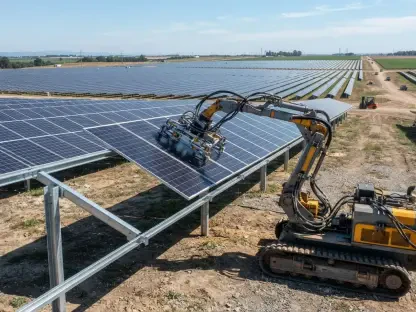

The Polish Ministry of Digital Affairs is now facing increased pressure to balance technological innovation with the preservation of human-centric employment sectors. On September 7, 2026, a landmark symbolic event occurred in Warsaw that pushed this conversation into the global spotlight. A coordinated demonstration, organized by the civic initiative known as Democratism, featured approximately thirty humanoid and quadrupedal robots gathered outside government offices. These machines, including the sophisticated Agibot A3 bipedal model, were not merely static displays but active participants, performing synchronized movements and carrying digital banners. The sight of robotic figures walking in formation created a visceral representation of the rapid integration of advanced machinery into the public square. By leveraging the very technology under debate, organizers sought to prove that the era of theoretical speculation regarding automation has ended and practical policy is needed.
The Socio-Economic Impact: Automation and Labor Trends
Cognitive Automation: The Erosion of White-Collar Security
The rapid advancement of robotics is no longer confined to the heavy lifting seen in traditional industrial environments or automotive manufacturing plants. Instead, the current wave of innovation is characterized by the integration of large language models and sophisticated sensory arrays into mobile robotic frames, creating machines capable of cognitive labor. This shift represents a fundamental change in the global economic landscape, as the distinction between physical and administrative work begins to dissolve. Systems equipped with advanced navigation and generative processing can now interpret complex instructions and conduct data analysis with a level of precision that was once exclusive to human professionals. As these machines become more versatile, they are being deployed in service sectors, logistics, and office management, posing a direct challenge to the job security of white-collar workers. This transition is occurring much faster than previously anticipated by analysts.
Systematic Risks: The Dangers of Uncontrolled Development
A primary concern articulated by observers is the danger of uncontrolled technological growth, which often outpaces the ability of government institutions to create effective safeguards. Without a regulatory framework to serve as a stabilizing mechanism, the rapid adoption of autonomous systems could lead to significant social friction and economic disparity. The Polish protest underscored the urgency of establishing a legislative “brake” to ensure that the deployment of robotics is managed with careful consideration for the human labor force. Proponents of stricter oversight argue that while innovation is essential for national competitiveness, it should not come at the expense of the social contract that sustains stable communities. The goal is to move away from a reactive stance where policy only follows after widespread disruption. Instead, the focus is shifting toward a proactive model of governance that anticipates technological shifts and prepares the workforce for a landscape where machines play a more prominent role.
Navigating the Legislative and Ethical Landscape
Regulatory Frameworks: Implementing the European Union’s AI Act
The timing of the recent robotic assembly in Warsaw aligned perfectly with the ongoing efforts within the European Union to implement the comprehensive AI Act. This pioneering legislative framework is designed to categorize artificial intelligence systems based on their risk levels, ranging from minimal to unacceptable, while imposing strict oversight on high-risk applications. For Poland, the challenge lies in translating these broad supranational guidelines into specific national policies that protect citizens without stifling the domestic tech industry. Government officials, including the Minister of Digital Affairs, have acknowledged the difficult task of fostering an environment where innovation can thrive while maintaining a safety-first approach. This involves creating new supervisory bodies tasked with monitoring the ethical deployment of autonomous machines in public and private spaces. By setting clear boundaries, the state aims to provide a predictable environment for companies while ensuring that progress remains aligned with human rights.
Legal Accountability: Closing the Responsibility Gap
One of the most complex ethical and legal questions facing modern regulators involves the growing “responsibility gap” inherent in autonomous systems. As robots gain the ability to make independent decisions based on real-time data inputs, determining liability for their actions becomes increasingly difficult for existing legal frameworks. Current laws are often ill-equipped to handle situations where an automated system causes economic harm or social disruption. Legislative bodies are now tasked with defining who is accountable—whether it be the software developer, hardware manufacturer, or the corporate end-user—when a machine deviates from its intended function. Establishing clear lines of responsibility is essential for maintaining public trust in new technologies and ensuring that victims of automated errors have a path to legal recourse. Addressing these accountability concerns is a critical step in building a sustainable future where machines are integrated into society in a way that is both transparent and ethically sound for all stakeholders.
Preparing for a Future of Human-Machine Collaboration
Adaptation Strategies: Reskilling and Social Protection
To navigate the coming transition effectively, governments and educational institutions must prioritize the development of robust reskilling programs that focus on uniquely human capabilities. The consensus among economic experts suggests that the future of work will likely involve a deep level of human-machine collaboration rather than the complete replacement of the human workforce. By focusing on skills such as emotional intelligence, complex problem-solving, and creative strategy, workers can complement the efficiency of automated systems. This requires a significant overhaul of traditional educational models to emphasize technical adaptability. Furthermore, the implementation of social safety nets is becoming a vital component of national policy to support individuals during periods of career transition. Ensuring that the economic gains generated by increased robotic productivity are distributed fairly across society is essential for preventing the concentration of wealth. These proactive measures are intended to create a resilient workforce for the future.
Defining Human Domains: Long-Term Socio-Economic Resilience
The demonstration in Warsaw effectively highlighted the necessity of defining specific sectors that required permanent human oversight for ethical and safety reasons. By establishing these human-only domains, regulators ensured that machines remained tools for enhancement rather than agents of total displacement. This approach demanded a proactive reimagining of the labor market, where the integration of technology was balanced with the fundamental need for social stability. Stakeholders recognized that a passive stance was no longer viable, leading to the creation of frameworks that prioritized the human element within a highly automated economy. Ultimately, the events surrounding the protest provided a roadmap for navigating the complexities of modern progress. The focus shifted toward long-term resilience, where the workforce was empowered to adapt to technological shifts through targeted educational initiatives. Legislative bodies prioritized the protection of citizens, ensuring that the transition to new systems was equitable and secure.