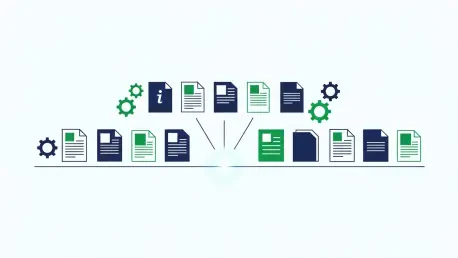

The global procurement landscape has undergone a radical transformation where the reliance on manual data entry has been replaced by a sophisticated ecosystem of autonomous digital workers. By this point, Robotic Process Automation has successfully shed its reputation as a mere productivity hack to become the foundational layer of back-office engineering for major enterprises. The shift from basic screen-scraping scripts to high-speed API integrations ensures that legacy desktop applications now communicate seamlessly with modern cloud architectures. This transition allows organizations to bridge the gap between historical data silos and real-time decision-making platforms, effectively eliminating the operational friction that once plagued supply chain management. Instead of simple task replication, current RPA frameworks act as intelligent orchestrators that manage the flow of information across disparate digital landscapes. Consequently, procurement professionals are no longer tethered to the drudgery of administrative maintenance, allowing them to redirect their cognitive energy toward high-stakes negotiation and supplier relationship management.
Advanced Technical Foundations
Intelligent Document Processing and Semantic Analysis
Modern automation frameworks rely heavily on Intelligent Document Processing (IDP) to navigate the complexities of modern paperwork which was previously inaccessible to machines. This sophisticated approach utilizes a dual-layered methodology where computer vision algorithms first map the structural layout of invoices, shipping manifests, and vendor contracts. Once the visual structure is understood, large language models (LLMs) take over to parse the actual text, resolving semantic ambiguities that would have traditionally required human intervention. For example, if a supplier uses non-standard terminology for a line item, the LLM cross-references the context to ensure the data is mapped correctly into the Enterprise Resource Planning system. This prevents the “garbage in, garbage out” cycle that often derailed earlier automation efforts. By integrating these advanced cognitive layers, companies can now process thousands of diverse documents per hour with a degree of precision that matches or exceeds human clerical standards.
Process Mining and Digital Workflow Mapping
Before deploying a single bot, leading organizations now prioritize process mining to gain an objective understanding of their current operational reality. This forensic approach involves analyzing digital event logs to reconstruct the actual workflows used by employees, rather than relying on idealized procedural manuals that rarely reflect daily practice. By visualizing these “as-is” processes, analysts can identify the exact points where bottlenecks occur or where redundant approvals slow down the procurement cycle. This data-driven foundation ensures that automation is applied to the most impactful areas, preventing the mistake of automating an inherently broken or inefficient process. Mapping these digital footprints provides a clear roadmap for transformation, allowing firms to simulate the impact of a bot before any code is written. This proactive strategy reduces the risk of project failure and ensures that the return on investment is calculated based on real-world usage patterns rather than optimistic projections.
Industry Use Cases
Automated Tender Management and Bid Response
Procurement departments have found that tender and bidding workflows offer some of the most significant returns on investment within the current automation landscape. Advanced bots now leverage vector databases to index years of historical bid submissions, technical specifications, and pricing models to create a searchable knowledge base. When a new Request for Proposal is received, the system can automatically extract key requirements and retrieve the most relevant prior responses in seconds. This capability compresses the discovery and drafting phase of a bid from several days into just a few minutes, giving the team more time to refine their strategy rather than hunting for old documents. By automating the retrieval of historical data, organizations can respond to a higher volume of opportunities without increasing their headcount. The accuracy of these automated drafts is maintained through strict validation rules, ensuring that the information provided to prospective clients is both current and consistent.
Legal Compliance and Contractual Risk Monitoring
Within the legal and compliance sphere, automation has become a non-negotiable tool for managing the sheer volume of regulatory changes and contractual obligations. Specialized lookup bots are now deployed to monitor global debarment lists, court dockets, and legislative updates in real-time, providing immediate alerts when a potential risk is detected. These digital agents are capable of querying vast internal repositories to identify specific clauses in thousands of supplier contracts, a task that would take a human legal team weeks to complete. Every time a bot accesses or modifies a record, it logs a comprehensive audit trail, which simplifies the process of demonstrating compliance to external auditors. Furthermore, this 24/7 monitoring capability allows companies to stay ahead of shifting trade regulations and environmental mandates by automatically flagging suppliers who no longer meet the required standards. By offloading these repetitive oversight tasks to bots, legal teams can focus on high-level risk mitigation.
Strategic Implementation
Governance Standards and Partner Selection
Selecting a suitable automation partner requires a shift in focus from basic cost considerations toward a deep evaluation of discovery capabilities and technical neutrality. Organizations must demand rigorous demonstrations involving “noisy” or poorly formatted multilingual documents to test the resilience of the underlying AI models. A critical aspect of this evaluation involves understanding the data residency and privacy implications of the solution, specifically whether processing occurs on a private tenant or within a shared cloud environment. Security remains a top priority, and professional implementations now mandate the use of robust versioning controls and secrets management to protect sensitive credentials. Furthermore, service level agreements must explicitly cover “break-fix” maintenance, ensuring that bots are updated immediately whenever source systems like SAP or Oracle undergo structural changes. Without these governance guardrails, an automation program can quickly become a liability rather than a corporate asset.
Economics of the Center of Excellence Model
The organizational structure supporting automation efforts has matured into a choice between managed service models and the creation of internal Centers of Excellence. For companies seeking rapid deployment and immediate value, partnering with a managed service provider offers access to pre-built templates and expert maintenance without the need for extensive internal training. Conversely, larger enterprises often opt for a Center of Excellence to maintain maximum control over their intellectual property and long-term automation roadmap. Financial planning for these initiatives has also become more sophisticated, with successful firms clearly separating the initial capital expenditure for building bots from the operational costs of maintaining them. While basic automation can be launched for modest sums, comprehensive enterprise rollouts utilizing document AI and complex integrations typically require a six-figure annual commitment. By accurately forecasting these costs and establishing clear ownership of the bot fleet, organizations avoid underfunding.
Strategic Integration of Hybrid AI Models
The transition toward a hybrid automation model successfully integrated deterministic, rule-based bots with generative AI agents to handle more nuanced interpretive tasks. This strategy allowed organizations to move beyond simple data migration and toward the intelligent summarization of communication and the proactive management of supplier relations. To ensure long-term viability, successful teams prioritized process mining and change management, which helped bridge the cultural gap between human staff and their digital counterparts. Looking ahead, firms should focus on identifying a single, high-friction workflow to serve as a proof of concept before attempting a full-scale digital overhaul. This incremental approach established the necessary credibility with stakeholders and provided a clear path toward a defensible digital strategy. By investing in resilient governance and scalable architectures, procurement departments solidified their role as central drivers of corporate efficiency. The era of manual labor was effectively replaced.