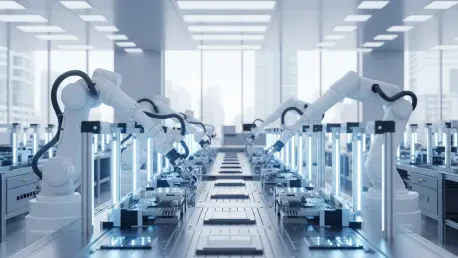

The rapid convergence of generative artificial intelligence and physical automation has triggered a transformative moment for the global robotics industry, shifting the focus from rigid programming to systems that possess the capacity to learn and adapt in real time. This evolution represents a trillion-dollar frontier where machines are no longer relegated to repetitive tasks but are instead becoming intelligent collaborators capable of making complex decisions on the fly. Driven by a global shortage of labor and a pressing need for resilient manufacturing, the industry is moving toward a state of pervasive autonomy. In this landscape, the lines between digital intelligence and physical execution are blurring, creating an environment where robots can handle intricate assembly and service roles that were previously considered the exclusive domain of human workers. This shift is not merely a technical upgrade but a fundamental reimagining of how production functions in an increasingly digitized world. By prioritizing the marriage of software and hardware, these nations are setting a global standard for the next industrial age.
The Strategic Partnership: A Synergy of Precision and Intelligence
Japan has long been recognized as the global leader in mechanical precision, providing the physical infrastructure necessary for high-performance robotics through decades of expertise in heavy machinery and fine motor control. Major industrial players such as Fanuc, Yaskawa, and Yamaha have established the gold standard for hardware reliability, creating robotic arms and automated systems that define modern factory floors. This heritage of engineering excellence ensures that the physical components of robots—the sensors, actuators, and chassis—can withstand the rigors of continuous industrial use while maintaining extreme accuracy. However, as the industry moves toward AI-driven systems, these mechanical giants are increasingly integrating sophisticated software layers to enhance the flexibility of their machines. By focusing on the durability and responsiveness of the hardware, Japanese firms provide the foundational brawn that allows for the execution of complex physical tasks in demanding environments. This commitment to engineering quality is the bedrock upon which the next generation of autonomous machines is being built today.
Taiwan serves as the essential computational hub of this international robotics ecosystem, leveraging its dominance in the semiconductor industry to supply the high-performance chips required for real-time AI processing. The island’s unrivaled density of chip manufacturing and design expertise provides the massive processing power necessary to run large-scale neural networks directly on robotic platforms. Without the specialized hardware produced by Taiwanese firms, the vision of truly autonomous robots capable of navigating unpredictable environments would remain a theoretical exercise. This concentration of technical resources creates a unique synergy where the brain of the robot is developed in close proximity to the global supply chain, allowing for rapid iterations and specialized hardware-software co-design. Furthermore, the collaboration between Taiwanese hardware providers and global AI developers ensures that robots can process vast amounts of sensory data with minimal latency and high efficiency. Consequently, Taiwan’s role is not just about manufacturing but about enabling the very intelligence that makes automation viable.
Redefining Productivity: The Rise of Collaborative Automation
The industrial sector is witnessing a profound transformation as traditional automated systems are replaced by collaborative robots designed to work safely alongside human operators in shared spaces. Yamaha Motor has emerged as a key pioneer in this space, having initially developed advanced automation tools to solve its own internal production challenges before commercializing these solutions for the broader market. These collaborative robots, or cobots, are equipped with advanced force-sensing and vision systems that allow them to adapt to the presence of humans without the need for bulky safety cages. In many modern factory settings, the implementation of these intelligent systems has led to a significant reduction in manual labor requirements, with some facilities reporting up to an 80 percent increase in operational efficiency. This shift allows human workers to move away from mundane, repetitive tasks and focus on higher-value activities such as system supervision and complex problem-solving roles that require creative thinking.
High-precision automation is also becoming indispensable in the specialized field of semiconductor manufacturing and microelectronic inspection, where the scale of components has reached microscopic levels. As chips become smaller and more complex, the human eye and traditional manual testing methods are no longer sufficient to ensure quality control, necessitating the use of AI-driven robotic inspectors. These systems utilize high-resolution imaging and deep learning algorithms to identify defects that are invisible to the naked eye, ensuring that every component meets the stringent standards of the modern tech industry. This creates a fascinating feedback loop within the economy: the robotics industry depends on advanced semiconductors for intelligence, while the semiconductor industry increasingly relies on robotics to maintain the efficiency and accuracy of its production lines. This interdependence accelerates the pace of innovation, as improvements in one sector directly contribute to the capabilities of the other, forming a powerful engine for sustained technological growth.
Global Rivalries: The High-Stakes Humanoid Robotics Race
While the partnership between Taiwan and Japan forms a formidable regional alliance, the global landscape is becoming increasingly competitive as American and South Korean firms accelerate their investments in humanoid robotics. Nvidia has positioned itself as a central architect of this movement, providing the software frameworks and R&D platforms that allow developers worldwide to train robotic agents in simulated environments before deploying them in the real world. By creating a standardized ecosystem for AI-driven robotics, Nvidia is lowering the barrier to entry for startups and established companies alike, fostering a wave of innovation that spans from logistics to healthcare. This competitive pressure is driving a shift toward general-purpose robots that can perform a variety of tasks rather than being limited to a single function. The goal is to create machines that can seamlessly integrate into existing human environments, utilizing human-centric tools and navigating spaces designed for people while maintaining high safety.
The move toward large-scale commercialization of humanoid machines is further exemplified by heavyweights like Hyundai, which has integrated the expertise of Boston Dynamics to bring agile robots like Atlas into industrial settings. These machines are transitioning from being subjects of viral laboratory videos to becoming practical tools for large-scale industrial assembly, particularly within the automotive sector. From 2026 to 2028, humanoid robots are expected to take on complex roles such as installing interior components or performing intricate wiring tasks that were previously difficult for traditional robotic arms to handle. This evolution represents a fundamental shift in how capital-intensive manufacturing is structured, as humanoid forms provide a solution for tasks that require the dexterity of a human but the endurance of a machine. As these robots become more cost-effective and reliable, their deployment will likely spread from automotive plants to other labor-intensive industries, fundamentally altering how companies manage their large-scale production assets.
Social Impact: Bridging Labor Gaps Through Remote Interaction
Robotics is increasingly being viewed as a social tool capable of bridging gaps in the labor market by providing a physical extension for individuals who might otherwise be unable to participate in the workforce. In the service sector, the emergence of robot-staffed cafes and hospitality venues provides a clear demonstration of how technology can foster inclusivity by allowing people with severe mobility challenges to operate robots remotely. These pilots use high-speed connectivity and intuitive control interfaces to let workers manage physical tasks through a digital medium, effectively breaking down the barriers imposed by physical disability. This model reframes the role of the robot from a replacement for human labor to an enabling tool that expands human potential and creates new opportunities for employment. By focusing on the synergy between human intelligence and robotic execution, these innovations address the social need for meaningful work while simultaneously solving the practical problem of staffing in the service industry.
The broader application of AI-driven robotics offers a strategic solution to the demographic crises currently facing many developed nations, where aging populations and shrinking workforces threaten long-term economic stability. Rather than viewing automation as a threat to job security, it is increasingly seen as a necessary evolution to maintain productivity and social cohesion in an era of labor scarcity. By automating labor-intensive tasks in both the industrial and service sectors, nations can ensure that essential services remain functional and that manufacturing remains competitive despite a smaller pool of available workers. This transition requires a shift in public perception, moving away from a narrative of competition between humans and machines toward one of collaboration and mutual support. The goal is to create a future where robotic systems handle the heavy lifting and repetitive chores, allowing humans to focus on creative, empathetic, and complex decision-making roles that ensure the continued prosperity and health of the global community.
Operational Excellence: Strategic Integration and Resilience
The successful integration of AI and robotics into the global economy required a coordinated effort between hardware innovators and software developers to ensure that systems were both capable and reliable. Organizations that prioritized the development of standardized communication protocols and interoperable platforms were able to scale their operations more effectively than those that relied on proprietary systems. By fostering an environment of open collaboration, industry leaders paved the way for a more diverse ecosystem where specialized startups could contribute niche solutions to larger robotic frameworks. This approach helped stabilize supply chains and reduced the costs associated with implementing advanced automation, making it accessible to small and medium-sized enterprises. Furthermore, the focus on ethical AI development ensured that as robots became more autonomous, they remained transparent and accountable in their decision-making processes. This was particularly important in sectors where human safety was a primary concern for the public.
Industry leaders who recognized the importance of cross-border partnerships between Taiwan and Japan successfully established a dominant position in the global robotics market by the middle of the decade. These stakeholders focused on creating a feedback loop between semiconductor advancements and mechanical engineering, which allowed for the rapid deployment of intelligent machines across various industrial sectors. Moving forward, the focus shifted toward refining the interaction between AI models and physical hardware to ensure higher levels of energy efficiency and operational uptime. Professionals in the field prioritized the creation of modular robotic systems that could be easily upgraded as AI capabilities evolved, rather than replacing entire fleets of hardware. This strategy not only reduced waste but also allowed companies to stay at the cutting edge of technological development without incurring massive capital expenditures. Ultimately, the era of AI-driven robotics proved that the most resilient economies were those that married digital intelligence with physical precision.