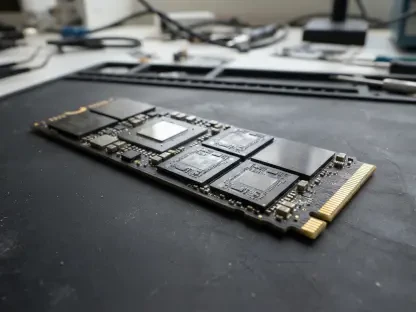

Hardware isolation mechanisms like AMD SEV-SNP and Intel TDX reduce trust in the infrastructure by shielding the protected guest from external software layers. This foundational shift in cloud architecture addresses a critical vulnerability in modern artificial intelligence deployments where sensitive data must be processed by third-party providers. As organizations increasingly rely on large language models and complex neural networks to handle proprietary information, the traditional model of shared infrastructure introduces significant risks. Confidential inference emerges as the architectural solution, ensuring that data remains encrypted not just in transit and at rest, but also during active computation. This technology creates a secure enclave, often referred to as a Trusted Execution Environment, which prevents even the most privileged system administrators from accessing memory. By decoupling the security of the application from the underlying software, businesses can maintain strict data sovereignty.
Architectural Foundations: The Mechanics of Hardware Isolation
The primary objective of a Trusted Execution Environment is to establish a perimeter that encompasses the central processing unit and specific memory regions, effectively isolating them from the rest of the host system. In a typical cloud environment, the hypervisor or host operating system possesses total visibility into the virtual machines it manages. Confidential inference disrupts this hierarchy by implementing hardware-level encryption keys managed by a dedicated security processor rather than host software. When an inference request is initiated, the input data is decrypted only within the confines of this secure boundary. This ensures that the model weights and the input prompts are never exposed in a readable format to the external environment. This isolation is crucial for industries such as finance and healthcare, where the leakage of a single data point could lead to severe regulatory consequences or the loss of competitive advantage.
Secure Interconnects: Extending the Enclave to the GPU
Beyond the CPU, the expansion of confidential computing into specialized accelerators is a defining trend of the 2026 landscape. High-performance inference requires the parallel processing of a Graphics Processing Unit, yet these devices have historically operated outside the core CPU security boundary. Modern confidential inference stacks now incorporate secure interconnects that extend hardware isolation to GPU memory. This ensures that the entire pipeline—from the moment a token is received to its final transformation into a generated response—remains within a verified cryptographic envelope. Without this extension, the data would be vulnerable during the transfer between the host processor and the accelerator. By establishing a unified trusted domain, organizations can leverage the speed of high-end silicon while maintaining the integrity of their most sensitive datasets. This architecture bridges the gap between performance and the security needs of modern enterprises.
Remote Attestation: Verifying the Integrity of the Compute Path
Hardware isolation is insufficient if the client cannot verify that the remote environment is truly secure and running the expected software. This is where the concept of remote attestation becomes vital to the confidential inference workflow. Attestation provides a cryptographic proof that describes the exact state of the hardware and the software stack inside the enclave. Before a client sends a sensitive prompt to an AI model, it requests this evidence to confirm that the server is an authentic instance of a confidential virtual machine. This report is signed by the hardware manufacturer, ensuring that it cannot be forged by a malicious provider. By examining the measurements contained within the report, a business can verify that no unauthorized debugging tools or backdoors have been inserted into the runtime environment. This creates a verifiable chain of trust that starts from the silicon and extends to the application layer, ensuring end-to-end security.
Dynamic Verification: Automated Checks and Policy Enforcement
The verification process must be dynamic and integrated into the connection handshake to account for the ephemeral nature of cloud resources. In a sophisticated deployment, the client application uses a specialized software development kit to perform this check automatically before establishing an encrypted tunnel. This prevents the dispatch of data to endpoints that may have been compromised or misconfigured. Furthermore, the attestation process includes version checks to ensure that the AI model and its serving software are running the latest patched versions. This granular control allows security teams to define strict policies regarding which software environments are permitted to process specific categories of data. If the hardware report fails to match the expected profile, the connection is terminated immediately, preventing any exposure. This automated oversight reduces the burden on human administrators while providing a continuous audit trail of the security posture.
Internal Governance: Managing Operational Risks and Access
While hardware isolation provides a robust defense against external threats, it does not automatically resolve the issue of internal software governance. A confidential virtual machine is still an operating environment that requires careful configuration to prevent accidental data leaks or unauthorized administrative access from within the guest. For instance, if a service provider maintains the ability to log into the protected instance via a remote shell, the practical benefits of the hardware enclave are diminished. Confidential inference requires a minimalist approach to the operating system, stripping away all unnecessary services and disabling diagnostic features that could export plaintext data. The goal is to create a black box environment where the software is immutable and its operations are transparently defined. This shift necessitates a new operational model where software updates are treated as cryptographic events, requiring re-validation of the entire stack.
Pipeline Integration: Building the Secure AI Infrastructure
Implementing a successful confidential inference strategy requires more than just selecting the right hardware; it demands a comprehensive integration of security protocols throughout the lifecycle of the request. Organizations must begin by identifying the critical data points that require protection and then select providers that offer documented gateway verification and explicit routing choices. This visibility is essential for understanding the specific path that data takes and the hardware boundaries it crosses. For developers, this means moving away from generic API calls toward specialized SDKs that can handle the complexities of cryptographic verification and session management. By integrating these checks directly into the client-side code, companies can ensure that their security policies are enforced at the point of origin. This proactive approach minimizes the risk of man-in-the-middle attacks and ensures that the end-to-end journey of the data remains fully protected.
Ecosystem Maturity: Evolving Standards for Data Security
The long-term success of confidential inference depends on the continuous evolution of the software-hardware ecosystem and the standardization of security evidence. As diverse providers enter the market with varying implementations of trusted environments, the ability to compare and validate different platforms becomes a competitive necessity. Organizations should establish a baseline for what constitutes acceptable evidence, focusing on the transparency of the provider’s content-plane code and the robustness of their attestation service. This level of technical due diligence allows for a more flexible infrastructure where models can be moved between different cloud providers based on cost or performance without compromising security. By maintaining a clear record of the accepted routes and client configurations, enterprises can facilitate easier audits and faster transitions to newer hardware as it becomes available during the coming years of development.
The Paradigm Shift: Navigating the Transition to Verifiable Sovereignty
The adoption of confidential inference shifted the paradigm of cloud security from a model of blind trust to one of verifiable integrity. Organizations that integrated hardware-based isolation and automated attestation established a resilient foundation for their artificial intelligence initiatives. This architectural transition allowed businesses to harness the full power of large-scale models while maintaining absolute control over sensitive information. Leaders evaluated their AI roadmaps to ensure that privacy remained a core component of the technical infrastructure. Standardizing evidence verification provided the necessary agility to navigate evolving global data regulations and technological shifts. Implementing these protocols ensured long-term viability by decoupling the security of the application from the underlying provider. Future considerations must focus on refining these secure boundaries as model complexity and compute demands continue to rise during the current era of innovation.