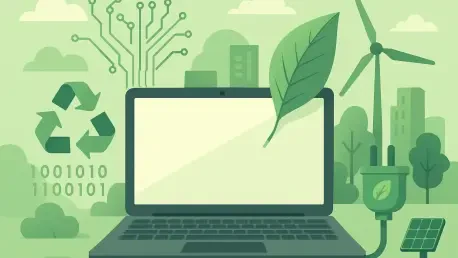

The digital economy has turned into one of the defining forces shaping modern society. Cloud computing powers global business operations; artificial intelligence continues to transform industries; and billions of connected devices continuously exchange information across vast networks, enabling connectivity.
Yet as technology expands, so does its environmental footprint and the consequences this brings.
Data centers consume enormous amounts of electricity, electronic waste is expanding, and the demand for computing resources is increasing faster than ever. Against this backdrop, green computing has evolved from a niche sustainability initiative into a strategic imperative for many future-focused organizations worldwide.
Today, green computing is no longer viewed simply as a way to reduce energy bills or improve corporate social responsibility reports.
The role it holds is much more vital: a central pillar of technology strategy, influencing everything from hardware design and software development to cloud infrastructure and the deployment of artificial intelligence. Organizations are starting to realize that environmental sustainability and operational efficiency are no longer competing objectives, but deeply interconnected goals that can drive innovation, resilience, and long-term business value.
But what exactly is green computing?
Green computing, sometimes also referred to as sustainable computing, encompasses the design, use, and disposal of computing systems in ways that minimize environmental impact. The concept encompasses a broad spectrum of activities, including reducing energy consumption, extending hardware lifecycles, improving data center efficiency, minimizing electronic waste, and utilizing renewable energy sources. While the core principles have remained consistent for decades, the technologies and strategies supporting green computing have evolved.
The Data Center Transformation
Modern data centers bear little resemblance to their predecessors. The facilities of a decade ago operated on static cooling schedules and brute-force power consumption. Today’s hyperscale operations deploy AI-driven management systems that treat energy optimization as a continuous, real-time challenge.
The shift isn’t purely altruistic. Data centers now consume approximately 1-1.5% of global electricity, a figure projected to double within the decade as AI workloads explode. When electricity represents one of the largest line items in technology budgets, efficiency stops being an environmental talking point and becomes a financial imperative.
These systems monitor thousands of variables simultaneously: server temperatures, workload distribution, cooling performance, external weather conditions, and power grid status. Rather than maintaining uniform environmental controls across an entire facility, they create dynamic micro-climates that deliver cooling precisely where and when it’s needed. And the efficiency gains offer a promising outlook for the future. Google reported that its AI-powered cooling systems reduced data center energy consumption by up to 40% for cooling alone.
But efficiency improvements only tell part of the story. The energy source matters as much as consumption volume. Major cloud providers have committed billions to renewable energy projects, fundamentally reshaping how facilities are planned. Location decisions that once prioritized connectivity and real estate costs now weigh regional renewable energy capacity as a critical factor. Microsoft and Amazon collectively represent some of the largest corporate purchasers of renewable energy globally, with combined commitments exceeding 20 gigawatts of clean power capacity.
Edge Computing and Distributed Efficiency
The architectural shift toward edge computing offers another path to sustainability. Traditional cloud models route data through centralized facilities, creating network traffic that consumes energy across every hop. Edge architectures process information closer to its source, reducing transmission overhead and the associated energy consumption.
Industrial IoT deployments showcase this principle. A manufacturing facility generating sensor data for predictive maintenance can process that information locally, transmitting only alerts and aggregated insights to central systems. The reduction in data volume translates directly to lower network energy consumption. Multiply this pattern across thousands of facilities and millions of devices, and the aggregate impact grows.
Smart city infrastructure demonstrates similar benefits. Traffic management systems that process video feeds locally can make real-time decisions without streaming high-bandwidth data to remote cloud facilities. The latency improvements that make these applications viable also deliver environmental benefits: faster response times and lower energy consumption, both stemming from the same architectural choices.
Hardware Lifecycles and Circular Economy
Operational efficiency addresses only part of the environmental equation. The manufacturing and disposal of computing equipment create a significant environmental impact that traditional green computing initiatives often overlook.
Electronic waste is one of the fastest-growing waste streams globally, with an estimated 50 million metric tons generated annually, and the problem extends beyond landfill volume alone. Electronics contain rare earth elements, precious metals, and toxic materials that create both resource depletion and pollution challenges when improperly handled.
The response from leading technology companies involves fundamental changes to hardware design philosophy. Devices are increasingly engineered for longevity, repairability, and eventual material recovery. Modular designs allow component replacement without the need to dispose of the entire device. Implementing standardized interfaces reduces obsolescence driven by connector changes rather than capability limitations.
Enterprise procurement practices are evolving accordingly, with technology buyers increasingly evaluating vendors based on product lifecycle management, recycling programs, and material sourcing practices. The questions have moved beyond “What does this device cost?” to “What does this device cost across its entire environmental lifecycle?”
The Software Sustainability Dimension
Green computing discussions historically focused on hardware and infrastructure. Software received comparatively little attention. It’s a costly oversight, as optimized applications can consume multiples of the computational resources that efficient alternatives require for identical functionality.
Green software engineering has emerged to address this potential gap, embodying the discipline that applies sustainability principles throughout the software development lifecycle. Algorithm selection considers computational complexity alongside correctness. Database queries are optimized for both resource consumption and response time. Architecture decisions evaluate the energy implications of different approaches.
The cloud-native movement has amplified the need for these greener tendencies. Container orchestration platforms enable precise resource allocation, eliminating the waste inherent in traditional server provisioning. Applications can scale down to minimal resource consumption during low-demand periods and expand only when traffic requires it, with automated mechanisms originally deployed for cost optimization that also help deliver environmental benefits.
Regulatory and Market Pressures
External pressures are accelerating adoption, but compliance isn’t slowing down to make innovation efforts easier. Many frameworks around the world increasingly mandate sustainability disclosures, set efficiency standards, and impose penalties for environmental violations. The European Union’s Corporate Sustainability Reporting Directive requires detailed environmental performance reporting from thousands of companies. Similar frameworks are emerging across Asia-Pacific and North American jurisdictions.
Investor pressure adds to these regulatory requirements, with ESG considerations becoming standard components of institutional investment analysis. Technology companies are experiencing increasing scrutiny regarding their environmental performance, supply chain practices, and climate risk exposure.
Customer expectations have shifted as well. Enterprise buyers include sustainability criteria in vendor evaluation processes, and consumer brands evaluate technology partners based on environmental performance.
The Path Forward
The challenges ahead remain substantial. Artificial intelligence adoption continues to accelerate, driving computational demand that could overwhelm efficiency gains. Digital transformation initiatives are expanding technology footprints across every industry. Emerging applications in immersive computing, autonomous systems, and advanced analytics will create new resource requirements that are difficult to predict.
Success will require continued innovation across multiple dimensions. Hardware efficiency must continue improving faster than demand grows. Renewable energy deployment must scale to meet data center requirements. Software engineering practices must embed sustainability as a fundamental quality attribute. Circular economy principles must become standard across technology supply chains.
The organizations leading this transformation are demonstrating that environmental responsibility and business performance are not competing priorities. Energy efficiency reduces operating costs. Hardware longevity reduces capital expenditure. Sustainability credentials improve market positioning. The economic case has become as compelling as the environmental one.