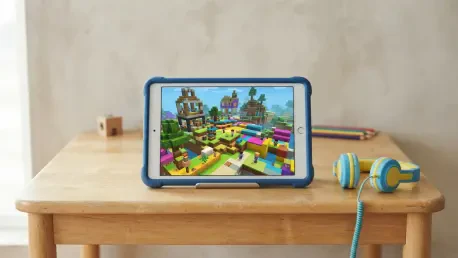

Parents and gamers often prefer tablets like the Galaxy Tab A11+ because they retain the 3.5 mm headphone jack to eliminate Bluetooth latency during gameplay. This hardware feature has become increasingly vital as Minecraft’s Bedrock Edition continues to evolve with more immersive soundscapes and complex multiplayer environments where immediate audio feedback is necessary for survival. In the current market, the search for a device that balances a low entry price with enough technical longevity and graphical power to handle the evolving demands of one of the world’s most popular sandbox games is a priority for many families. The hardware landscape has shifted significantly, and today’s consumers require more than just basic functionality; they demand devices capable of sustaining smooth frame rates while maintaining thermal efficiency. Identifying these devices requires moving beyond theoretical specifications to analyze real-world performance through standardized battery drain tests and rigorous benchmarking within heavy building zones and high render distance environments.
Entry-Level Accessibility: The Lenovo Budget Revolution
The Lenovo Idea Tab has emerged as the premier choice for those seeking a functional gaming experience at the lowest possible price point without sacrificing quality. Unlike many generic budget tablets that suffer from frequent stuttering or unresponsive touch controls, this device maintains a stable frame rate for Minecraft even in dense jungle biomes. It features an 11-inch IPS LCD screen with a crisp 2560 x 1600 resolution and a 90 Hz refresh rate, providing visual fluidity that was once exclusive to high-end flagship models. For the best results, it is absolutely essential to opt for the version equipped with 8 GB of RAM rather than the base model. This extra memory capacity prevents the operating system from aggressively closing background tasks and ensures that the game does not crash when players switch between their worlds and other essential applications like Discord or web browsers for crafting recipes.
Beyond its impressive screen quality, the Lenovo Idea Tab offers a premium build with an aluminum back and basic water resistance that protects against minor spills. It also includes a stylus, making it a versatile tool for students who need to switch between creative building in Minecraft and school-related sketching or note-taking. However, potential buyers should note that its software support window is shorter than its premium competitors, meaning it may not receive the latest Android features for as many years as higher-priced alternatives. This makes it a perfect short-to-medium-term investment for younger children who might be rough with their devices. The inclusion of the stylus adds significant value, as it allows for more precise redstone placement and inventory management compared to standard finger gestures, which can often be clumsy on smaller screens. This tablet proves that budget hardware no longer necessitates a compromised experience.
Reliable Performance: Samsung and Longevity Standards
The Samsung Galaxy Tab A11+ is widely considered the sweet spot for the average consumer in the current hardware market. Powered by a MediaTek Dimensity 7300 chip, this tablet handles Minecraft effortlessly in its dedicated performance mode, maintaining a consistent 60 frames per second even when the render distance is pushed to high levels. It strikes a nearly perfect balance between cost and capability, making it the most practical choice for parents and casual players who want a reliable device that will not lag during intense multiplayer sessions on popular servers. The display quality is vibrant enough to make the blocky textures pop, while the cooling system keeps the chassis at a comfortable temperature during extended sessions. This thermal management is critical for preventing the processor from throttling, which can lead to frustrating frame drops during high-action gameplay or complex automation builds.
One of the most compelling reasons to choose the Samsung Galaxy Tab A11+ is the industry-leading software policy that provides extended peace of mind. Samsung has committed to seven years of security patches and Android updates for this model, ensuring that future Minecraft updates from 2026 through 2033 will remain fully compatible for a long time. Additionally, this tablet leads the pack in battery endurance, lasting over eight hours on a single charge during intensive gaming tests, and retains the classic 3.5 mm headphone jack for gamers who prefer wired audio to avoid charging Bluetooth headsets. The integration of Samsung’s specialized gaming hub allows users to optimize system resources, prioritizing game performance over background processes. This level of software optimization, combined with long-term support, transforms the device into a sustainable piece of technology that outlasts many of its competitors in the mid-range category.
Premium Processing: Apple iPad and Graphical Fidelity
For those who prioritize raw power and have a larger budget, the Apple iPad 11 is the undisputed performance leader in the mobile gaming space. Equipped with the A16 chip, it offers significantly higher graphical overhead than its Android counterparts, allowing players to run high-resolution texture packs and complex shaders without any loss in speed. The iPad 11 is also a robust multitasking machine, capable of running more demanding titles like Fortnite with ease, which makes it a more comprehensive gaming investment for users who explore diverse titles. The hardware efficiency of the A-series silicon ensures that even when the game is rendering massive world maps or high-resolution entities, the input lag remains virtually nonexistent. This responsiveness is a key factor for competitive players who participate in player-versus-player modes where every millisecond counts toward victory.
The iPad 11 benefits from the highly optimized iPadOS, which provides a seamless experience for cross-play with friends on Xbox, PC, or Switch consoles. It also features superior screen brightness, which is essential for outdoor use, and native support for external console controllers, catering to players who prefer traditional inputs over touchscreens. However, this high performance comes with a notable trade-off; it recorded the shortest battery life among the top picks in recent tests and lacks a microSD slot for storage expansion. This requires users to pay significantly more upfront for internal space if they plan to download many custom maps or media files. Despite these drawbacks, the build quality and the sheer speed of the interface make it the gold standard for enthusiasts who want the best possible visual experience. The ecosystem integration also allows for easy screen recording and streaming directly to social platforms.
Market Dynamics: Selecting the Ideal Hardware
When comparing these devices, several significant trends emerge in the current tablet market that directly impact the Minecraft experience. Most notably, the shift toward 90 Hz refresh rates in affordable tablets like those from Samsung and Lenovo has made gameplay feel much smoother than the traditional 60 Hz standard found on older budget units. Furthermore, the inclusion of microSD slots in the Android models provides a level of storage flexibility that is ideal for players who download massive custom maps and community-created content without worrying about internal memory limits. This flexibility is a significant advantage for users who prefer to store their world backups locally rather than relying solely on cloud services. The convergence of high-resolution displays and efficient processors has finally eliminated the gap between entry-level devices and high-end gaming machines for sandbox gaming.
The final decision requires a careful assessment of how long a player intends to keep the device and the specific environments in which it is used. The Lenovo Idea Tab proved to be the winner for minimal expenditure, while the Samsung Galaxy Tab A11+ offered the best long-term value through its extended update cycle and superior battery life. For those seeking maximum power, the Apple iPad 11 remains the top choice despite its higher price point and storage limitations. Gamers are advised to prioritize RAM capacity and screen refresh rates over raw clock speeds to ensure a fluid experience. By selecting a device that aligns with these specific testing results, players can enjoy seamless, block-building adventures without worrying about hardware limitations. Moving forward, checking for regional hardware variations and ensuring the latest firmware updates are installed will help maintain these performance levels as the game continues to expand.