
The traditional concept of international trade as a bridge for mutual prosperity has been fundamentally re-evaluated as Western governments transform high-tech export controls from reactive security measures into a proactive and aggressive industrial strategy. This shift is most visible in the burgeoning quantum technology sector, where the objective is no longer merely to deny adversaries access to finished hardware but to meticulously architect a global ecosystem that inherently favors Western allies and their commercial interests. By asserting control over the growth of this emerging field at its very inception, policymakers are attempting to ensure that their respective nations maintain a dominant market share while securing a technological lead that could redefine national security for decades. This strategy, frequently labeled as “anticipatory containment,” represents a radical departure from past precedents where regulations followed commercial maturity. Instead, quantum computing is being hemmed in while still largely in the research and development phase, allowing for an unprecedented level of supply chain security before the global market becomes too decentralized or complex to manage effectively.
Moving Beyond Global Consensus
The Erosion of Multilateral Trade Frameworks
The collapse of the traditional multilateral framework for export controls, specifically the Wassenaar Arrangement, has served as the primary catalyst for this new era of technological protectionism. Historically, this international body operated on a consensus-based model to coordinate restrictions on conventional arms and dual-use goods, but it became effectively paralyzed following the geopolitical shifts that began in the middle of the decade. Because the arrangement requires unanimous agreement to update its control lists, certain member states have been able to veto the inclusion of critical new technologies, leaving Western powers unable to respond collectively to emerging threats. This stagnation forced a pivot toward a more fragmented but agile approach to trade policy, where nations no longer wait for a global consensus that includes their primary strategic rivals. The result is a shift away from universal agreements and toward a system where security-minded nations set their own rules to protect the integrity of their most sensitive research.
The Rise of Plurilateral Coalitions
In response to the limitations of the old international order, the United States, the European Union, the United Kingdom, and Japan have formed what is essentially a “coalition of the willing” to implement harmonized national controls. Rather than relying on a broad but dysfunctional global body, these nations are aligning their domestic laws to create a de facto international standard for quantum technology. This plurilateral approach allows for much faster policy adjustments, ensuring that as soon as a breakthrough in quantum error correction or qubit stability occurs, the relevant export restrictions can be updated in unison. This level of coordination effectively creates a high-tech trade zone where sensitive information and hardware can circulate among trusted partners while being strictly shielded from external competitors. By bypassing the need for a global consensus, this alliance has gained the ability to move at the speed of innovation, making it increasingly difficult for unaligned nations to keep pace with the rapidly evolving technological landscape.
Strategic Choke Points and Technological Assets
Material Dependencies in Quantum Computing
A central component of this industrial strategy involves identifying and controlling the “critical nodes” within the quantum supply chain where a very small number of facilities hold exclusive expertise. At the foundational level of the quantum stack are specialized materials that are nearly impossible to substitute, such as isotopically enriched Silicon-28 and high-purity Helium-3. Silicon-28 is essential for the fabrication of spin-based quantum processors because it lacks the magnetic noise that interferes with qubit coherence, yet its production requires sophisticated enrichment processes that only a few Western-aligned entities can currently perform at scale. Similarly, the global supply of Helium-3 remains extremely limited and is vital for the cooling processes required by superconducting systems. By strictly regulating the flow of these materials, Western nations have established natural choke points that can be leveraged to slow down the progress of any rival state attempting to build an independent quantum infrastructure from the ground up.
Hardware Constraints and Enabling Systems
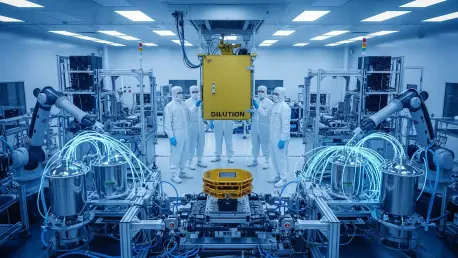
Beyond the raw materials, the Western strategy focuses heavily on the specialized hardware and enabling systems that are required to operate high-performance quantum computers. This includes dilution refrigerators, which are complex cooling units capable of maintaining temperatures colder than deep space, as well as the high-speed control electronics needed to manipulate and read quantum states with extreme precision. Currently, the market for this specialized equipment is dominated by a handful of firms based in Finland, the Netherlands, and the United Kingdom, such as Bluefors and Oxford Instruments. By imposing strict export licenses on these specific tools, Western governments are creating significant barriers to entry for any country lacking a domestic cryogenic industry. These hardware restrictions act as a formidable deterrent, as building a high-fidelity quantum computer is impossible without a steady supply of these precision instruments and the specialized knowledge required to maintain them over time.
Regional Interdependency and Supply Chain Synergy
The effectiveness of this modern industrial strategy relies on the deep interdependency that has developed between the United States and its European and Asian partners. While American technology giants like IBM and Google often lead the charge in overall system integration and the development of full-scale quantum processors, they remain heavily dependent on European suppliers for essential sub-components and specialized tools. For instance, Dutch and German companies are often the primary sources for the lithography equipment and microwave components that allow these processors to function. This intricate web of reliance means that a successful strategy cannot be pursued by any single nation in isolation but must instead be managed as a collective Western asset. This synergy ensures that the entire supply chain remains robust and secure, as each partner contributes a unique piece of the puzzle, making it nearly impossible for an outside actor to replicate the entire ecosystem without significant and prolonged effort.
Maintaining the Western Technological Edge
Building on this foundation of mutual reliance, the coalition has focused on creating a self-reinforcing loop where the benefits of innovation stay within the alliance. By ensuring that the most advanced research and development projects are funded through joint ventures between Western entities, the alliance prevents the leakage of intellectual property to outside competitors. This approach also involves a high degree of transparency between the intelligence services of these nations to monitor potential “gray-market” acquisitions of quantum hardware. The goal is to move beyond simple denial and toward a state where the Western technological edge is maintained through a combination of superior innovation and the strategic denial of critical infrastructure to others. This comprehensive oversight ensures that even as the technology moves toward commercialization, the fundamental building blocks remain under the control of a trusted network, thereby securing the economic and military advantages of the quantum revolution for the foreseeable future.
Policy Implementation Across Key Regions
American Regulatory Standards and Licensing
The United States has taken the lead in codifying these new trade rules by introducing regulations that target specific technical thresholds, such as the number of physical qubits and their associated error rates. Rather than focusing solely on the end product, American regulators have shifted their attention to the underlying performance metrics that define a computer’s strategic value. To prevent these rules from stifling innovation among allies, the U.S. Department of Commerce has expanded the use of “licensing exceptions” for trusted partners, particularly those involved in security frameworks like AUKUS. This creates a privileged “inner circle” of technological exchange where researchers in the UK and Australia can collaborate with American firms with minimal bureaucratic friction. This tiered system of export controls ensures that the most sensitive breakthroughs remain restricted to a small group of trusted nations, effectively creating a protected enclave for quantum development that is both secure and highly collaborative.
European and Japanese Alignment Strategies
In parallel with American efforts, the European Union and Japan have significantly aligned their national export lists to match these new standards, specifically targeting advanced processors and cryogenic circuits. While European initiatives were initially complicated by the need to harmonize the views of various member states, the region has since moved toward a more unified framework to prevent regulatory fragmentation that could be exploited by foreign entities. Japan has similarly pivoted its strategy, signaling a move toward full-scale commercialization while ensuring that its industry is deeply integrated into the Western economic sphere. By adopting similar control thresholds for qubit connectivity and gate fidelity, these nations are ensuring that there are no “weak links” in the global regulatory chain. This alignment not only protects national security but also provides a stable and predictable environment for private investors who are looking to capitalize on the next wave of computing technology within a secure and regulated market.
The Future of Economic and Technological Security
Mitigating the Risks of Foreign Domestication
While export controls are a potent tool for maintaining a technological lead, Western policymakers recognized that these measures could unintentionally incentivize strategic rivals to accelerate the development of their own domestic industries. There was documented evidence that some competitors responded to Western restrictions by pouring massive amounts of state capital into indigenous cooling systems and lithography tools to bypass the embargoes. This phenomenon of “forced indigenization” meant that trade barriers could only ever create “strategic friction” rather than an absolute block on progress. To mitigate this risk, the Western strategy evolved to include a heavy focus on monitoring the internal progress of rival states and adjusting control thresholds in real time to stay ahead of their domestic breakthroughs. By constantly moving the goalposts, the alliance aimed to ensure that by the time a competitor successfully replicated a restricted Western tool, the state-of-the-art technology had already moved several generations ahead.
Offensive Industrial Policy and Market Resilience
To complement these “defensive” trade restrictions, Western governments implemented “offensive” industrial policies designed to bolster the commercial viability of their domestic quantum firms. This included the provision of significant public funding for research and development, as well as the use of government procurement contracts to provide a steady market for early-stage quantum hardware. Furthermore, authorities strengthened investment screening mechanisms, such as the Committee on Foreign Investment in the United States (CFIUS) and similar bodies in Europe, to prevent rivals from acquiring sensitive technology through corporate takeovers or minority stakes in startups. The strategy utilized targeted trade restrictions not as an end in themselves but as a mechanism to buy time for domestic industries to mature and flourish. Western governments recognized that the window of opportunity to set global standards was closing, and they acted to consolidate their lead in the quantum sector. Moving forward, the focus shifted toward building deeper institutional ties between academia and private enterprise to sustain this momentum. Stakeholders were encouraged to prioritize the development of indigenous cryogenic solutions and error-correction protocols to reduce any remaining reliance on external actors. By fostering a self-sustaining ecosystem, the alliance aimed to render outside competition obsolete through sheer innovation. Future considerations emphasized the need for a dynamic regulatory framework that could adapt to the rapid pace of quantum breakthroughs while maintaining strict oversight of dual-use capabilities. The successful execution of these policies established a blueprint for how democratic nations could manage emerging technologies in an era of heightened geopolitical rivalry.