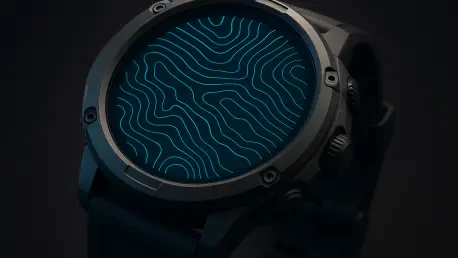

The Suunto Plus store provides a growing library of specialized applications, though it remains more limited than the ecosystems offered by major consumer electronics competitors. However, for the dedicated trail runner navigating the technical singletracks of the Pacific Northwest or the technical ridges of the Alps, the value of a sports watch is measured by its unwavering precision and structural integrity. The Race 3S emerges as a strategic response to the demand for high-performance wearable technology that sheds unnecessary bulk without compromising on the structural integrity required for extreme endurance. By focusing on a refined 46mm form factor, Suunto addresses a long-standing grievance among athletes with smaller wrists who previously found flagship models cumbersome during high-velocity descents. This shift in design philosophy suggests that Suunto is prioritizing ergonomic efficiency alongside its traditional reputation for ruggedness, creating a tool that feels like a natural extension of the athlete’s body during high-intensity movement across unpredictable terrain.
Rugged Design and Advanced Trail Navigation
Durable Engineering: Material Resilience and Form
The structural design of the Race 3S is a testament to the commitment to resilience, featuring a high-grade titanium bezel paired with a scratch-resistant sapphire crystal glass. These premium materials are not merely aesthetic choices; they are functional necessities for mountain sports where exposure to abrasive granite, dense underbrush, and extreme environmental factors is a constant reality. Despite its focus on toughness, the device incorporates a brilliant 1.32-inch AMOLED display that challenges the readability issues traditionally associated with high-contrast screens in outdoor settings. Boasting a peak brightness of 2,000 nits, the screen ensures that complex data fields and intricate map details remain perfectly legible even under the harshest midday sun at high altitudes. The combination of a rugged exterior and a high-fidelity screen allows runners to maintain situational awareness without the fear of damaging their equipment or losing track of their vital performance metrics.
Visual Clarity: Performance Metrics and Visibility
Beyond the surface materials, the refined 46mm case represents a significant ergonomic achievement that improves the overall user experience during sustained physical exertion. Traditional sports watches designed for ultra-endurance often suffer from an oversized profile that can lead to wrist fatigue or inconsistent sensor contact due to the device shifting during movement. The streamlined dimensions of the Race 3S ensure a stable and centered fit, which is crucial for maintaining the accuracy of the optical heart rate sensors during the rhythmic shocks of technical running. A stable device minimizes motion artifacts, allowing for cleaner data collection and a more comfortable experience over dozens of miles. Furthermore, the reduced weight distribution prevents the watch from snagging on clothing or hydration pack straps during transitions. By optimizing the physical dimensions, Suunto has successfully tailored the hardware to the specific biomechanics of high-intensity movement across the mountains.
Navigation Precision: Offline Mapping and Topography
Navigation remains a cornerstone of the ecosystem, and the Race 3S excels by offering comprehensive offline mapping capabilities that include detailed topographic data and contour lines. With 64GB of onboard storage, users can download high-resolution maps for entire regions, allowing for full navigational autonomy in areas where cellular signals are nonexistent. This local storage is a vital safety feature for wilderness exploration, providing runners with a reliable digital guide to their surroundings. The mapping interface is designed to highlight points of interest and trail names, making it easier to stay on course during poorly marked sections of a race. This offline utility is complemented by a “track back” feature, which provides a precise digital path to the starting point, mitigating the risk of becoming lost in technical terrain. For the modern athlete, having this level of geographic detail accessible on the wrist provides a critical safety net during remote adventures.
Strategic Pacing: Climb Guidance and Safety
One of the most effective software additions for mountain athletes is the “Climb Guidance” feature, which allows runners to manage their energy expenditure during significant elevation changes. By providing a real-time preview of upcoming inclines and descents, the watch enables athletes to modulate their effort and maintain a sustainable pace. Knowing the length and gradient of a climb before it begins allows for strategic decision-making, such as choosing to power-hike a steep grade to conserve muscular endurance for a later flat section. This foresight prevents the common mistake of overexertion during the early phases of a race, ensuring that the runner has the necessary energy to finish a technical course strong. The inclusion of turn-by-turn navigation further enhances this experience, using haptic feedback to alert the user to upcoming direction changes. These tools work in tandem to create a sophisticated guidance system that empowers athletes to focus entirely on their performance.
Technical Specifications and Training Insights
Biometric Accuracy: Redesigned Sensor Hardware
The technical sophistication of the Race 3S is anchored by a redesigned heart rate sensor array that incorporates a unique 2.5D curved glass housing on the underside of the device. This specific geometry is designed to bring the sensor closer to the skin, significantly reducing the gap where external light leakage could interfere with optical readings. By employing an array of six LEDs and four photodetectors, the watch achieves a level of biometric accuracy that rivals many dedicated arm-mounted sensors. This precision is vital for athletes who rely on heart rate data to determine their training load and recovery status. The sensor’s ability to filter out motion artifacts—the “noise” created by the movement of the arm—ensures that the data remains reliable even during erratic movements on technical terrain. Accurate heart rate tracking serves as the foundation for all physiological insights, making this hardware upgrade a cornerstone of the device’s utility for serious training.
Power Management: Silicon-Carbon Battery Technology
Despite the power demands of the AMOLED screen, the Race 3S utilizes advanced silicon-carbon battery technology to deliver industry-leading performance. The watch offers up to 45 hours of continuous, high-accuracy GPS tracking, which is sufficient for most ultramarathons and multi-day trekking expeditions. In standard smartwatch mode, the device can operate for up to 12 days, reducing the need for frequent charging during heavy training cycles. This longevity is a significant competitive advantage, especially for athletes who venture into remote areas where power sources are unavailable. The ability to record an entire 100-mile race with full mapping and sensor data provides peace of mind and ensures a complete record of the athlete’s performance. Additionally, the fast-charging capabilities mean that even a short period of connectivity to a power source can provide enough energy for a significant workout, reinforcing the watch’s position as a specialized tool for demanding environments.
Physiological Metrics: ZoneSense and Recovery
The integration of ZoneSense technology marks a significant shift in how runners interpret physiological strain by utilizing Heart Rate Variability to measure real-time exercise intensity. ZoneSense translates complex cardiac data into an accessible visual format, showing exactly how much time is spent in specific aerobic or anaerobic zones. This allows runners to stay within their intended limits, preventing the cumulative fatigue that leads to injury or overtraining. Following a high-intensity session, the Recovery Heart Rate feature provides a measure of how quickly the heart returns to a resting state, which is a primary indicator of cardiovascular fitness. These insights are displayed via an intuitive interface that encourages users to listen to their bodies and adjust their workloads accordingly. By providing a holistic view of strain and recovery, the Race 3S empowers athletes to make data-driven decisions that optimize their long-term health and performance, moving beyond simple distance tracking.
Machine Learning: The Role of Suunto AI Coach
The Suunto Race 3S successfully established its place as a specialized tool by synthesizing rugged hardware with advanced physiological insights. It addressed the core challenges faced by trail runners by providing a compact form factor that maintained the structural integrity and battery life required for mountain environments. The implementation of ZoneSense and the Suunto AI Coach offered athletes a sophisticated approach to endurance training, ensuring that every session was optimized for growth. While the device omitted certain consumer-focused conveniences like mobile payments, these trade-offs were widely accepted by the community in favor of superior navigation. The result was a highly focused instrument that proved indispensable for those navigating the complexities of remote wilderness racing. Ultimately, the watch functioned as a reliable partner that empowered athletes to push their limits while maintaining a margin of safety through precise mapping and adaptive coaching.