
Many decentralized finance users mistakenly assume that because information was posted to a ledger, the underlying protocol guarantees its permanent retrievability for years to come. In reality, the 2026 blockchain landscape relies on a sophisticated distinction between the immediate accessibility of transaction data and its long-term preservation. This misunderstanding often leads to architectural decisions that can compromise the security of decentralized applications or result in a false sense of security for investors. As decentralized networks transition toward modular frameworks, the concepts of data availability and data storage have moved from niche technical jargon to essential pillars of network integrity. While they appear to perform the same task of documenting activity, they serve entirely different masters within a distributed ecosystem. Data availability acts as a fleeting guarantee of transparency, whereas data storage functions as an enduring historical record. Grasping this nuance is the primary requirement for navigating the current wave of scaling solutions that define modern finance.
The Notice Board: A Framework for Verification
Data availability refers to the high level of confidence that all network participants can access the specific information required to verify a block at the exact moment it is added to the chain. In the context of a decentralized ledger, verification is the act of rerunning transactions to ensure they follow established protocol rules. If a block producer publishes a summary of transactions but withholds the actual data, other nodes cannot confirm the validity of the state transition. This scenario, known as a data withholding attack, represents a primary security threat that data availability seeks to prevent. It ensures that the information needed to maintain the chain’s honesty is public and accessible during the consensus process. This immediate transparency allows a network to reach a collective agreement on the current state of the ledger without relying on a centralized authority to dictate which transactions are valid.
To visualize this concept, one might consider the analogy of a town notice board where new laws are posted for public review. For a new regulation to be considered valid within the community, it must be placed in a public space where every citizen has the opportunity to read and scrutinize its contents. This act of “posting” is equivalent to data availability. The protocol does not necessarily promise that the notice will stay on the board for decades; it only ensures that it was available for a sufficient window of time so that the community could reach a consensus on its validity. Within the Ethereum network of 2026, full nodes download every piece of data in every block to ensure that nothing is missing, rejecting any block that lacks the underlying transaction details. This process keeps the network secure by forcing block producers to be transparent, though it does not mandate that the data remains on the primary chain indefinitely.
The Library: Historical Persistence and Retrieval
Data storage, often referred to as data retrievability, focuses on the persistence of information over long durations rather than the immediate needs of block verification. Once a block has been verified and added to the chain, the immediate requirement for every participant to hold that specific data diminishes. However, the data remains incredibly useful for syncing new nodes, auditing historical transactions, or exploring the chain’s past for research purposes. If data availability is the town notice board, then data storage is the town library. A library archives records for posterity, allowing researchers to look up information from years ago. However, the presence of a book in a library does not prove that its contents were publicly scrutinized and verified by the entire town on the day it was written. Storage is an archival function that supports the ecosystem’s history but does not drive its consensus.
In the current technological environment, storage is increasingly handled by archive nodes, specialized third-party services, and distributed storage networks. These entities keep the historical state of the blockchain, but the core protocol does not require every single node to perform this heavy lifting. This separation is necessary because storing every transaction from the current year to 2030 would create an unsustainable burden on hardware, eventually leading to centralization. By offloading archival responsibility, the network remains accessible to users with modest hardware while still providing a path for those who need to dig into historical data. This distinction allows the blockchain to function as a lean, high-speed verification engine while relying on a secondary layer of participants to act as the curators of its digital heritage, ensuring that the ledger’s history is never lost to time.
Analyzing the Functional Divergence: Four Primary Lenses
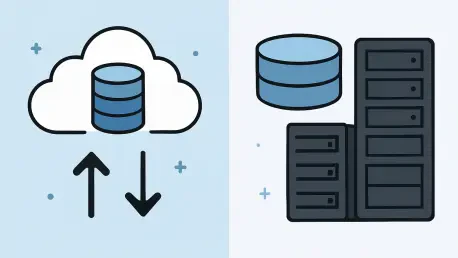
The divergence between data availability and data storage can be summarized through the lenses of purpose and functionality. Data availability ensures that data can be accessed and verified immediately to secure the chain, while storage focuses on keeping that data accessible over the long term. Availability allows participants to reconstruct the current state of the blockchain from the most recent updates, whereas storage keeps a comprehensive record in databases for retrospective use. This division of labor allows the network to function efficiently without forcing every participant to become a digital historian. By focusing on availability for the “now” and storage for the “then,” blockchain protocols manage resources more effectively. This ensures that the most critical information for network security is always at the fingertips of the validators, while less immediate data is stored elsewhere, where it does not interfere with the chain’s speed.
Security impacts and technical guarantees further differentiate these two concepts. Data availability is critical for the security of Layer 2 rollups because, without it, fraud cannot be proven and the trustless nature of the network is compromised. In contrast, data storage is essential for historical transparency and deep-dive analysis but does not directly impact the immediate consensus of the current block. Furthermore, availability often relies on temporary publication guarantees, such as the “blobs” used in modern scaling upgrades, which are often deleted after a specific period, such as eighteen days. Storage concerns the persistence and retrieval of data that may have already been pruned from the main chain. This shifting of responsibility to specialized archive nodes or third-party services ensures that the primary chain remains lightweight while historical data remains retrievable for those who seek it out from the archives.
Technical Solutions: Sampling and Erasure Coding
A central challenge in 2026 blockchain development remains the data availability problem. As networks grow, forcing every node to download every transaction becomes a massive bottleneck, limiting throughput and increasing the cost of participation for the average user. To solve this, developers have implemented Data Availability Sampling. This mathematical technique allows a node to confirm that a block’s data is available without downloading the entire block. This enables light clients with limited resources to maintain a high level of security without the massive storage or bandwidth requirements of a full node. By randomly checking small portions of the data, these nodes can gain statistical certainty that the whole set is available to the network. This breakthrough has been instrumental in allowing blockchains to scale to millions of transactions per second while keeping the hardware requirements for individual users relatively low.
The process of sampling is made possible through erasure coding, a method that adds redundant information to the data so that the whole can be reconstructed from just a fraction of its parts. If a node successfully retrieves several random samples, it can be statistically certain that the entire block is available for others to download. This mechanism perfectly illustrates the divide between availability and storage: it proves the data was published and is available for verification without requiring the node to actually store it for the long term. This innovation is key to increasing blockchain capacity while maintaining decentralization. It allows the network to distribute the burden of data across many participants, ensuring that no single node is a point of failure while simultaneously ensuring that the data needed to catch a malicious block producer is always accessible somewhere in the swarm.
Impact on Layer 2: Rollups and Modular Chains
The distinction between these two concepts is most visible in the operation of Layer 2 rollups, which process transactions off the main chain and post compressed summaries to Layer 1. Optimistic rollups rely on a challenge window where transaction data must be available on-chain so that verifiers can prove a fraud claim. If the data disappears too quickly, the window for security closes. Similarly, Zero-Knowledge rollups require data availability so that users can know their own balances and exit the rollup independently if the operator goes offline. Modern scaling upgrades provide dedicated, temporary space for this data, emphasizing that the protocol’s goal is availability for verification, not permanent storage. This temporary space allows for high-volume transactions at a low cost, provided that the ecosystem has a plan for where that data goes after the initial verification period has passed.
When transaction data is not available, the entire security model of a rollup can collapse. Without availability, an optimistic rollup cannot be challenged, and a ZK-rollup user might find their funds stuck because they cannot prove ownership to the main chain. Common misconceptions often lead users to believe that anything posted to a blockchain is permanent, but in the context of availability layers, data is frequently pruned to save space. Understanding that data availability is a transient, high-intensity security property while data storage is a long-term archival property is essential for evaluating new blockchain projects. As we look at the progress made from 2026 to 2028, the separation of these layers has become the standard for all high-performance networks. This modular approach ensures that the “notice board” is always updated and checked, while the “library” is safely managed by those with the capacity to do so.
Strategic Implications: Navigating the Future of Data
The industry successfully transitioned toward a clearer understanding in which protocols were optimized for throughput without becoming bloated by historical weight. It became evident that developers needed to implement diverse strategies for redundancy, utilizing decentralized storage networks to complement the transient data layers of primary blockchains. Stakeholders learned to distinguish between the proof of a transaction’s existence and the ability to retrieve its full history decades later. This shift prevented much of the network congestion that plagued earlier iterations of decentralized finance. By acknowledging that the base layer was not a bottomless archive, the community fostered the growth of specialized storage providers that ensured historical integrity. This clarity allowed for a more robust architectural design where security and performance were no longer at odds, but rather supported by different specialized layers of the infrastructure.
Moving forward, the integration of specialized archival services became mandatory for any project requiring deep auditability. Users prioritized platforms that clearly delineated their data retention policies, ensuring that mission-critical information remained accessible through secondary decentralized repositories. The move toward modularity meant that the responsibility for data was shared across a broader spectrum of participants, each optimized for their specific role. For investors and developers, the key takeaway was that data availability guarantees the truth of the present, while data storage preserves the truth of the past. By decoupling these two functions, the ecosystem paved the way for mass adoption without sacrificing the decentralized verification that remains the core value proposition of blockchain technology. This balanced approach ensured that as the volume of global transactions grew, the fundamental security of the digital economy remained unshakable.