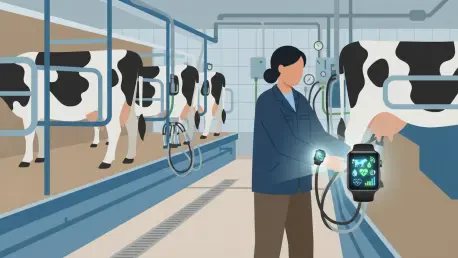

While milking accounts for nearly thirty percent of a dairy worker’s day, the actual physical intensity of the task varies significantly depending on parlor design. This reality highlights the complex nature of agricultural labor, particularly during the high-pressure spring block-calving season in New Zealand. During this period, the convergence of calving, milking, and pasture management creates an environment where physical and mental demands reach an absolute zenith. Historically, the industry has lacked quantitative data to define these physiological tolls, largely because traditional clinical monitoring tools are ill-suited for the rugged, often unpredictable conditions of a working dairy farm. However, a recent pilot study published in Frontiers in Animal Science has broken new ground by utilizing consumer-grade smartwatches to bridge this information gap. By tracking workers in real-time, researchers sought to establish a baseline for daily activity and stress, exploring how wearable technology might finally provide a detailed window into the health of those who maintain the nation’s dairy herds.
Evaluating the Feasibility of Wearables in Agriculture
Study Logistics: Participant Selection and Equipment Durability
The pilot study concentrated on a cohort of nine male farm workers, ranging in age from twenty-five to forty-four, across five diverse dairy operations in regions like Waikato and Canterbury. These farms represented a wide spectrum of the industry, with herd sizes varying from 235 to 800 cows, which allowed researchers to capture data across different operational scales and environmental conditions. To facilitate this monitoring, each participant was equipped with a Garmin Instinct 2 smartwatch. This specific model was selected for its tactical-grade durability, impressive water resistance, and extended battery life, all of which are critical requirements for the punishing conditions of a calving season. Workers were asked to wear the devices continuously for an average of forty-nine days, syncing their data daily through a smartphone application. This setup provided a continuous stream of physiological metrics that would have been impossible to gather through intermittent clinical observations or manual self-reporting by the busy farm staff.
A major concern when introducing wearable technology into a manual labor environment is the potential for non-compliance or safety hazards, yet this study yielded encouraging results regarding feasibility. The participants demonstrated remarkable commitment, wearing the smartwatches for more than twenty-three hours per day on seventy-one percent of the monitored days. This level of engagement far exceeded results typically seen in studies involving other wearable forms, such as sleep-tracking rings, which can be more easily forgotten or discarded. Furthermore, the research reported a total absence of health and safety incidents throughout the entire monitoring period. There were no reports of the watches catching on farm machinery, nor were there instances of skin irritation caused by the straps despite the wet and dirty conditions. This confirms that modern consumer smartwatches are sufficiently low-profile and comfortable for long-term use in heavy agriculture, providing a non-invasive way to monitor health without hindering daily duties.
Workload Metrics: Measuring Physical Strain and Physiological Arousal
To accurately quantify the physical and mental toll of farm life, the researchers prioritized several high-level physiological metrics, most notably the physiological stress score derived from heart rate variability. This metric utilizes complex algorithms to identify sympathetic nervous system activation, which serves as a proxy for physiological arousal. In this context, a high stress score does not necessarily equate to emotional distress; rather, it indicates the body’s reaction to external pressures such as heavy lifting, high environmental temperatures, or acute cognitive demands. Additionally, the study tracked Metabolic Equivalent of Task minutes to measure energy expenditure relative to a state of rest. By combining these metabolic readings with moderate-to-vigorous physical activity tracking, the research team could construct a comprehensive profile of the energetic costs associated with various agricultural duties. This data-driven approach moves beyond subjective feelings of fatigue to provide a concrete measurement of how much a body is actually enduring.
The findings revealed that dairy farming during the calving season is an exceptionally vigorous occupation that matches or exceeds the physical output of many competitive athletes. Median daily moderate-to-vigorous physical activity frequently topped fifty minutes, with some participants reaching nearly ninety minutes of high-intensity work on a daily basis. To put this into perspective, standard global health guidelines recommend 150 minutes of such activity per week; these workers often hit that target in just two or three days. Perhaps more concerning for long-term health was the extreme variability in the daily workload. The data showed massive fluctuations in activity levels, as tasks changed rapidly due to fluctuating calving rates or shifting weather patterns. This inconsistency suggests that workers are caught in a cycle of extreme exertion followed by insufficient recovery periods, a pattern that can lead to chronic fatigue. The ability to visualize these peaks in energy expenditure is the first step toward understanding the long-term impact of seasonal labor on the human body.
Insights into Workplace Stress and Task Intensity
Data Analysis: The Disconnect Between Activity and Stress
One of the most intriguing discoveries of the study was the lack of a direct, linear correlation between physical movement and physiological stress scores. While activity levels remained high, high-stress episodes—defined as scores above seventy-five—varied dramatically between different farm sites. Some workers experienced only sixteen minutes of high stress daily, while others remained in a state of high arousal for over an hour. Crucially, these peaks in stress did not always align with the most physically demanding chores. This suggests that the mental load of the job, such as the cognitive pressure of managing a difficult birth or the social stress of coordinating a large team during a crisis, significantly impacts the worker’s internal state. Environmental factors, including extreme heat or heavy rain, also likely contributed to these elevated readings. By separating physical strain from physiological stress, the study highlights that farm work is as much a mental and environmental challenge as it is a physical one, necessitating a more holistic approach to labor management.
The inclusion of manual task-logging allowed the researchers to identify what they termed the ‘milking paradox,’ where the same task yielded vastly different physiological results across different farms. Although milking was the most time-consuming activity, its physical intensity was highly dependent on individual parlor design and the specific behavior of the herd. On some farms, milking was a relatively relaxed process, while on others, it accounted for the majority of the day’s high-intensity physical activity. Interestingly, the data also captured high intensity levels during seemingly sedentary ‘people-related’ tasks, such as staff meetings or office work. Researchers attributed these anomalies to a physiological ‘carry-over’ effect, where the heart rate remains elevated and the nervous system stays in a state of high arousal for a significant period after a physically demanding chore has ended. This finding is critical because it suggests that even when a worker appears to be resting or doing light work, their body may still be processing the strain of previous intense labor.
Looking Forward: Addressing Research Constraints and Future Applications
Despite the success of this pilot, several constraints must be addressed in future iterations to provide a truly comprehensive view of the industry. The small sample size of nine male participants means the data cannot yet be generalized to the entire dairy workforce, particularly female workers who may experience different physiological stress profiles. Furthermore, the study relied on Garmin’s proprietary algorithms, which, while generally accurate for fitness tracking, have not been specifically validated for the unique, repetitive movements found in agricultural work. There is also the persistent challenge of distinguishing between ‘productive’ stress, which can be a sign of healthy engagement and excitement, and ‘harmful’ stress that leads to burnout and health decline. Without more granular data, it is difficult to determine exactly which tasks or environmental conditions are the primary drivers of negative physiological outcomes. Expanding the scope of the research to include a more diverse demographic and using open-source algorithms could help refine these measurements in the coming years.
The New Zealand pilot study successfully validated that consumer smartwatches are a practical and powerful tool for documenting the hidden costs of agricultural labor. By identifying the moments when workers reached peak exhaustion or stress, the research provided a blueprint for more sustainable farm management practices. Looking ahead, the integration of automated task-recognition software could eliminate the need for manual logging, further reducing the burden on workers while providing even more precise data. Farm owners were encouraged to use these insights to design better rosters that prioritized recovery after high-intensity calving events and to optimize parlor designs that minimized physical strain during milking. Ultimately, the transition toward using wearable technology in the dairy sector represented a shift toward a more health-conscious and data-driven workplace culture. By acknowledging the athletic level of output required for modern farming, the industry took a vital step toward protecting its most valuable asset: its people. These advancements fostered a safer environment where technology and tradition worked in tandem for long-term success.