
Despite the sophistication of One UI 9.0, the Android app ecosystem occasionally struggles with scaling smartphone-centric applications for a 12.6-inch landscape-oriented desktop experience. This technological friction defines the current era of mobile computing, where the Samsung Galaxy Tab S12+ seeks to bridge the final divide between high-performance tablets and traditional ultra-portable laptops. As 2026 unfolds, the demand for versatile hardware that satisfies both leisure and professional rigor has reached a zenith. Samsung’s latest flagship arrives with a premium price tag of Rs 1,29,999, positioning itself as a direct competitor to high-end ultrabooks rather than just other tablets. The device represents a culmination of years of iterative engineering, aiming to prove that a touch-first mobile operating system can finally sustain the complex workflows required by today’s digital professionals. It is no longer enough for a tablet to be a secondary media consumption tool; it must now function as a primary workstation.
Structural Engineering and Visual Performance
Samsung has refined the physical language of the Galaxy Tab S12+ through a meticulously crafted flat metal chassis with a matte finish that effectively resists fingerprints. At only 5.3mm thick and weighing 555g, the tablet is impressively slender, allowing it to disappear into any standard commuter bag without adding significant bulk. However, the sheer surface area of the 12.6-inch frame presents unique ergonomic challenges, as one-handed operation becomes difficult during prolonged use. This design reflects a commitment to the “go-anywhere” utility that heavy, hinged laptops often struggle to match. The aesthetic is one of understated luxury, where the hardware disappears into the background to prioritize the user’s interaction with the content. By focusing on a thin profile, Samsung addresses the modern need for devices that transition smoothly from a confined airplane tray table to a sprawling office desk, maintaining a professional presence in any setting.
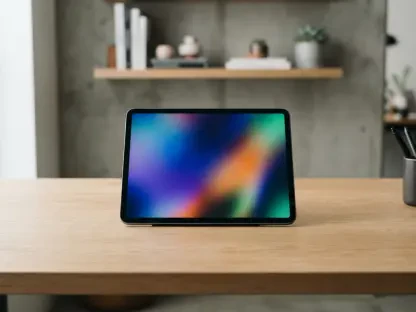
The 12.6-inch Dynamic AMOLED 2X display serves as the undisputed centerpiece of the device, pushing the boundaries of what users expect from a mobile screen. With a resolution of 2,800 x 1,752 pixels and a fluid 120Hz refresh rate, the panel delivers an visual experience characterized by infinite contrast and perfect black levels. This technology is particularly beneficial for creative professionals who require precise color reproduction and deep detail in high-dynamic-range content. During testing with complex video editing and cinematic media, the display maintained remarkable color accuracy, ensuring that vibrant scenes remained life-like while shadows retained subtle details without crushing. The smooth motion of the interface further enhances the perception of speed, making every swipe and transition feel instantaneous. This level of visual fidelity often surpasses the displays found on comparably priced laptops, establishing the S12+ as a premier tool for professional media work.
Processing Infrastructure and Thermal Constraints
Equipped with the high-performance MediaTek Dimensity 9500 chipset and 12GB of LPDDR5x RAM, the Galaxy Tab S12+ stands as a performance powerhouse in the 2026 landscape. Daily productivity tasks, such as intensive web browsing with dozens of active tabs and rapid app switching, occur without any perceptible lag or system stutter. The inclusion of UFS 4.0 storage further accelerates boot times and data transfer speeds, making the device feel exceptionally responsive during large file operations. For mobile gamers and creative users, this hardware configuration provides enough overhead to handle the most demanding applications available on the Android platform. The ample memory capacity allows the operating system to keep multiple heavy applications active in the background, facilitating a multitasking experience that rivals traditional desktop environments. This ensures that the transition between a video conference and a graphics-heavy presentation remains fluid and uninterrupted.
The pursuit of an ultra-thin profile does present inevitable challenges regarding thermal management during sustained heavy workloads. After extended periods of high-end gaming or intensive 4K video rendering, the back of the metal chassis can become noticeably warm to the touch as the internal components dissipate heat. While this thermal buildup generally does not result in aggressive performance throttling during standard office tasks, power users should be mindful of these cooling limitations when pushing the hardware to its absolute limits. The absence of active cooling fans, which are standard in many performance laptops, means the device relies entirely on passive heat dissipation. Consequently, while the Dimensity 9500 is capable of peak performance bursts that match top-tier mobile chips, maintaining that level of output over several hours requires a cool environment. This highlights the ongoing engineering trade-off between the portability of a tablet and the sustained processing power of a workstation.
Software Productivity and the DeX Experience
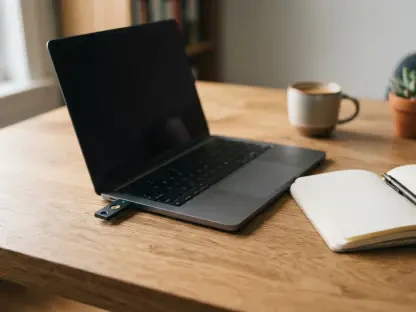
The core of the tablet’s claim as a legitimate laptop replacement is found in Samsung DeX, a sophisticated software environment that mimics a traditional desktop interface. By offering resizable windows, a persistent taskbar, and advanced keyboard shortcut support, DeX allows for a workflow that feels familiar to those transitioning from Windows or macOS. When paired with the optional keyboard cover, the S12+ transforms into a functional workstation capable of handling complex document editing, email management, and multi-window research. This mode effectively bridges the gap between a casual touch interface and a productivity-focused computer. The ability to connect the tablet to an external monitor and extend the desktop further enhances its utility, allowing users to maintain a dual-screen setup even when traveling. For generalists and office-bound professionals, the DeX ecosystem provides a compelling alternative to the traditional laptop, offering a level of versatility that is unique.
However, the transition from a traditional laptop to an Android-based tablet was still periodically hampered by the inherent limitations of the broader app ecosystem. Many third-party applications remained optimized primarily for portrait-oriented smartphone screens and exhibited unpredictable behavior when forced into a windowed desktop environment. While Samsung worked extensively with developers to improve scaling, certain specialized software tools—particularly in high-end data analysis and engineering—lacked the full feature parity found in their desktop counterparts. Some web applications also defaulted to mobile versions, requiring users to manually request desktop sites to access critical features. This meant that while the S12+ was an excellent tool for general office management and creative sketching, specialized power users still found themselves tethered to a traditional computer for specific software requirements. The success of the tablet as a primary machine depended heavily on the user’s specific software needs.
Power Management and the Future of Mobile Computing
To sustain its expansive display and high-performance processor, Samsung integrated a substantial 10,600mAh battery into the Tab S12+. For light tasks such as reading, basic document preparation, or web browsing, the tablet easily lasted over 12 hours, providing a reliable all-day experience for most professionals. This longevity was a critical factor for users who prioritized mobility and needed a device that could survive long flights or back-to-back meetings without constant proximity to a power outlet. However, the endurance of the battery scaled significantly with the intensity of the workload. High-brightness HDR video streaming or prolonged 3D gaming sessions drained the capacity much faster, requiring more frequent charging intervals. Samsung’s power management software did a commendable job of optimizing background processes to extend life, but the high-resolution AMOLED panel remained a significant power draw that users had to manage effectively to maximize their time away from the wall.
A notable point of criticism in the 2026 hardware cycle was the 45W wired charging speed, which felt somewhat outdated given the battery’s massive capacity and the device’s premium positioning. In practical application, a full charge from zero to 100% took approximately two hours, a duration that lagged behind many modern smartphones and even some competitive laptop charging standards. For professionals who were constantly on the move and relied on quick power boosts during short breaks, this slow charging turnaround was a limiting factor. The decision to cap charging at 45W likely related to heat management within the slim chassis, but it necessitated more deliberate power planning throughout the workday. Practical next steps for users included investing in high-quality power banks and cloud-based collaborative tools to ensure that the hardware remained a viable primary workstation. Ultimately, the S12+ proved that for a significant portion of the professional population, the traditional laptop was no longer a strict necessity.