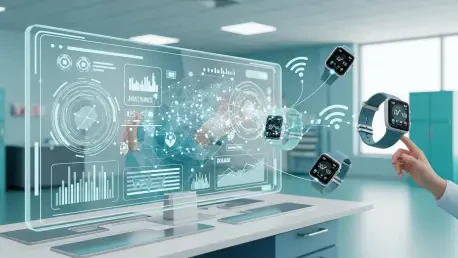

In contemporary hospital settings, the traditional reliance on intermittent manual vital sign checks is being replaced by a sophisticated network of medical-grade smartwatches that provide a seamless view of patient health. These wrist-worn devices represent a paradigm shift in inpatient care, moving away from the snapshot approach of assessment toward a more holistic, continuous model of clinical surveillance. By 2026, health systems have integrated these wearables to monitor everything from subtle changes in cardiac rhythms to early signs of respiratory distress in patients who do not require intensive care. This persistent oversight allows clinicians to identify trends that would otherwise remain hidden between nursing rounds, creating a safety net for vulnerable individuals. The data collected from these devices is not merely observational; it is actionable information that drives bedside decisions. Consequently, the role of the smartwatch has evolved into a vital diagnostic tool that enhances the capacity of healthcare providers to deliver timely and personalized interventions.
Advancements in Diagnostic Continuity and Accuracy
Real-Time Data Streams: Enhancing Vital Sign Visibility
The deployment of smartwatches in medical-surgical wards has addressed the inherent risks associated with unmonitored recovery periods. Unlike the invasive and bulky telemetry systems of the past, modern wearables provide medical teams with high-fidelity physiological data without compromising patient mobility. This continuous flow of information includes real-time electrocardiograms and photoplethysmography, which are transmitted directly to a centralized nursing station for ongoing review. By 2026, these systems have demonstrated a remarkable ability to detect atrial fibrillation and other arrhythmias in a broader population of patients. This level of visibility ensures that any deviation from a patient’s baseline is immediately noted, allowing for rapid medical assessment before the condition worsens. Furthermore, the unobtrusive nature of these devices encourages patients to maintain activity levels conducive to recovery, knowing that their status is being watched without the need for restrictive wiring or stationary equipment.
System Integration: Automating Electronic Health Record Updates
A significant challenge in inpatient care has historically been the manual entry of vital signs, a process prone to human error and time delays. The latest generation of smartwatches has solved this by establishing a direct, encrypted link to hospital electronic health record systems, ensuring that data points are uploaded automatically at frequent intervals. This automation significantly reduces the administrative burden on caregivers, allowing them to spend more time at the bedside. Moreover, the integration of AI-driven software analyzes these data streams to highlight potential risks, such as early-stage sepsis or impending hemodynamic collapse. These algorithms filter through the noise to present only the relevant insights to the clinical team, improving the signal-to-noise ratio in hospital communications. By 2026, this digital infrastructure has created a more cohesive environment where the care team possesses an up-to-the-minute understanding of every patient’s health trajectory, facilitating more informed and collaborative clinical decision-making.
Improving Workflow and Patient Autonomy
Alarm Fatigue Management: Utilizing Haptic Notification Systems
The constant auditory environment of a hospital, characterized by frequent beeps and sirens, often leads to alarm fatigue among nursing professionals, potentially resulting in missed signals. Smartwatches are now utilized as localized notification hubs, delivering silent haptic alerts directly to the wrist of the assigned nurse when a patient’s vital signs fall outside of safe parameters. This targeted approach ensures that the right provider receives the alert without contributing to the overall noise pollution, which also benefits the patient’s rest and recovery. By 2026, these wearable platforms have become sophisticated enough to triage notifications based on severity, prioritizing life-threatening events over routine alerts. The implementation of this silent notification strategy led to a significant decrease in response times for critical events across numerous medical centers, while the ability to acknowledge alarms from the wrist streamlined the daily nursing workflow, allowing clinicians to focus on care.
Strategic Outcomes: Establishing New Standards for Recovery
The adoption of wearable technology in hospital wards represented a fundamental shift in clinical surveillance and patient safety during recent implementation phases. By decentralizing the monitoring process, healthcare systems improved response times and successfully reduced the burden of alarm fatigue on frontline nursing staff. Patients benefited from increased visibility into their own physiological metrics, which encouraged greater participation in recovery protocols and improved the overall inpatient experience. These initiatives proved that integrating medical-grade smartwatches into the clinical ecosystem could deliver measurable improvements in both operational efficiency and long-term outcomes. As hospitals looked toward expansion, the focus shifted to maintaining high standards of data security and ensuring the seamless continuity of care through the transition to home-based monitoring. These advancements established a new standard for hospital care that prioritized proactive intervention over reactive treatment, changing how providers interacted with bedside data.