
The value of any smart device must be measured by the net time returned after accounting for the labor required for initial setup and ongoing technical support. For years, the marketing narrative surrounding the Internet of Things (IoT) suggested that the increasing complexity of household technology would lead to a corresponding decrease in human effort. The initial promise was simple: machines would take over mundane chores, granting inhabitants a luxury previously reserved for the elite—uninterrupted leisure time. However, the reality of living in a modern automated environment has revealed a hidden tax on that leisure. Instead of scrubbing floors or manually adjusting thermostats, residents now find themselves navigating firmware update screens, resetting unresponsive routers, and debugging automation scripts that have mysteriously stopped functioning. This shift from physical drudgery to digital administration represents a fundamental change in the nature of domestic labor. Today’s homeowner is frequently forced to adopt the role of a systems administrator, managing a distributed computing network that just happens to include a refrigerator and a light bulb. This evolution suggests that we have not actually eliminated work; we have merely transformed it into a cognitive and technical burden that demands a different, and often more taxing, type of human attention.
Measuring Utility Through the Lens of Net Time Returned
To accurately assess whether a smart device is a benefit or a burden, one must move beyond flashy demonstrations of voice commands and mobile app interfaces to focus on a more rigorous calculation of efficiency. This approach requires evaluating the actual amount of time a device saves over its entire lifecycle, a metric that is often ignored in favor of the immediate convenience of a single automated task. For instance, an automated irrigation system might save ten minutes of watering every evening, but if it requires three hours of seasonal configuration, monthly sensor calibrations, and occasional troubleshooting when a software update breaks the local Wi-Fi connection, the actual time saved may be negligible or even negative. This Net Time Returned serves as a sobering reality check for the enthusiast who tends to view each new gadget through the lens of potential rather than practice. In a world saturated with smart solutions, the most effective tools are those that provide a clear surplus of time after all digital maintenance costs are settled, rather than those that offer high-tech novelty at the price of constant manual intervention.
Furthermore, the distinction between chronological time and cognitive attention is vital when judging the success of home automation. A manual chore, such as taking out the trash, is a predictable physical task that rarely interrupts the flow of deep work or relaxation. In contrast, digital malfunctions are notoriously erratic and intrusive. A smart lock that fails to recognize an authorized user during a rainstorm or a lighting system that refuses to turn off at midnight creates a level of frustration and mental exhaustion that far outweighs the physical effort of turning a key or flipping a traditional switch. This cognitive load is the true cost of a poorly integrated smart home. For an automation system to be genuinely autonomous, it must achieve a near-perfect ratio of successful unattended operations. When a device requires a rescue because it has become stuck or lost its connection, it stops being a servant and becomes a dependent. True household intelligence should be measured by its ability to function without being noticed, yet many current systems prioritize feature density over this essential, quiet reliability, leading to a state where the technology demands more mental bandwidth than the original chores it replaced.
The Inherent Friction Between Software and Physical Environments
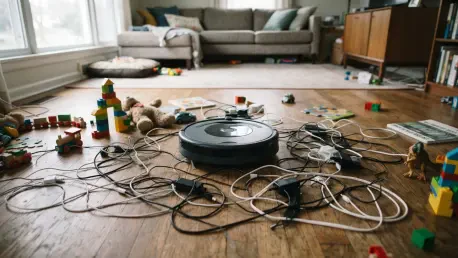
One of the most persistent challenges in creating a seamless smart home is the fundamental disconnect between the rigid logic of software and the messy, fluid reality of a physical living space. This friction is most apparent in the operation of autonomous floor cleaners, which are often heralded as the pinnacle of domestic automation. While modern robot vacuums utilize advanced LiDAR and sophisticated computer vision to map a room, they remain highly susceptible to unpredictable obstacles common in every home, such as stray charging cables, pet toys, or displaced furniture. This creates a phenomenon known as upstream labor, where the human resident must spend significant time pre-cleaning the environment to ensure the robot can perform its task without incident. If a user spends fifteen minutes clearing the floor so a robot can vacuum for thirty, the automation has not truly removed the chore; it has simply forced the human to perform the preparatory work that the machine’s software logic cannot handle. This cycle reinforces the idea that many smart devices are not replacing human effort but are instead reorganizing it to suit the limitations of current technology.
This architectural struggle is further exacerbated by the complex data paths that many smart devices rely upon to execute even the simplest commands. Many manufacturers prioritize cloud-based processing for features like object recognition or energy optimization, which means a simple request must travel from the local device to a remote server and back again before any action is taken. This dependency introduces multiple points of failure, ranging from local network congestion to global outages of the manufacturer’s cloud infrastructure. When these external systems falter, the intelligence of the home evaporates, leaving the resident with a collection of expensive, non-functional hardware. The label of Artificial Intelligence in these contexts often hides a fragile web of dependencies that require constant monitoring by the user. Moving away from this cloud-centric model toward local-first processing is a necessary step for stability, yet it often requires a level of technical expertise that the average homeowner does not possess. This reliance on remote servers turns a simple light switch into a complex network node, complicating the user experience and increasing the likelihood of a technical breakdown that requires professional-level troubleshooting.
The Dilemma of Disparate Mechanical and Digital Lifespans
A significant and often overlooked risk in the adoption of smart appliances is the Two Lifetimes problem, which describes the mismatch between the physical durability of a machine and its digital support cycle. Traditional household appliances, such as refrigerators, ovens, and washing machines, were historically engineered to provide reliable service for fifteen to twenty years. However, the integration of software layers and cloud connectivity has tethered these long-lived mechanical assets to the much faster-paced world of digital obsolescence. A manufacturer may decide to stop providing security patches or cloud service support for a connected appliance after only five or six years, effectively rendering its smart features useless even while the mechanical components remain in perfect working order. This creates a situation where perfectly functional hardware becomes a security liability or a functional annoyance simply because the software supporting it has been abandoned. This discrepancy forces homeowners into a cycle of premature upgrades driven by digital failure rather than mechanical wear, undermining the long-term sustainability and value of domestic investments.
The consequences of this digital-mechanical mismatch are particularly severe when it involves critical home infrastructure like HVAC systems or security arrays. For example, recent shifts in the industry have seen major manufacturers migrate to entirely new cloud platforms, leaving users of older hardware with limited options for remote control or automation. When a manufacturer shuts down an older online controller service, a high-end air conditioning unit may lose its ability to participate in energy-saving schedules or be controlled via a mobile application. In these instances, the homeowner is essentially penalized for owning hardware that outlasts the manufacturer’s interest in maintaining the associated software. This reality highlights the precarious nature of the modern connected lifestyle, where the functionality of one’s home is subject to the corporate whims and shifting business models of technology companies. To avoid this, a strategic approach to home automation must prioritize devices that offer local control and open standards, ensuring that the physical asset remains useful even after cloud-based support has inevitably reached its end of life.
Addressing the Flaws of Modern Device Interoperability
The most visible failure of many smart home implementations occurs at the most basic level of interaction: the physical wall switch. In an ideal automated environment, technology should supplement existing human habits rather than seeking to replace them with less intuitive alternatives. However, many early and mid-tier smart lighting systems suffer from a design flaw where turning off a light at the physical switch cuts power to the device’s internal radio, making it invisible to the network and breaking all scheduled automations. This conflict forces residents to unlearn the natural instinct to flip a switch when entering or leaving a room, creating a friction-filled experience that feels more like adapting to the machine’s needs than the machine adapting to theirs. The solution lies in decoupled or detached control modes, where the physical switch acts as a digital signal to the controller rather than a mechanical disconnect of the power supply. Implementing these systems often requires rewiring or specialized relays, further contributing to the technical labor required to make a home truly intelligent and user-friendly.
While the industry has attempted to solve these integration issues through universal standards like Matter and Thread, these protocols are not a universal remedy for the administrative burden of the smart home. Matter, which serves as a common language for devices from different brands to communicate locally, has certainly reduced the initial friction of setting up a multi-vendor ecosystem. However, it does not eliminate the need for proprietary manufacturer apps for critical tasks such as firmware updates, deep configuration, and advanced diagnostic features. Furthermore, as these standards evolve at the rapid pace of the software industry, hardware that was standard-compliant only a few years ago can quickly find itself unable to support the latest iterations of the protocol. This creates a secondary layer of maintenance where the homeowner must manage the compatibility of various hubs, border routers, and endpoint devices. Instead of a “set it and forget it” utility, the smart home remains a dynamic environment that requires constant monitoring to ensure that the interconnected pieces continue to play well together as their individual software stacks are updated.
Navigating the Complexity of Domestic Network Engineering
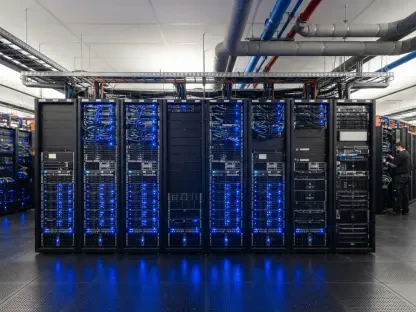
As the density of connected devices in the home increases, the underlying network infrastructure begins to resemble that of a small corporation rather than a simple residential setup. Managing dozens or even hundreds of wireless clients requires a sophisticated understanding of network congestion, signal interference, and security protocols. Many advanced users have turned to Virtual Local Area Networks (VLANs) to isolate potentially insecure IoT devices from their personal computers and sensitive data. While this segmentation is a best practice for cybersecurity, it introduces significant technical hurdles, particularly regarding device discovery across different network segments. For example, a smartphone on a secure network may struggle to find a smart TV on the IoT network without the manual configuration of multicast DNS reflectors or specialized gateways. This level of complexity effectively transforms the resident into a network engineer, responsible for maintaining traffic routing and security policies that would have been unimaginable in a domestic context a decade ago.
Beyond initial configuration, the ongoing security maintenance of a high-tech home requires a vigilant approach to vulnerability management. Each smart device represents a potential entry point for malicious actors, and the responsibility for keeping these gateways closed falls squarely on the homeowner. This involves regularly checking for firmware updates, monitoring for unusual network traffic, and managing complex authentication tokens and API keys. The failure of a single device to receive a timely security patch can compromise the entire household network, leading to privacy breaches or the unauthorized control of physical systems. This persistent threat creates a background level of stress that is entirely absent from a non-connected home. When a device stops responding, the troubleshooting process often involves a tedious cycle of power-cycling, factory resets, and re-pairing, all while trying to determine if the issue is a hardware failure, a software bug, or a broader network problem. The resulting environment is one where the pursuit of convenience has unintentionally introduced a new category of technical risk and administrative labor.
Establishing a Framework for Sustainable Smart Home Design
The ultimate success of a smart home is not defined by its complexity or the number of its connected devices, but by its ability to fail gracefully and operate without constant human supervision. A resilient system must be designed around the principle of graceful degradation, ensuring that the core functions of the home—lighting, climate control, and security—remain fully operational even if the internet connection is lost or the central automation controller fails. This requires a shift in philosophy away from cloud-dependent gadgets toward local-first architectures that prioritize reliability over marketing-driven features. Furthermore, the energy overhead of maintaining a constant digital infrastructure must be considered. While a single smart sensor uses very little power, the cumulative draw of multiple hubs, routers, and “vampire loads” from connected appliances can offset the energy savings promised by smart thermostats. A truly efficient home should provide measurable benefits that exceed the energy and attention required to sustain its operation, moving closer to the original ideal of a house that serves its inhabitants rather than the other way around.
To transition from being a system administrator to a resident of a truly functional environment, many users have adopted a more discerning approach to technology. This shift involves auditing existing systems to identify high-maintenance devices that provide low net value and replacing them with solutions that offer open APIs and local control. Prioritizing wired connections over wireless ones significantly reduces network instability and the associated labor costs that characterized earlier smart home configurations. Furthermore, establishing a clear manual override policy ensures that anyone can operate the home without needing a digital interface. By focusing on simplicity and local autonomy, it becomes possible to reclaim the time that was once promised by the initial wave of automation. The ultimate goal is realized when technology recedes into the background, functioning as a silent utility that enhances daily life without demanding constant, professional-grade maintenance. This evolution proves that the smartest homes are not those with the most gadgets, but those that require the least amount of technical intervention to remain helpful.