
The TransfHAR system leverages a transfer learning architecture pre-trained on 2,700 hours of motion data to learn new, user-defined activities from a single minute of demonstration. This breakthrough, developed by researchers at Northwestern University’s Sensing, Perception, Interactive Computing and Experiences (SPICE) Lab, addresses a long-standing limitation in wearable technology where devices remain largely oblivious to the nuanced manual actions of their users. While contemporary smartwatches have become adept at monitoring internal metrics like heart rate or external metrics like step counts, they have historically lacked the sophistication to interpret the complex interplay of hand and arm movements that define human interaction with the physical world. By utilizing the wrist as a primary data source, these engineers are transforming wearables from passive recording tools into active, intelligent observers of human intent. This transition is essential as the industry moves toward more intuitive interfaces that require less manual input on small screens and more seamless integration with everyday tasks. The research led by Karan Ahuja highlights a future where technology adapts to the individual’s unique movement patterns rather than forcing the user to conform to a narrow set of factory-defined gestures. This approach effectively bridges the sensory gap, allowing a device to “see” and “understand” what the hands are doing simply by being in constant contact with the skin.
Internal Sensing and Musculoskeletal Mapping
Advanced Bio-signatures: Precise Gesture Control
The implementation of EITWatch represents a sophisticated leap in how devices monitor the human body, utilizing a process known as Electrical Impedance Tomography to create a digital map of the interior of the wrist. Unlike traditional sensors that merely sit on the surface, this system employs eight compact electrodes integrated into the back of the watch housing to send nearly imperceptible electrical signals through the underlying tissue. Because muscles, tendons, and bones have different electrical properties, their shifting positions during hand movements create a dynamic environment for these signals. As the user moves their fingers or clenches their fist, the internal musculoskeletal architecture changes its density and arrangement, which in turn alters the electrical impedance measured by the watch. This allows the device to generate a unique “bio-signature” for every specific posture, effectively allowing the software to visualize the internal mechanics of the arm without the need for invasive procedures or bulky imaging equipment. This method bypasses the limitations of optical sensors, which can be fooled by skin tone or ambient lighting, providing a robust and reliable data stream directly from the source of the movement.
In practical application, the EITWatch prototype has demonstrated an exceptional ability to categorize complex movements with high fidelity, achieving over 90 percent accuracy across a variety of common hand gestures and subtle finger adjustments. This precision enables a new layer of user interface design where specific movements are mapped to digital triggers. For example, a user could theoretically navigate a complex digital menu, answer a phone call with a specific finger tap, or send a pre-written message using a “thumbs up” gesture, all while their hands are full or their attention is directed elsewhere. This functionality transforms the watch from a mere display into a powerful input peripheral that recognizes the wearer’s motor intent. During the 2026 research trials, the system showed it could maintain this performance even when movements were performed with varying degrees of force, suggesting that the bio-signatures are consistent enough for commercial implementation. By focusing on the internal shifts of the wrist, the engineers have provided a way for technology to interpret the language of the human body in a way that feels natural and requires almost no learning curve for the end user.
Bridging the Gap: Accessibility and Prosthetic Integration
The potential for EITWatch extends significantly into the realm of assistive technology, offering a lifeline for individuals who find traditional touchscreen interfaces difficult to navigate. For many people with motor impairments or physical limitations, the fine motor control required to tap small icons on a smartwatch or smartphone can be a significant barrier to digital inclusion. By providing a secondary input channel that relies on gestures rather than screen contact, this system allows for an “eyes-free” and “hands-free” interaction model. A wearer could control their smart home devices or communication tools using muscle contractions in the wrist that are already part of their natural movement repertoire. This democratization of technology ensures that the benefits of the wearable revolution are available to a broader demographic, moving beyond the standard user profile to accommodate diverse physical needs. The ability to sense motor intent through the skin means that even if a full range of motion is not possible, the device can still pick up the bioelectric signals of the effort, allowing for customized interaction profiles tailored to the specific capabilities of each individual user.
Furthermore, this musculoskeletal mapping technology serves as a foundational component for the next generation of bionic prosthetics. Currently, many advanced prosthetic hands rely on external sensors or complex surgical implants to determine what the user wants to do, but EITWatch offers a non-invasive alternative that could be integrated directly into a prosthetic sleeve. Because the sensors are reading the muscle tension and structural shifts in the residual limb or the wrist area, they can translate those signals into precise movements for a mechanical hand. This method is far more discreet and less cumbersome than existing vision-based or bulky EMG systems, providing a streamlined interface that feels like a natural extension of the body. By 2026, the progress in this field has shown that integrating such sensing capabilities into everyday wearables could drastically lower the cost and complexity of high-end prosthetic control. This shift not only improves the functionality of artificial limbs but also enhances the user’s sense of agency and dignity, as the technology operates quietly in the background without drawing unnecessary attention to the device or the user’s physical condition.
Personalized Activity Recognition and Privacy
Breaking Dataset Rigidities: The Power of Transfer Learning
While gesture recognition handles micro-movements, the TransfHAR system addresses the broader scope of daily activity tracking by utilizing existing hardware in a radically new way. Most commercial wearables today are restricted to a pre-defined catalog of activities, such as walking, cycling, or swimming, because they are trained on massive but static datasets that cannot account for the vast diversity of human behavior. TransfHAR breaks this mold by employing a transfer learning architecture that has already “learned” the basic physics of human motion from thousands of hours of general data. This foundational knowledge allows the system to understand how the arm moves in space without needing a specific label for every possible action. When a user wants to track a unique or specialized activity—such as a specific exercise routine or a repetitive professional task—they only need to provide a one-minute demonstration. The system then takes that small sample and, using its prior knowledge of motion physics, creates a highly accurate model for that new behavior. This “few-shot” learning capability marks a significant shift from the rigid, “one-size-fits-all” approach of 2026 toward a truly personalized digital assistant.
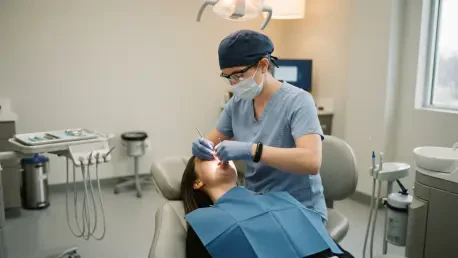
The implications of this adaptive learning are particularly profound for professionals whose daily movements are critical to their health or performance but are ignored by standard trackers. A dental hygienist, for instance, performs specific wrist and arm movements throughout the day that could lead to repetitive strain injuries; TransfHAR can be taught to recognize these specific motions to provide feedback on ergonomics or track work volume. Similarly, a chef in a high-pressure kitchen or a technician performing precise assembly tasks could use the system to log their activities automatically, providing data-driven insights into their productivity and physical well-being. In experimental studies, the system maintained a 90 percent accuracy rate even for these highly specific, user-defined habits, demonstrating that the underlying transfer learning model is robust enough to handle the complexities of real-world motion. This technology effectively removes the developer as the gatekeeper of what constitutes a “valid” activity, empowering the user to define their own metrics and track the things that actually matter in their specific daily lives.
Privacy by Design: Solving the Visibility Dilemma
One of the most significant advantages of wrist-based sensing over traditional camera-based motion tracking is the inherent protection of user privacy. While optical systems are currently very effective at identifying human poses, they require constant visual surveillance, which is increasingly viewed as an unacceptable intrusion in private spaces. In sensitive environments like bedrooms, bathrooms, or eldercare facilities, the presence of a camera can feel like a violation of dignity, even if the data is intended for health monitoring. TransfHAR and EITWatch offer a compelling alternative by providing detailed behavioral data through movement and impedance rather than visual recording. A healthcare provider can confirm that an elderly patient is maintaining their hygiene routine, such as brushing their teeth or washing their face, without ever needing to see a video feed of the person. This allows for a high level of care and safety monitoring while maintaining the patient’s privacy and autonomy, a balance that has been difficult to achieve with previous generations of monitoring technology.
In addition to the ethical benefits, wrist-based sensing also overcomes the physical limitations of “occlusion” that plague vision-based systems. A camera can only track what it can see; if a user’s hand is tucked under a blanket, hidden behind their back, or obscured by heavy winter clothing, the system fails to provide any data. This makes vision-based tracking unreliable in dynamic, real-world environments where people are constantly moving in and out of the camera’s line of sight. A smartwatch, conversely, is always in contact with the wearer, regardless of their orientation or the presence of physical obstacles. This persistent connection ensures that activity tracking remains continuous and reliable throughout the day and night. Whether the user is working at a desk with their hands under a table or sleeping in a dark room, the sensors on the wrist continue to function perfectly. By moving the “eyes” of the system to the wrist in the form of motion and impedance sensors, the Northwestern engineers have created a tracking paradigm that is both more effective and more respectful of human boundaries than any optical solution currently available.
Scaling Toward Universal Consumer Adoption
Technical Refinement: Miniaturization and Universal Calibration
As these prototypes move toward the commercial market, the primary focus of the engineering team has shifted toward miniaturizing the complex electronics required for Electrical Impedance Tomography. Currently, the EITWatch requires specialized circuitry that, while compact, still pushes the limits of what can fit inside the slim, aesthetic profiles of modern consumer smartwatches. The goal is to integrate these electrodes and the processing units into the standard manufacturing process, ensuring that the additional sensing capabilities do not add significant bulk or weight to the device. By 2026, advancements in flexible circuitry and low-power microchips have made this goal increasingly attainable, allowing the sensors to be woven into the fabric of the watch band or embedded directly into the ceramic backplate of the device. This physical integration is crucial for user adoption, as consumers are unlikely to trade the comfort and style of their existing wearables for a larger, more cumbersome device, regardless of how advanced the gesture tracking might be.
Another significant hurdle being addressed is the challenge of universal calibration. Because every person has a unique musculoskeletal structure—with variations in bone density, muscle mass, and fat distribution—an EIT system that is calibrated for one individual may not work as effectively for another. Initially, this required a lengthy setup process where each new user had to “train” the watch to recognize their specific anatomy. However, the researchers are now leveraging the same transfer learning principles used in TransfHAR to create a more generalized model for EITWatch. By training the system on a diverse group of participants, the engineers are working to develop an algorithm that can automatically adjust to the wearer’s specific physiology within seconds of putting the watch on. This “plug-and-play” capability is essential for a consumer product, as it ensures that the technology is accessible to everyone immediately, regardless of their physical build. Solving this calibration issue will allow the technology to scale from a laboratory curiosity to a standard feature in the global wearable ecosystem.
Future Perspectives: A New Foundation for Interaction
The engineering team demonstrated that the future of wearable technology lies not in adding more screens, but in deepening the sensory connection between the device and the human body. By moving beyond simple heart rate monitoring and into the realm of musculoskeletal mapping and adaptive learning, researchers at Northwestern have established a new framework for how humans and computers will interact in the coming years. The research highlighted the wrist as the ultimate interface, a unique location that offers a constant, high-fidelity stream of data about both our internal physical state and our external behavioral patterns. This development suggested that the next phase of the digital revolution will be defined by devices that anticipate our needs and understand our actions without requiring us to explicitly tell them what we are doing. As these technologies become more refined, they will likely migrate from smartwatches to even more discreet form factors, such as smart rings or subtle wristbands, further embedding ambient intelligence into our daily lives.
Moving forward, the integration of these sensing systems will require a concerted effort from both hardware manufacturers and software developers to create open standards for gesture-based interaction. The actionable next step for the industry involves moving away from proprietary, locked-down motion catalogs and toward the flexible, user-driven models pioneered by the TransfHAR system. Providing developers with the tools to implement “few-shot” learning in their apps will unlock a wave of innovation in fitness, healthcare, and productivity. For the consumer, the transition will be marked by a shift in expectation; wearables will no longer be viewed as simple trackers, but as personalized extensions of their own physical presence. The ultimate goal is a seamless digital experience where the boundary between human intent and machine execution disappears, enabled by the quiet, constant sensing of the structures beneath our skin and the patterns in our movement. This shift promised to make our interactions with the digital world as natural and fluid as the gestures we use to navigate the physical one.