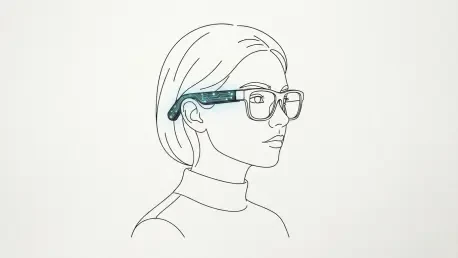

Rokid Glasses lead the HUD category by utilizing a green micro-LED waveguide to project real-time navigation and translation data directly into the user’s field of view. This technological breakthrough represents a broader shift in the augmented reality market, which has reached a state of significant maturity as of late 2026. The industry has successfully transitioned past the era of bulky, cumbersome prototypes to embrace sleek, functional designs that cater to specific consumer needs across various price points. This diversification is largely the result of a coordinated effort by hardware manufacturers to solve the long-standing friction between high-performance optics and wearable comfort. As of November 5, 2026, the market is no longer a monolithic entity but a vibrant ecosystem where established giants like Meta and XREAL compete alongside specialized innovators like Rokid and RayNeo. The emergence of standardized operating systems has further catalyzed this growth, providing a stable foundation for software developers to create meaningful, everyday applications. Consequently, smart glasses have moved from being expensive novelties to becoming essential tools for communication, productivity, and entertainment, fundamentally altering how individuals interact with the digital world in their daily lives. The current landscape is characterized by a clear stratification of hardware, where the choice of a device is dictated more by lifestyle requirements than by mere technical specifications or brand loyalty.
Categorizing the Modern Hardware Landscape: Three Distinct Tiers
The augmented reality market in late 2026 has branched into three distinct hardware tiers, each defined by the delicate balance between style, battery life, and visual capability. The first tier consists of camera and audio glasses, a category that has seen explosive growth due to its focus on social acceptability and fashion. These devices, most notably seen in the latest Ray-Ban Meta collections, prioritize a form factor that is indistinguishable from traditional eyewear. By eschewing integrated displays, manufacturers are able to maximize battery life and minimize weight, focusing instead on high-fidelity audio, advanced AI assistants, and high-resolution media capture. These glasses serve as an always-on portal to digital assistants, allowing users to interact with their environment through voice and sound without the social friction often associated with more intrusive headsets. This tier has successfully captured the mainstream consumer who values the convenience of a hands-free interface but is not yet ready for a full visual overlay in their daily routine.
The remaining two tiers focus on visual interaction, ranging from simple information overlays to fully immersive spatial computing. Display-centric smart glasses represent the second tier, offering a lightweight heads-up display that provides essential data such as turn-by-turn navigation, incoming notifications, and real-time translation. These devices typically weigh less than 50 grams and are designed for all-day wear, functioning as a secondary screen for the user’s smartphone. In contrast, the third tier consists of virtual screen and XR glasses, which are designed for high-fidelity “private cinema” experiences or complex spatial work. These devices often rely on an external compute puck or a wired connection to a mobile device to handle the heavy processing requirements and power consumption. By offloading the battery and processor to a separate unit, manufacturers have achieved a level of visual performance that rivals traditional desktop monitors, making them a preferred choice for frequent travelers and professional developers who require a portable, high-resolution workspace.
Meta’s Strategic Dominance: Segmenting the Consumer Experience
Meta continues to hold a dominant position in the consumer smart glasses market through its highly successful partnership with EssilorLuxottica. Following the high-profile Connect event earlier this year, Meta effectively segmented its product lineup into three distinct price points to ensure coverage across all demographic segments. The third-generation Ray-Ban Meta remains the flagship mainstream product, retailing at $449 and featuring a sophisticated six-microphone array designed to eliminate nearly all background noise during calls or AI interactions. The inclusion of the “Zena” cat-eye frame alongside the classic Wayfarer and Aviator styles demonstrates Meta’s commitment to fashion-first technology. By focusing on the camera and audio experience rather than a display, the company has created a product that people are willing to wear in any social setting, effectively normalizing the presence of face-worn sensors in public spaces. This strategy has allowed Meta to collect vast amounts of real-world data to train its AI models, further widening the gap between itself and its competitors.
To bridge the gap between simple audio wearables and full augmented reality, Meta introduced the Ray-Ban Display model, priced at $799. This device features a single-eye in-lens display and is paired with a wrist-worn Neural Band that interprets micro-gestures of the fingers for discreet input. This combination of a minimalist display and a neural interface represents Meta’s vision for the future of human-computer interaction, where physical buttons and touchscreens are replaced by subtle movements and voice commands. Additionally, the company launched a camera-free audio version for $349 to address growing privacy concerns and regulatory pressures in certain global markets. This audio-only model functions as a high-end wearable with integrated Meta AI, targeting users who want the benefits of a smart assistant without the social or legal complications of a face-mounted camera. Through this multi-tiered approach, Meta has successfully created an ecosystem that caters to varying levels of comfort with technology, ensuring that its Horizon OS remains the most widely used platform in the wearable space.
Android XR: The Great Unification of Spatial Systems
The most significant shift in the competitive landscape during late 2026 is the arrival of Android XR, Google’s dedicated operating system for spatial computing. Much like the original Android OS did for the smartphone industry, Android XR aims to provide a unified framework that standardizes how apps and hardware interact in 3D space. This platform allows various manufacturers to leverage the vast Google Play ecosystem, moving away from the proprietary, siloed software that characterized the early years of the AR industry. For companies like XREAL and RayNeo, the adoption of Android XR has been transformative, allowing them to focus on hardware innovation while Google manages the underlying software complexities and developer relations. This shift has led to a surge in high-quality applications designed specifically for smart glasses, ranging from immersive education tools to collaborative work environments that transcend the limitations of traditional 2D screens.
The XREAL AURA, which began shipping in mid-November 2026, stands as the premier example of what the Android XR platform can achieve. Unlike previous generations of “dumb” glasses that merely mirrored a smartphone screen, the AURA is a standalone spatial computing device that runs full Android applications via an external compute puck. It features high-end Sony micro-OLED panels and a generous 70-degree field of view, providing a visual experience that is both crisp and expansive. By adopting the Android XR standard, XREAL has ensured that its users have access to a familiar suite of productivity apps, including Google Workspace and various media streaming services, right out of the box. This move toward a standardized ecosystem is viewed by industry analysts as the primary threat to the existing duopoly of Meta and Apple, as it lowers the barrier to entry for other hardware manufacturers and creates a more competitive, diverse marketplace for consumers who are wary of being locked into a single brand’s ecosystem.
The Strategic Alliance: Samsung, Google, and Fashion Partners
In a direct challenge to the market leaders, Samsung and Google have formed a strategic alliance that integrates high-end hardware with a robust software ecosystem. This partnership has recently expanded to include prominent eyewear brands like Warby Parker and Gentle Monster, ensuring that their upcoming devices meet the aesthetic standards required for mass-market adoption. Their initial collaborative hardware, scheduled for a mid-December release, focuses on a sophisticated blend of audio and camera functionality housed in premium frames that look like high-end boutique eyewear. This initial offering is designed to establish a foothold in the fashion-tech space before the companies release a more advanced, display-based version in the coming year. By leveraging Samsung’s expertise in miniaturized electronics and Google’s software prowess, the duo is positioning itself as the sophisticated alternative for professionals who demand both style and deep integration with their existing Android and Galaxy ecosystems.
This collaboration is viewed as a critical counter-move against Apple’s high-end visionOS and Meta’s broad consumer reach. The involvement of Warby Parker is particularly significant, as it provides a ready-made retail and prescription infrastructure that most tech companies lack. This allows consumers to easily try on the devices and obtain prescription lenses in a traditional optical setting, removing one of the most persistent hurdles to smart glasses adoption. Furthermore, the integration with Samsung’s Galaxy AI ensures that the glasses offer a level of personalized assistance that is difficult for smaller competitors to replicate. As these tech giants align their interests, the market is seeing a consolidation of resources that favors the development of more polished, reliable products. The competition between the Android XR alliance and the proprietary systems of Meta and Apple is driving rapid innovation, leading to better displays, longer battery life, and more intuitive user interfaces for the average consumer.
Specialized Leaders: Navigation, Gaming, and Productivity
While the larger tech conglomerates compete for general market share, specialized manufacturers have carved out lucrative niches by focusing on specific high-value use cases. Rokid has established itself as the leader in the heads-up display category, particularly for users who require real-time information overlays without the bulk of a full spatial headset. The Rokid Glasses, weighing only 49 grams, have become a favorite for travelers and urban professionals due to their native integration with Google Gemini. This allows for seamless, real-time translation of foreign languages and turn-by-turn walking directions that appear naturally in the user’s field of vision. By focusing on a single-color micro-LED waveguide, Rokid has maximized outdoor visibility and battery efficiency, creating a tool that is highly effective for its intended purpose rather than trying to be an all-in-one entertainment device. This focus on utility over immersion has resonated with a segment of the market that prioritizes practical benefits in a lightweight form factor.
For those focused on entertainment and mobile productivity, the tethered display category remains the most viable option for high-quality visuals. Devices like the XREAL One Pro and the VITURE Pro 2 cater to a different set of needs, providing massive virtual screens that replace traditional monitors or televisions. The XREAL One Pro uses a custom X1 chip to provide stable 3DoF tracking, ensuring that the virtual screen remains fixed in space even as the wearer moves their head. This feature is particularly valuable for frequent flyers who want to watch movies or work on spreadsheets in the cramped environment of an airplane cabin. Meanwhile, VITURE has differentiated itself by focusing on accessibility and ergonomics, including built-in myopia adjustment dials that allow many prescription wearers to use the glasses without needing custom lens inserts. By addressing these specific pain points, these companies have maintained a loyal following among enthusiasts and professionals who require the highest possible visual fidelity for their specific tasks.
The High-End Frontier: Standalone AR and Industry Benchmarks
The high-end of the 2026 market is defined by devices that push the absolute limits of current optical and processing technology, often serving as a preview for what will eventually become mainstream. Snap’s latest iteration of its Spectacles offers a completely standalone AR experience, meaning all processing and battery power are contained within the frames themselves. With a 51-degree field of view and incredibly low latency, these glasses provide one of the most seamless and interactive AR experiences available today. However, the trade-off for this standalone capability is a higher weight and a relatively short battery life, which currently limits their use to shorter sessions or specific professional applications. Despite these limitations, Snap has built a thriving community of creators who are developing unique AR lenses that push the boundaries of social interaction and digital art, proving that there is a significant appetite for immersive, standalone hardware among the creative class.
Apple continues to set the benchmark for visual fidelity and spatial operating systems with the Vision Pro, which remains the most advanced device in the broader XR category. While it is not a pair of glasses in the traditional sense, its impact on the smart glasses market is profound, as it defines the standard for how digital objects should look and behave in the real world. Apple has reportedly shifted a large portion of its internal research and development toward translating the Vision Pro experience into a much lighter, glasses-like form factor. Similarly, Meta’s “Orion” project serves as a technical north star for the entire industry, showcasing the potential of silicon carbide lenses and high-FOV holographic displays. Although these high-end devices are currently priced for developers and early adopters, the technologies they utilize—such as advanced eye-tracking and spatial mapping—are already beginning to trickle down into more affordable consumer models, ensuring a constant cycle of improvement across the entire industry.
Societal Integration: Ambient AI and Regulatory Evolution
The widespread adoption of smart glasses in 2026 has brought the concept of “Ambient AI” to the forefront of daily life. Across all tiers of hardware, the integration of Large Language Models such as Meta AI and Google Gemini has become the standard interface, largely replacing the need for physical buttons or constant interaction with a smartphone screen. Voice-driven commands and AI-driven visual recognition allow users to interact with their surroundings in ways that were previously impossible, such as identifying landmarks, summarizing long documents at a glance, or receiving instant feedback on complex tasks. This shift toward a more natural, hands-free interface has been particularly beneficial in professional settings, where technicians and medical professionals can access critical information without breaking their focus. However, this convenience comes with a new set of societal challenges, as the constant presence of cameras and microphones on people’s faces continues to spark intense debate regarding privacy and the boundaries of digital surveillance.
As camera-equipped eyewear becomes more ubiquitous, legal frameworks and social norms are undergoing a period of rapid evolution to keep pace with the technology. In late 2026, several global jurisdictions have implemented strict regulations regarding where smart glasses can be worn, with many schools, courtrooms, and private theaters instituting outright bans on the devices. Lawmakers in the United States and the European Union have begun questioning the privacy implications of “stealth” recording, leading some manufacturers to include more prominent recording indicators to alert bystanders when the sensors are active. This regulatory pushback has forced companies to be more transparent about their data collection practices and has encouraged the development of more privacy-centric hardware, such as the aforementioned camera-free models from Meta. Navigating these complex legal and social landscapes is now as much a part of a manufacturer’s strategy as developing the next generation of display technology, as the long-term success of the industry depends on maintaining public trust and social acceptance.
Shaping the Path Forward: Insights for the Next Developmental Cycle
The industry looked back on the progress made during the previous twelve months as a period of significant stabilization and growth. The transition from experimental prototypes to refined consumer products was largely completed, and the market established a clear structure that benefited both manufacturers and end-users. It was observed that the “compute puck” model became a favored solution for balancing performance with the physical constraints of wearable hardware, allowing for more powerful processors without increasing the heat or weight on the user’s face. This architectural decision was seen as a vital step in maintaining the aesthetic appeal of the glasses while still delivering the high-quality visual experiences that consumers demanded. The standardization brought about by Android XR played a crucial role in this evolution, as it allowed for a more cohesive developer ecosystem that flourished across different hardware brands.
As the market moved toward the next developmental cycle, the focus shifted toward the eventual integration of holographic lenses and more advanced power management solutions. The lessons learned during 2026 provided a roadmap for future hardware, emphasizing the need for better outdoor visibility and more intuitive neural interfaces. It was concluded that the most successful products were those that integrated seamlessly into the user’s existing lifestyle rather than requiring significant changes in behavior. The industry prepared for the upcoming year with an emphasis on refining these experiences and expanding the reach of spatial computing to a broader global audience. While the hardware continued to advance at a rapid pace, the primary focus remained on creating meaningful value for the user, ensuring that the next generation of smart glasses would be even more indispensable than those that defined the current landscape.