
A resilient smart home architecture must separate cloud-based natural-language interpretation from the essential local control of lights and appliances. In the current landscape of residential technology, the definition of a modern home has evolved from a collection of isolated gadgets to a highly sophisticated ecosystem of interconnected devices that demand constant uptime and precision. This digital transformation introduces a multi-layered dependency stack, where physical wiring, local networking hardware, and cloud-based intelligence are woven into the very fabric of daily life. As these systems become more intricate, the probability of a partial failure increases exponentially, making the structural and operational resilience of the home a critical area of study for engineers and architects alike. In high-density environments, such as those found in modern metropolitan areas or the unique architectural landscape of Indian households, smart systems face specific challenges like electrical volatility and structural barriers. The true intelligence of a smart home is not demonstrated by its performance under ideal laboratory conditions, but by its capacity for graceful degradation. This engineering principle ensures that a system maintains its most essential functions even when the more sophisticated layers of its digital infrastructure fail or become inaccessible, preventing a minor internet outage from turning a residence into an unlivable environment.
Structural Foundations: Understanding the Layers of Technical Infrastructure
Part 1: Decoupling Protocols and the Dependency Stack
A common consumer misconception persists that communication protocols like Wi-Fi, Zigbee, Thread, and Matter are simply interchangeable competitors in a winner-take-all market. In reality, these technologies represent different layers of a technological stack where each serves a specific purpose and creates a distinct failure domain within the home ecosystem. While Wi-Fi remains the standard for high-bandwidth IP connectivity, it is often too power-hungry for small, battery-operated sensors. Conversely, Thread offers a low-power IPv6 mesh network specifically designed for reliability and low latency in device-to-device communication. Matter acts as an overarching application standard that runs on top of these various hardware layers to ensure that a lightbulb from one manufacturer can speak the same language as a hub from another. By understanding this hierarchy, homeowners can better prepare for specific points of failure, recognizing that a problem with the local Wi-Fi router does not necessarily mean that the mesh-connected light switches should stop functioning.
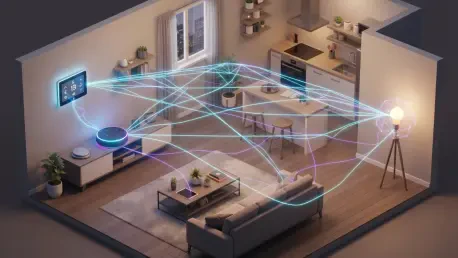
The complexity of this dependency stack means that any break in the chain can have cascading effects on the user experience. For instance, if a cloud-based service goes offline, the voice assistant may lose its ability to process natural language, but the underlying Matter protocol should allow for continued control through a local tablet or physical remote. Building a resilient home requires identifying these failure domains and ensuring that each layer has a backup or a way to operate independently. This approach moves away from a monolithic system where the entire house relies on a single internet connection and toward a modular architecture where the local network is the primary authority. Engineers are now focusing on creating systems where the “intelligence” is distributed, allowing individual rooms or zones to maintain their automation logic even if the central gateway is disconnected from the global internet. This shift ensures that the most basic human needs, such as lighting and climate control, remain available regardless of the status of external servers or wide-area network stability.
Part 2: Local-First Architectures and Hardware Resilience
The movement toward a local-first architecture is a direct response to the inherent instability of cloud-dependent smart home systems. In a local-first setup, the heavy lifting of automation logic and device state management happens on hardware located physically within the home, such as a dedicated automation hub or a Thread border router. This strategy significantly reduces latency and enhances privacy, but it also shifts the potential point of failure from a global cloud provider to the home’s own hardware infrastructure. If a local hub suffers a hardware failure or a power surge, the routines and scheduled tasks it manages will inevitably stop. Therefore, hardware resilience becomes just as important as software stability. Homeowners must consider the physical environment where their controllers are placed, ensuring they are protected from heat, dust, and electrical interference. This local-centric approach does not eliminate dependencies but rather brings them within the control of the resident, allowing for faster troubleshooting and a more predictable operational environment.
Investing in high-quality local hardware is only one half of the resilience equation; the other involves designing systems that fail safely when that hardware eventually reaches its end of life or encounters an error. A truly resilient local architecture incorporates redundancy, such as having multiple Thread border routers that can take over if the primary one goes offline. This mesh-based redundancy ensures that the network can “self-heal” by rerouting data through other active nodes. Furthermore, the selection of hardware should favor open standards that allow for easier replacement and migration. If a proprietary hub fails and the manufacturer has discontinued the product line, the homeowner is left with a house full of useless electronics. By prioritizing devices that support interoperable standards like Matter over Thread, residents can ensure that their infrastructure remains viable even if individual components need to be swapped out. This philosophy of hardware independence is the cornerstone of a sustainable smart home, moving the industry away from disposable gadgets toward enduring residential infrastructure.
Operational Reliability: Strategies for Maintaining Functionality During Outages
Part 1: Managing Connectivity and Controller Failures
Resilience in the modern smart home must be planned across four distinct layers of potential failure, beginning with the most common scenario: a Wide Area Network outage. When the internet connection is severed, a well-designed system should continue to execute local routines, such as turning on lights at sunset or managing temperature based on occupancy. However, most consumers find that their cloud-dependent features, such as voice-activated assistants and remote smartphone access, fail immediately in this state. To mitigate this, engineers are integrating local voice processing that can handle basic commands without needing to send data to a remote server. This ensures that even when the outside world is cut off, the interior of the home remains responsive and controllable. The goal is to create a seamless transition where the user might not even notice the internet is down because the core functionality of the house remains completely unaffected.
A more severe tier of failure occurs at the Local Area Network level, where the primary router or Wi-Fi access point crashes or loses power. In many homes, this renders every Wi-Fi-based smart device unreachable, effectively “breaking” the house until the router finishes its lengthy reboot cycle. This vulnerability highlights the superior resilience of mesh technologies like Zigbee or Thread, which can maintain peer-to-peer communication between devices even when the central router is unavailable. For instance, a wireless switch can still communicate directly with a ceiling fan if they are part of the same mesh network, bypassing the traditional router entirely. Planning for LAN-level failures involves strategically placing mesh-capable devices throughout the home to ensure that critical communication paths are always available. By diversifying the communication protocols used in the house, a resident can ensure that a single piece of networking equipment does not become a catastrophic point of failure for the entire living environment.
Part 2: State Reconciliation and Power Recovery Metrics
When electricity returns after a power outage, the smart home enters a complex and often chaotic recovery phase that determines the true reliability of the system. This process is not instantaneous; the infrastructure must boot, the network mesh must reform, and every individual device must rejoin the controller. A vital reliability metric used to evaluate this performance is the “Time to Useful Recovery,” which measures how long it takes for the system to become fully operational and accurately reflect the physical state of the home. In many cheaper systems, devices may appear as “offline” in an app for several minutes even after they have regained power, or they may default to an “on” state when the user previously had them “off.” This lack of predictability creates frustration and distrust in the technology, emphasizing the need for robust state reconciliation protocols that can handle the messy reality of power fluctuations.
State reconciliation is arguably the most challenging aspect of post-outage recovery, as the digital map of the house must be synchronized with the physical reality of every switch and sensor. If a resident manually toggles a physical switch while the power is out, the software must be intelligent enough to detect that change the moment it reconnects. Systems that prioritize accurate state updates are far superior to those that simply show a functional user interface while the background devices are still struggling to stabilize. Advanced controllers now use persistent memory and proactive polling to ensure that as soon as a device comes back online, its actual status is verified and updated in the system logic. This ensures that automated routines do not fire incorrectly based on stale data. For the homeowner, this means that the house “wakes up” exactly as it was before the outage, providing a sense of stability and continuity that is essential for long-term adoption of smart home technology.
Physical Realities: Maintenance and Environmental Context
Part 1: Sensor Integrity and Maintenance in High-Dust Environments
As smart homes integrate more advanced sensors to automate daily tasks, they introduce a new and often overlooked physical dependency: the need for regular cleanliness and maintenance. This is particularly evident in high-performance devices like robot vacuums and air purifiers that rely on an array of LiDAR, cameras, and infrared sensors to navigate and monitor the environment. In geographical regions with high levels of environmental dust, or in homes with pets, these sensors can quickly become “blinded” by a layer of debris. This does not always lead to a total system shutdown but rather a subtle degradation of data quality, where the robot might start bumping into furniture it previously avoided or an air quality sensor might report inaccurately high levels of particulates. Maintenance must therefore be viewed as a core component of system performance rather than an occasional chore.
The design of the hardware itself plays a significant role in how well it handles these environmental challenges. Consumers are increasingly looking for devices where the sensors are easily accessible for cleaning and where the software can provide “fuzzy” data interpretation when a sensor is partially obscured. A sophisticated sensing array is only beneficial if it is designed to be maintained by the average user without specialized tools. For example, some modern robot vacuums now include self-cleaning sensor modules or diagnostic alerts that specifically tell the user which lens needs a wipe. When a system can identify its own physical limitations—such as a cliff sensor being covered in dust—and alert the user before a failure occurs, it demonstrates a higher level of functional intelligence. This proactive approach to maintenance ensures that the information feeding the automation logic remains accurate, preventing the “garbage in, garbage out” scenario that can lead to erratic and frustrating automated behaviors.
Part 2: Beyond Simple Thresholds in Environmental Sensing
The next evolution of the smart home involves moving away from rigid, binary logic toward a more nuanced understanding of environmental context. Traditional automation often relies on simple thresholds, such as turning on a fan when the temperature hits 75 degrees. However, this can lead to “short-cycling,” where the device constantly flips on and off as the temperature fluctuates around that single point. To combat this, modern systems utilize “hysteresis,” which sets different thresholds for turning a device on versus turning it off, creating a stable buffer zone. Furthermore, truly intelligent systems now analyze data trends rather than reacting to a single static number. By determining whether pollution levels are rising rapidly or slowly dissipating, a smart air purifier can adjust its fan speed more gracefully, providing a more comfortable and energy-efficient environment for the residents.
Presence sensing has also seen a significant technological leap with the transition from Passive Infrared sensors to Millimeter-wave radar. While PIR sensors could only detect significant movement, mmWave technology can detect the micro-movements of a person breathing, allowing a room to remain “occupied” even if the resident is sitting perfectly still while reading a book. This prevents the common annoyance of lights turning off unexpectedly in a quiet room. However, this increased sensitivity brings its own set of challenges, as these sensors can be triggered by inanimate objects like a rotating desk fan or curtains moving in the breeze. Effective implementation requires sophisticated algorithm design that can filter out these “false positives.” By combining multiple sensor types and using temporal logic, a smart home can achieve a much higher degree of accuracy, ensuring that automation feels like a natural extension of the home rather than a series of clumsy, unpredictable reactions.
Electrical Integration: Software and Material Realities
Part 1: Resolving Conflicts Between Smart Software and Legacy Switches
One of the most persistent points of friction in smart home adoption is the fundamental conflict between modern automation software and traditional electrical wiring. In a standard setup, a smart bulb requires constant power to remain connected to the network, but the physical wall switch is designed to cut that power entirely. When a guest or a resident reflexively flips the switch to “off,” the smart bulb becomes a “dead” device, unreachable by any app, voice command, or automated routine. To solve this, the industry has shifted toward “detached-input control” and relay-based automation. In these configurations, the smart device remains powered at all times, and the physical switch is rewired to send a digital signal to the controller rather than physically breaking the circuit. This allows the light to be controlled by both the wall switch and the software simultaneously, ensuring that the home remains intuitive and accessible to everyone.
This hybrid approach is essential for ensuring that a smart home is usable by all residents, including children, guests, and the elderly who may not have access to a smartphone or may simply prefer the tactile feedback of a physical switch. Beyond the user interface, retrofitting these systems into existing homes often reveals significant logistical challenges. Many older buildings lack a “neutral” wire at the switch box, which is required by most smart switches to stay powered. Addressing this often requires the use of specialized “no-neutral” switches or the installation of bypass modules at the light fixture itself. Additionally, controlling heavy electrical loads like water heaters or large air conditioning units requires specialized, high-rated hardware that can safely handle the current without overheating. By treating smart home installation as a serious electrical engineering project rather than just a software setup, homeowners can build a system that is both reliable and safe for long-term use.
Part 2: Overcoming Signal Propagation and Material Barriers
The physical construction of a building is a silent but powerful variable that often dictates the success or failure of a smart home network. Materials common in modern construction, such as reinforced concrete, masonry, and even certain types of insulation, are notorious for blocking or reflecting the 2.4 GHz radio signals used by Wi-Fi, Zigbee, and Thread. In a home with thick walls, a single central router is often insufficient to provide reliable coverage to every corner of the property. While mesh networking is designed to overcome these barriers by allowing devices to pass signals to one another, not all smart devices are created equal in this regard. Battery-powered sensors typically act as “endpoints” to conserve energy, meaning they do not repeat signals. Always-on devices, such as smart plugs or wired switches, act as “routers” or “repeaters,” forming the backbone of the mesh network.
Effective network engineering requires a strategic distribution of these routing devices to ensure that signals can penetrate structural barriers and navigate metal enclosures. A homeowner might find that adding a single smart plug in a hallway significantly improves the reliability of a door sensor in the next room by providing a more direct path for its signal to reach the hub. By mapping out the “RF environment” of the home, residents can identify dead zones and proactively place repeating devices to bridge the gaps. This proactive approach to wireless propagation treats the smart home as a physical engineering challenge rather than a simple plug-and-play software installation. When the underlying network is robust and well-distributed, the intermittent connectivity issues that plague many amateur smart home setups are largely eliminated, leading to a much more professional and dependable user experience that feels solid and responsive.
Strategic Orchestration: Interoperability and Future Standards
Part 1: Interoperability and Advanced Conflict Resolution
The evolution of the Matter standard has brought the industry closer to a world where “conflict resolution” is a built-in feature rather than a constant frustration. In earlier versions of smart home technology, if two different automation platforms tried to control the same device simultaneously, the results were often unpredictable, with lights flickering or thermostats bouncing between different settings. With recent updates, the framework has moved from simple command execution to sophisticated coordination. New protocols allow a controller to offer a “suggestion” to a device, which the device can then evaluate against its current manual settings or a set of priority rules. This ensures that a manual override by a person in the room always takes precedence over an automated routine, preventing the house from “fighting” its inhabitants. This level of coordination is vital for creating a harmonious living environment where technology supports, rather than dictates, the resident’s behavior.
Despite these advancements in standards, the actual adoption of these features remains heavily dependent on manufacturer support and the willingness of companies to update their existing hardware. A new specification does not automatically grant new powers to old devices; it often requires firmware updates that may never come for budget-friendly products. This creates a tiered market where premium hardware offers better resilience and coordination features while entry-level gadgets remain stuck with basic functionality. For the informed consumer, the strategy has shifted from buying the most popular gadget to buying hardware from manufacturers with a proven track record of long-term software support. As the smart home matures, the ability of a device to play nicely with others and resolve logic conflicts gracefully has become a more important selling point than its individual feature list, marking a shift toward a more collaborative and interoperable ecosystem.
Part 2: Energy Orchestration and Infrastructure Management
The final frontier for the resilient smart home is the transition from simple appliance control to comprehensive energy orchestration. In regions where energy pricing is volatile or where the electrical grid is prone to instability, a smart home must be capable of managing its own power supply and demand. This involves integrating solar generation, battery storage systems, and electric vehicle charging into a single, flexible load that can respond to external conditions. Rather than just following a fixed schedule, a smart system can now monitor real-time energy tariffs and battery levels to decide when to run high-drain appliances like the dishwasher or the laundry machine. This level of infrastructure management turns the home into a small, self-contained utility grid that can optimize for both cost and reliability, ensuring that essential functions are never compromised by external grid failures.
In the event of a total grid failure, a well-orchestrated system should automatically initiate a “load shedding” routine, identifying and turning off non-essential high-power devices to preserve stored battery energy for critical needs. Networking equipment, security systems, and a few essential lights should be prioritized, while heavy climate control and luxury appliances are temporarily sidelined. This is the ultimate expression of graceful degradation: the house recognizes its limited resources and adjusts its behavior to maintain the most vital services for the longest possible duration. By moving beyond “gadget automation” and into true infrastructure management, the smart home becomes a tool for resilience and self-sufficiency. This holistic approach to energy and control ensures that the modern residence is not just “smart” in its features, but “wise” in its resource management, providing a secure and functional haven regardless of the challenges presented by the outside world.
The Final Paradigm: Building for Long-Term Dependability
Part 1: Establishing Actionable Resilience Standards
In the final analysis of residential technology trends, the industry moved toward a definitive standard of local reliability that prioritized the resident’s needs over cloud convenience. Homeowners who adopted a “local-first” philosophy discovered that their systems remained functional through various infrastructure stresses, from internet service provider outages to local hardware malfunctions. By decoupling the complex natural-language processing tasks from the fundamental control logic of the home, a clear hierarchy of operations was established. This separation ensured that the most basic human requirements—light, safety, and temperature control—were never held hostage by the availability of a remote server or a software update. The transition was marked by a shift in consumer behavior, where the ability of a device to operate offline became a non-negotiable requirement for any significant purchase.
The adoption of advanced sensing technologies also matured as maintenance was integrated into the daily routine of the smart home. Residents learned to value the accuracy provided by millimeter-wave radar and sophisticated environmental sensors, but they also recognized that these high-tech tools required physical upkeep to maintain their peak performance. The most successful implementations were those that allowed the homeowner to easily inspect the “reasoning” behind an automated action, providing a transparent link between sensor data and device behavior. This transparency reduced the mystery often associated with automation, allowing for a more collaborative relationship between the users and their environment. As these systems became more robust, the fear of “being locked out of one’s own home” by a glitch faded into the past, replaced by a confidence in the system’s ability to fail gracefully and revert to manual control whenever necessary.
Part 2: Reflecting on the Integration of Energy and Safety
The integration of energy orchestration and electrical safety represented the final step in the evolution of the truly resilient home. By treating the house as a unified electrical load, systems were able to protect themselves from the volatility of the aging power grid and the rising costs of energy. The shift toward load shedding and intelligent battery management meant that homes were no longer passive consumers of electricity but active participants in their own survival during outages. This structural resilience was built on a foundation of proper electrical engineering, where high-rated relays and detached-input controls replaced the flimsy, cloud-only gadgets of the previous decade. The conflict between traditional switches and smart software was resolved not by forcing a single interface, but by creating a redundant system that respected both the digital and the analog worlds.
Ultimately, the goal of graceful degradation was achieved when the technology became so dependable that it effectively faded into the background. A house was no longer “smart” because it had a flashy interface, but because it remained flawlessly operational under any conditions. The lessons learned from challenging environments, such as high-dust areas and concrete-heavy architecture, provided the blueprint for building technology that worked for everyone, regardless of their technical expertise. The smart home reached its full potential when it stopped being a collection of toys and became a piece of reliable infrastructure, as fundamental and trustworthy as the plumbing or the foundation itself. By prioritizing resilience and manual fallback, engineers ensured that the digital transformation of the domestic space enhanced the lives of the residents without ever compromising their basic control over their own living environment.