
Artistic software experiences like Body Proxy are pushing the boundaries of smart glasses utility by using integrated cameras to turn wearers into active participants in AI-driven storytelling. As the industry moves through the final months of 2026, the transition from heavy, tethered virtual reality setups to lightweight, fashion-forward smart glasses has accelerated beyond expectations. This shift represents more than just a reduction in hardware weight; it is a fundamental reimagining of how digital information layers onto the physical world. The current landscape is defined by a move away from the isolated experiences of the early 2020s toward a model where Extended Reality (XR) functions as a constant, unobtrusive companion. This evolution is driven by the convergence of advanced generative AI, more efficient spatial computing chips, and a critical pivot toward social acceptability. While the technical hurdles of battery life and thermal management remain persistent, the industry has reached a consensus that the future of computing is worn on the face rather than held in the hand.
The Rise of Global Tech Alliances
Hardware Milestones: The Shift Toward Android Alternatives
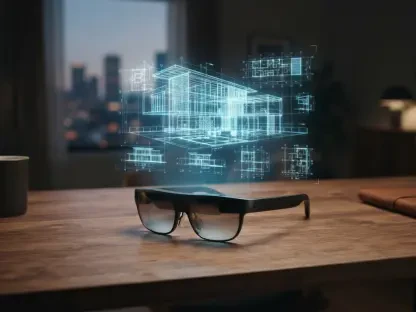
The competitive dynamics of the XR market have fundamentally changed with the entry of the Samsung-Google-Qualcomm alliance. Regulatory filings recently revealed two distinct smart glasses models, designated as SM-O200P and SM-O200J, which have successfully passed through FCC certification for a late November launch. This partnership represents the first major challenge to Meta’s multi-year dominance in the wearable space, offering a robust Android-based ecosystem that integrates seamlessly with existing mobile services. By leveraging Qualcomm’s latest spatial processing units and Google’s refined AR-specific operating system, Samsung is positioning its hardware as a versatile alternative for users who have previously been locked into proprietary platforms. The dual-model strategy indicates a focus on specific user segments, with one variant likely optimized for high-performance visual overlays and the other focusing on a minimalist, notification-centric experience.
This influx of new hardware options is crucial for market maturation, as it breaks the monopoly on developer tools and consumer choice. The FCC approval signifies that the hardware is ready for mass distribution, marking a pivotal moment where the software ecosystem must now catch up to the capabilities of the glass. Unlike previous attempts at smart eyewear, these new entries are designed to look and feel like standard frames, hiding the complex array of sensors and cameras within slim temples. This development forces competitors to move faster, leading to a rapid cycle of innovation that benefits the end user through lower price points and more diverse form factors. As the market expands from 2026 to 2028, the battle for the “operating system of the face” will likely mirror the smartphone wars of the past decade, with the Samsung-Google alliance serving as the primary challenger to established closed-loop systems.
Fashion and Identity: The Brand Partnership Model
A significant factor in the current success of XR hardware is the strategic alliance between technology giants and luxury eyewear brands. Samsung’s collaboration with Gentle Monster and Warby Parker illustrates a move to prioritize fashion over raw technical specs, recognizing that social stigma is the largest barrier to mass adoption. By integrating high-tech components into frames that are already popular in the high-fashion world, these companies are successfully rebranding smart glasses as a lifestyle choice rather than a niche tool for tech enthusiasts. This approach addresses the historical “pervert glasses” critique by making the technology virtually invisible to the casual observer. The result is a device that a user feels comfortable wearing in a business meeting or a social setting, significantly increasing the daily “time-on-face” metric that developers rely on for engagement.
The focus on aesthetics has also led to a diversification of the hardware itself, moving away from a one-size-fits-all mentality. Consumers now expect their wearables to reflect their personal style, leading to a variety of colorways, lens tints, and frame shapes that were previously unheard of in the XR space. This trend has forced hardware engineers to work backwards from a desired aesthetic, miniaturizing components to fit into pre-defined fashion templates. Consequently, the industry has seen a rise in modular components where the internal tech can be swapped into different frames, extending the lifespan of the electronics while allowing the user to update their look. This intersection of vanity and utility is what finally pushed XR into the mainstream, as the devices stopped looking like experimental prototypes and started looking like essential accessories.
Strategic Retail and the Evolution of Immersion
Experiential Retail: Bridging the Digital-Physical Divide
The marketing of XR has shifted from digital trailers to physical, experiential retail spaces, as demonstrated by Snap Inc.’s new “SPECS” pop-up store at Westfield Century City. This strategy acknowledges that spatial computing is difficult to understand without a hands-on demonstration, especially for consumers who are skeptical of wearing cameras on their faces. By creating a glamorous, boutique-like environment, Snap is positioning its AR glasses as a luxury status symbol, attended by high-profile figures and celebrities to reinforce the “cool factor.” These retail hubs serve as educational centers where the public can experience the benefits of augmented navigation, real-time translation, and AI assistance in a controlled, low-pressure environment. This move reflects a broader industry trend where physical presence is becoming a key component of brand loyalty in the digital age.
Furthermore, these physical locations provide manufacturers with invaluable real-time feedback on user comfort and interface intuitiveness. Seeing how a diverse group of people interacts with the hardware allows companies to refine their software updates and future hardware iterations more effectively than through remote telemetry alone. The retail experience also facilitates a more personalized fitting process, which is essential for devices that rely on precise eye-tracking and pupillary distance measurements. As more companies adopt this high-touch retail model, the gap between the average consumer and the specialized tech enthusiast continues to shrink. By the end of 2026, the success of a wearable product is as much about the quality of the in-store experience as it is about the resolution of the micro-OLED displays inside the frames.
The FOV DilemmImmersion Versus Wearability
A central tension has emerged in the design of modern “VR Glasses” regarding the trade-off between a slim profile and the field of view (FOV). Internal documentation from industry leaders has recently sparked debate by suggesting that developers should optimize experiences for a perceived FOV of approximately 58°x54°, despite the hardware having a higher theoretical limit. This reduction is a direct consequence of making the glasses thin enough to look natural on the user’s face, as the distance between the eye and the lens is minimized. While traditional, bulky headsets can use large lenses and adjustable eye-relief to maximize immersion, smart glasses are constrained by the physical laws of optics. This has created a divide between “immersion purists” who crave a wide visual canopy and “lifestyle users” who are willing to sacrifice some peripheral vision for a device that fits in their pocket.
This fragmentation is leading to a two-tiered market where different devices serve distinct purposes. High-end headsets remain the standard for deep-work productivity and high-fidelity gaming, offering the 100-degree plus FOV necessary for total presence. In contrast, the current generation of smart glasses focuses on “glanceable” information and augmented overlays that do not require the user to be fully removed from their physical surroundings. This specialization is actually beneficial for the ecosystem, as it prevents a single device from being a “jack of all trades, master of none.” Developers are now learning to design software that works within these constraints, using clever UI tricks and spatial audio to create a sense of scale that the physical lenses cannot achieve on their own. The focus has shifted from trying to replace reality to subtly enhancing it, which is a more sustainable path for daily-wear technology.
Safety, Subscriptions, and Software Innovation
Thermal Constraints and Hardware Reliability
The engineering challenge of cramming high-speed processors and batteries into eyewear frames has led to significant reliability hurdles, as seen in the recent recall of the INMO Air3 glasses. Reports of overheating and physical discomfort highlight the razor-thin margins that manufacturers are working with when it comes to heat dissipation. Unlike a smartphone or a laptop, a wearable device has constant contact with the user’s skin, meaning even a minor increase in temperature can lead to a negative user experience or safety concerns. In response, companies are implementing aggressive software throttling and power-management algorithms to keep the devices cool, often at the expense of peak performance. This thermal “ceiling” is currently the most significant bottleneck for standalone XR, forcing a shift toward distributed computing where the glasses offload heavy processing to a nearby phone or a cloud server.
To address these physical limitations, the industry is investing heavily in new materials and more efficient cooling solutions, such as micro-fans and graphene heat spreaders. However, until a major breakthrough in battery chemistry or low-power silicon occurs, the balance between performance and safety remains delicate. This has led to a rise in “active cooling” accessories and modular battery packs that can be clipped onto the stems of the glasses, though these often compromise the sleek aesthetic that users desire. The current situation serves as a reality check for the industry, proving that miniaturization cannot come at the expense of consumer safety. Consequently, the focus for hardware revisions moving into 2027 is on “sustained performance” rather than “burst performance,” ensuring that the glasses can remain operational for several hours without becoming uncomfortably warm to the touch.
AI-Driven Content and Subscription Ecosystems
The software landscape in late 2026 is being revitalized by a combination of generative AI and new “live service” subscription models. Platforms like Meta’s Horizon+ are evolving beyond simple game libraries to include digital currency, exclusive cosmetic items, and early access to experimental features like the Orion Drift social hub. This shift toward a recurring revenue model provides developers with the financial stability to create long-term content updates rather than one-off releases. Simultaneously, the rise of AI-assisted porting tools has allowed the community to bring classic flat-screen titles like Titanfall 2 and Max Payne 2 into immersive environments with minimal manual effort. This “democratization of content” ensures that the library of available experiences is growing faster than ever before, filling the gaps between major AAA studio releases with high-quality, fan-driven projects.
Furthermore, AI is being integrated into the core functionality of the glasses to provide context-aware assistance. Apps like Liminal use computer vision to analyze the wearer’s environment and generate calming, AI-driven audio narratives or “walking meditations” based on real-world objects. This moves the technology away from being a mere screen on the face to being an intelligent observer that understands the user’s context. The ability for the hardware to recognize a kitchen, a park, or an office and automatically surface relevant tools is the true “killer app” for XR. As these AI models become more localized and privacy-focused, the utility of smart glasses will only increase, making them an indispensable tool for both professional productivity and personal well-being. The community-led modding scene, combined with official subscription perks, has created a vibrant ecosystem that rewards both creators and consumers.
Strategic Pathways: A Mature Market Outlook
The XR industry successfully transitioned from a period of experimental growth to a phase of strategic refinement and commercial stabilization. Manufacturers recognized that the path to the mainstream was paved with fashion-forward designs and robust ecosystem partnerships rather than just higher resolution displays. The market established clear standards for ocular comfort, and developers successfully moved toward eye-tracking as a primary input method, reducing the reliance on external controllers for daily tasks. By the end of 2026, the fragmentation between high-immersion headsets and casual smart glasses became a recognized strength, allowing users to choose the right tool for their specific needs. This maturity was also reflected in the regulatory space, where safety standards for thermal management and data privacy became more stringent, fostering greater public trust in the technology.
Looking forward, the focus shifted toward optimizing the synergy between hardware and the burgeoning field of generative AI. Companies began to prioritize the development of “world-aware” software that could interact with the physical environment in real-time, moving beyond static overlays. The lessons learned from early hardware recalls and FOV compromises informed the next generation of devices, which began to utilize remote processing more effectively to maintain slim form factors. As the industry moved toward 2027 and 2028, the actionable priority for stakeholders was the expansion of localized AI processing to ensure privacy while maintaining high-speed interactions. The infrastructure for a truly spatial society was laid, and the move toward a post-smartphone era felt more inevitable than ever before as the digital and physical worlds continued their seamless integration.