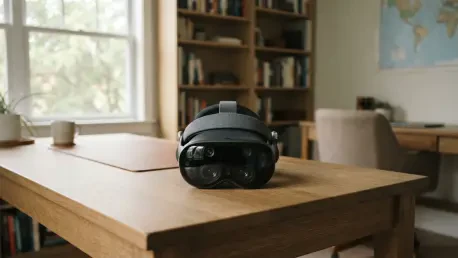

Analysts have noted that Apple’s rigid adherence to high-end hardware standards drove production costs to levels that the consumer market simply would not support in 2024. This early misstep set a precedent for the device, which was framed as a spiritual successor to the iPhone and the definitive gateway to spatial computing. By mid-2026, the technology giant had ceased production of the headset, marking one of the most significant retreats in the company’s storied history of market disruption. Despite the inclusion of groundbreaking features such as dual 4K micro-OLED displays and a sophisticated array of sensors, the product failed to ignite the same cultural firestorm as previous Apple releases. The gap between the technical ambition of the project and the practical needs of the average consumer proved insurmountable, forcing a reevaluation of how people interact with digital layers in physical spaces. As the dust settles, the industry sees this era as a turning point for wearable tech.
Market Realities and Strategic Failure
Financial Barriers: The Price of Perfection
The most immediate hurdle to widespread adoption was the staggering $3,500 price tag, which essentially relegated the device to a niche category for wealthy enthusiasts and professional developers. Unlike the iPhone, which maintained its market dominance through carrier subsidies and a clear sense of daily necessity, the Vision Pro struggled to justify its cost to the broader public. This high entry barrier created a stagnant environment where the user base remained too small to attract high-tier software support. Consequently, the device often functioned more as a luxury curiosity than a productive tool, frequently ending up as an expensive external monitor for existing MacBook setups rather than a standalone platform. Without a vibrant library of native applications, potential buyers remained skeptical of the long-term value proposition. This cycle of low adoption and minimal developer interest ultimately strangled the platform’s growth before it could reach maturity.
Building a new software ecosystem requires a critical mass of active users, a milestone that the Vision Pro never achieved during its short lifespan on the market. Developers faced a difficult choice: invest significant resources into creating three-dimensional experiences for a tiny audience or stick to established platforms with millions of users. Most chose the latter, leading to a shortage of killer apps that could have showcased the unique capabilities of spatial computing. Even with Apple’s considerable influence, the lack of financial incentive meant that many popular third-party services either provided half-hearted ports of existing tablet apps or skipped the platform entirely. This absence of compelling content made the hardware feel like a beautiful but empty shell, reinforcing the perception that it was a solution in search of a problem. By the time the final units were produced in 2026, the platform had become a cautionary example of how hardware cannot succeed without software.
Strategic Shifts: The Move to Ambient Tech
The conclusion of the Vision Pro’s journey provided several vital lessons for the future of hardware development and market alignment. It was clear that technical excellence alone could not sustain a product if the economic and ergonomic costs remained too high for the general public to bear. Manufacturers shifted their focus toward developing lighter, AI-integrated eyewear that prioritized immediate utility and social invisibility over high-fidelity immersion. This pivot involved a significant redistribution of research funds toward battery efficiency and thermal management in smaller frames, ensuring that future devices could be worn all day without discomfort. Engineers also began emphasizing voice and gesture controls that felt more natural than the early eye-tracking systems, which often felt taxing for casual users. By focusing on solving real-world friction rather than chasing raw performance, the industry found a more sustainable path forward.
Market participants eventually recognized that the preference for discrete assistance outweighed the desire for total digital immersion. The failure of the high-end headset model prompted a surge in the development of smart glasses that functioned as an extension of the smartphone rather than a replacement for it. Companies prioritized the integration of localized AI models that could provide real-time information without needing a bulky facial interface. These advancements allowed for a smoother transition into augmented reality, where digital information felt like a natural part of the environment rather than a heavy overlay. By 2026, the industry had moved past the era of high-end headsets, acknowledging that the next stage of spatial computing required a focus on portability and social acceptability. The focus turned toward making technology disappear into the background of daily life, which proved to be the more effective solution for reaching the mainstream consumer market.