
The relentless progression of residential automation has transformed the humble front door from a static mechanical barrier into a sophisticated node within the vast ecosystem of the Internet of Things. While the allure of unlocking a home with a facial scan or a voice command suggests a futuristic leap in convenience, the fundamental requirement for physical security remains anchored in mechanical reliability that software simply cannot replicate. In contemporary society, the integration of smart technology into every household object has become a standard, yet the front door remains the most critical point of failure for any security strategy. Many homeowners find themselves at a crossroads where they must decide if the momentary ease of a keyless entry system outweighs the centuries of proven durability offered by a traditional deadbolt. This tension between high-tech convenience and low-tech reliability has prompted a significant re-evaluation of what it truly means to secure a property. As the market for home automation matures, the limitations of these digital systems are becoming more apparent to those who prioritize long-term safety over the novelty of interconnected gadgets.
The push toward smart locks is often framed as an inevitable evolution of home hardware, yet this perspective overlooks the inherent stability of a well-crafted mechanical lock. Traditional locks function through a direct physical interaction that requires no external power, no internet connection, and no software updates to remain effective. This simplicity is not a sign of obsolescence but rather a testament to a design that has been refined over generations to achieve a peak state of efficiency. When a homeowner inserts a physical key into a lock, they are engaging in a mechanical process that provides immediate tactile feedback and a level of certainty that a digital notification can never match. The transition to smart alternatives introduces a layer of complexity that often obscures the primary purpose of a lock, which is to provide a reliable barrier against unauthorized entry. By stripping away the digital distractions, one can see that the traditional lock remains the most dependable tool for residential protection, offering a level of resilience that is increasingly rare in a world of fragile, software-dependent electronics.
The Insider Perspective: Why Tech Experts Often Choose Tradition
Professional technology journalists and engineers who spend their careers analyzing the latest gadgets are frequently the most vocal critics of smart lock adoption. These experts possess an intimate understanding of the rapid development cycles that prioritize speed and feature-rich marketing over the long-term durability required for home infrastructure. Having witnessed the frequent collapse of software ecosystems and the emergence of critical bugs in flagship devices, these professionals are naturally skeptical of placing a digital gatekeeper at the only entrance to their homes. Their caution is not rooted in a fear of technology but in a deep familiarity with how modern electronics are built and maintained. They recognize that while a buggy smartphone is a minor annoyance, a buggy front door can lead to a catastrophic security failure or an expensive lockout situation. This professional skepticism serves as a warning that the most advanced technology is not always the most appropriate solution for critical systems.
These industry insiders often point to the “move fast and break things” philosophy of Silicon Valley as a direct contradiction to the stability needed for residential security. Traditional lock manufacturers, some of whom have been in business for over a century, operate under a different set of standards that prioritize mechanical tolerances and material strength. In contrast, tech companies often release products with the expectation that software patches will fix any initial shortcomings. This iterative approach is acceptable for a social media application or a streaming device, but it is dangerously misplaced when applied to the hardware that protects a family. Experts understand that once a smart lock is installed, its security is tied to the manufacturer’s commitment to providing ongoing security updates, a commitment that can vanish if the company is acquired or changes its business model. Consequently, many seasoned technologists choose to keep their entryways “dumb” to ensure that their home security remains independent of corporate lifecycles and digital vulnerabilities.
The Infrastructure Paradox: Complexity in Home Entry Systems
A functional smart home operates on a hierarchy of needs where different devices carry different levels of risk and responsibility. Modern households often successfully integrate automated lighting, climate control, and voice-activated media centers to create a more comfortable living environment. These applications are generally considered low-stakes because a failure in a smart bulb or a thermostat does not compromise the physical safety of the residents. Within this context, automation provides genuine value by handling environmental variables and streamlining daily routines without introducing significant hazards. The problem arises when this same logic is applied to the front door, where the stakes are inherently higher. A smart lock attempts to bridge the gap between environmental convenience and physical security, but the complexity required to do so often creates a system that is more fragile than the one it replaced.
The infrastructure of a smart home relies on a stable internet connection, a local Wi-Fi network, and often a cloud-based server to process commands. When a lock is integrated into this web of dependencies, its functionality is no longer self-contained within the door itself. A local internet outage, a server failure on the other side of the country, or even a simple router malfunction can render the “smart” features of the lock useless. While many smart locks include a physical key backup, the reliance on digital interfaces often leads homeowners to stop carrying their physical keys entirely. This creates a dangerous single point of failure where a technical glitch in the network infrastructure can leave a resident stranded outside their own home. Traditional locks avoid this paradox by remaining entirely self-contained, ensuring that the ability to enter the home is never dependent on external networks or the stability of a service provider’s cloud infrastructure.
The Latency Problem: Speed and Efficiency in Daily Use
One of the most significant yet underreported drawbacks of smart locks is the introduction of latency into the simple act of entering a home. A traditional mechanical lock provides near-instantaneous results; as soon as the key is turned, the bolt retracts and the door opens. In contrast, many smart locks require a series of digital handshakes before they can operate. A user might have to wake up their phone, open a specific app, wait for the app to connect to the lock via Bluetooth or Wi-Fi, and then wait for the command to be processed and executed. Even with “auto-unlock” features that use geofencing, the system can often lag, forcing the user to stand at their door for several seconds while the technology catches up. This delay is a regression in user experience that trades the immediate mechanical response of a key for a slower, more cumbersome digital process.
Furthermore, the mechanical feedback provided by a traditional lock is an essential part of the user’s peace of mind. When a physical key is turned, the operator can feel the bolt sliding into the strike plate and hear the solid click that indicates the door is truly secured. This tactile confirmation is unmistakable and provides a sense of certainty that a digital notification cannot replicate. Many smart locks use small, battery-powered motors to move the deadbolt, and these motors can struggle if the door is slightly misaligned or if there is any resistance from the weatherstripping. In such cases, the lock might report that it is secured when it has actually jammed halfway. A homeowner using a traditional lock would immediately feel this resistance and adjust the door accordingly, whereas a smart lock user might walk away believing their home is safe when it remains unsecured due to a minor mechanical obstruction.
Power Management Risks: The Inherent Risk of Electronic Failure
Every smart lock is a battery-powered device, which introduces a maintenance requirement that traditional locks simply do not have. While manufacturers often claim that batteries will last for several months or even a year, real-world performance can vary wildly based on usage frequency, extreme temperatures, and the strength of the wireless connection. When a smart lock’s batteries die, the electronic features of the device cease to function, often without much warning if the user has ignored low-battery notifications. This reliance on a limited power source is a fundamental weakness in a device that is supposed to be always available. In extreme cold, battery life can plummet unexpectedly, potentially leading to a lockout during the most inconvenient and dangerous times of the year. Traditional locks, being entirely mechanical, are immune to these power-related failures, remaining functional regardless of the energy state of the household.
The secondary issue with power management is the potential for hardware degradation over time. Electronic components, especially those exposed to the elements on an external door, are susceptible to corrosion, heat damage, and electrical shorts. The small motors and circuit boards inside a smart lock are far more delicate than the heavy-duty brass and steel components of a high-quality traditional deadbolt. Over a period of several years, the repeated stress of operating the motor and the constant drain on the electronics can lead to a total hardware failure. While a traditional lock can easily last for several decades with minimal lubrication, a smart lock is likely to become electronic waste within five to ten years. This shorter lifespan not only increases the long-term cost of home security but also introduces a recurring risk of failure that mechanical systems have long since solved through robust engineering.
Software Vulnerabilities: The Risk of Planned Obsolescence
In the digital age, hardware is only as good as the software that supports it, and this reality creates a significant vulnerability for smart locks. When a homeowner installs a traditional lock, they are purchasing a permanent piece of home infrastructure that will function as long as the physical components remain intact. When they install a smart lock, they are entering into an ongoing relationship with a software developer. If the manufacturer decides to stop supporting a particular model, or if the company goes out of business, the smart features of the lock may stop working entirely. This “planned obsolescence” is a common feature of the tech industry, where older devices are often left behind to encourage users to upgrade to the latest model. For a front door lock, this lack of long-term support is unacceptable, as it forces the homeowner to replace functional hardware simply because the digital ecosystem around it has shifted.
Beyond the risk of discontinued support, there is the ongoing issue of software bugs and security patches. Every piece of code is a potential entry point for an exploit, and smart locks are no exception. While the risk of a high-end hacker targeting a specific residence is relatively low, the discovery of a widespread vulnerability in a popular smart lock brand could put thousands of homes at risk simultaneously. Traditional locks are not immune to picking or bumping, but these methods require physical presence and individual effort for every single door. A software vulnerability, by contrast, can be exploited remotely and at scale. The need to constantly monitor for updates and apply patches to a front door is a burden that most homeowners are not prepared to handle. A mechanical lock requires no such vigilance, providing a consistent level of security that does not fluctuate based on the discovery of a new zero-day exploit in a piece of firmware.
Human Factors: The Learning Curve for Temporary Guests
Residential security is as much about human interaction as it is about hardware, and traditional locks benefit from a universal design language that everyone understands. Almost any person, regardless of their technological literacy, knows how to use a physical key or turn a thumb-turn on the inside of a door. This simplicity is vital when dealing with guests, elderly family members, or emergency personnel who may need to enter or exit the home quickly. Smart locks often introduce non-intuitive interfaces, such as touchpads that require a specific sequence of gestures to activate, or smartphone apps that must be downloaded and configured by the guest. This creates a friction point that can be frustrating for visitors and potentially dangerous in an emergency where a quick exit is required. The cognitive load of learning how to operate a “smart” door is a hidden cost of these systems that many people fail to consider until they are faced with a confused guest or a delivery person who cannot figure out how to lock up.
The management of digital access codes also introduces new avenues for human error. While the ability to give a unique code to a contractor or a neighbor is marketed as a security feature, it often leads to a proliferation of active codes that the homeowner may forget to deactivate. Unlike a physical key, which must be physically handed over and returned, a digital code can be shared, written down, or guessed with relative ease. Furthermore, fingerprint smudges on a touchscreen can often reveal the digits used in a PIN, allowing a savvy intruder to deduce the combination without any technical tools. These behavioral vulnerabilities are exacerbated by the digital interface, making the home less secure in practice even if it appears more advanced on paper. Traditional locks avoid these issues by sticking to a physical token model that is easy to track and nearly impossible to replicate without direct access to the original key.
Physical Integrity: Comparing Deadbolt Strength to Smart Hardware
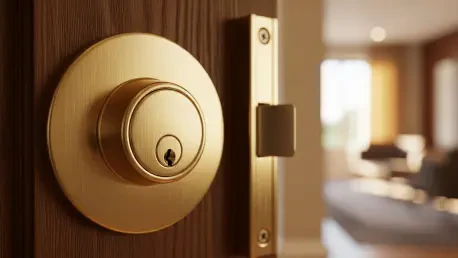
A common misconception in the home security market is that a “smarter” lock is inherently a “stronger” lock. In reality, the security of a door is primarily determined by the physical strength of the deadbolt and the integrity of the door frame. Many smart locks are designed with a heavy focus on the external appearance and the internal electronics, sometimes at the expense of the core mechanical components. Some models are essentially “smart covers” that fit over an existing deadbolt, adding layers of plastic and gears that can actually introduce new points of mechanical failure. When an intruder attempts to bypass a door, they are far more likely to use a crowbar or a well-placed kick than they are to use a laptop. In these brute-force scenarios, the electronic sophistication of a smart lock offers zero additional protection. A high-quality, Grade 1 mechanical deadbolt remains the gold standard for physical resistance, providing a level of durability that many consumer-grade smart locks struggle to match.
Moreover, the physical design of smart locks often includes components that are more vulnerable to tampering than traditional locks. Touchscreens can be shattered, and external housings can be pried off to reveal the wires or motors that control the bolt. Because these devices need to house batteries and circuit boards, they are often bulkier and protrude further from the door than a sleek mechanical cylinder. This extra surface area provides more leverage for an intruder using heavy tools to twist or snap the lock off the door entirely. Traditional locks have a lower profile and are made of solid metal components that are specifically engineered to resist drilling, prying, and impact. By prioritizing the physical integrity of the locking mechanism over the inclusion of digital features, traditional manufacturers ensure that the primary barrier between the home and the outside world remains as formidable as possible.
The Myth of Enhanced Security: Data Logs vs. Actual Prevention
Marketing for smart locks often emphasizes the ability to view an access log, showing exactly when the door was locked or unlocked and by whom. While this information can be interesting for a homeowner to review, it is important to distinguish between monitoring and prevention. An access log is a reactive tool; it tells you what has already happened, but it does nothing to stop an unauthorized person from entering if they have managed to bypass the system. In many cases, the sense of security provided by a digital log is a false one, as it focuses the homeowner’s attention on data points rather than physical vulnerabilities. Knowing that the door was unlocked at 2:00 PM does not help if the person who entered was an intruder who exploited a software glitch or a guessed PIN. Traditional locks offer a more honest form of security by focusing entirely on the preventative aspect of the mechanical barrier.
Furthermore, the data logs themselves can become a security risk if the manufacturer’s servers are compromised. A database containing the entry and exit patterns of thousands of homeowners is a goldmine for criminals who want to know when a specific house is likely to be empty. This digital footprint creates a level of exposure that simply does not exist with traditional mechanical locks. A “dumb” lock does not keep a record of your daily routine, it does not communicate your location to a third-party server, and it does not leave a trail of data that can be harvested by advertisers or hackers. For many people, the privacy and security of their personal habits are far more valuable than the convenience of seeing a list of timestamps on a smartphone screen. By choosing a traditional lock, a homeowner maintains complete control over their physical access and their digital privacy simultaneously.
Environmental Durability: Why Weather Favors Mechanical Designs
External doors are subjected to a wide range of environmental stresses, from blistering summer heat and high humidity to freezing winter temperatures and driving rain. Mechanical locks are built to withstand these conditions through the use of weather-resistant metals like brass, bronze, and stainless steel. These materials do not degrade when exposed to UV rays, and they do not malfunction when they get wet. A simple application of lubricant once a year is usually all that is required to keep a traditional lock functioning perfectly for decades, regardless of the climate. Electronics, on the other hand, are notoriously sensitive to environmental factors. Condensation can build up inside a smart lock’s housing, causing short circuits or corroding the delicate components. Extreme heat can cause batteries to swell or fail, while extreme cold can freeze the small motors that drive the deadbolt.
The mechanical tolerances of a door also shift with the seasons as wood expands and contracts in response to changes in humidity. A human user with a physical key can easily compensate for a slightly misaligned door by pulling or pushing on the handle as they turn the key. A smart lock’s motor does not have this level of finesse; if the bolt hits any resistance due to seasonal shifting of the door frame, it will often simply stall and report an error. This can lead to situations where a door that was locked in the morning becomes impossible to lock or unlock by the afternoon because the house has settled or the temperature has changed. Traditional locks are far more forgiving of these minor physical variations, ensuring that the door can always be secured regardless of how the environment is affecting the structure of the building.
Privacy and Surveillance: The Hidden Trade-offs of Digital Entry
The integration of smart locks into a home often brings with it an unintended expansion of the surveillance state within the domestic sphere. Most smart locks require a constant connection to the manufacturer’s servers to function, meaning that every single time a door is opened or closed, that data is recorded and stored by a private corporation. While this might seem benign, it represents a significant erosion of privacy, as it allows companies to build detailed profiles of a household’s movements and habits. This data can be used for targeted advertising, shared with third-party partners, or even accessed by law enforcement without a warrant in certain jurisdictions. A traditional lock provides a private entry that leaves no digital trace, allowing the residents of a home to move in and out without being monitored by a remote server.
There is also the concern of “feature creep,” where smart locks are bundled with microphones, cameras, and other sensors that can record audio and video of the entryway. While these features are marketed as enhanced security, they also turn the front door into a potential listening post. If a device is compromised, an attacker could potentially listen to private conversations happening inside the home or watch the residents through a connected camera. The complexity of these systems makes it difficult for the average user to know exactly what data is being collected or who has access to it. By contrast, a traditional mechanical lock is a single-purpose tool that does exactly what it is designed to do: secure the door. It does not listen, it does not watch, and it does not report back to a corporate headquarters, making it the superior choice for those who value their autonomy and privacy.
The Maintenance Cycle: Mechanical Repairs vs. Tech Support
Maintenance for a traditional lock is a straightforward and well-understood process that can be handled by any local locksmith or even a reasonably handy homeowner. If a key is lost, the cylinder can be rekeyed in a few minutes at a low cost. If the lock becomes stiff, a quick spray of graphite or silicone lubricant usually solves the problem. These are mechanical solutions to mechanical problems, and the parts required are standardized and widely available. In contrast, when a smart lock malfunctions, the repair process is often far more complex and expensive. Because these devices are proprietary and contain sensitive electronics, they generally cannot be repaired by a traditional locksmith. If a circuit board fails or a motor burns out, the entire unit usually needs to be replaced, leading to a much higher total cost of ownership over time.
Furthermore, troubleshooting a smart lock often involves dealing with technical support departments rather than local tradespeople. A homeowner might spend hours on the phone trying to diagnose a software conflict or a connectivity issue, only to be told that their router is incompatible or that they need to perform a factory reset. This shift from physical maintenance to digital troubleshooting is a major disadvantage for a critical piece of home hardware. In an emergency, a locksmith can be at a house within an hour to drill out or bypass a mechanical lock. If a smart lock’s software fails, the homeowner may be left waiting for a firmware update or a replacement unit to arrive in the mail. The reliability and repairability of traditional locks ensure that the homeowner is never more than a simple mechanical fix away from a secure and functional home.
Economic Considerations: Initial Investment and Recurring Costs
The financial argument for traditional locks is compelling when considering the total life cycle of the hardware. A high-quality mechanical deadbolt can be purchased for a fraction of the price of a mid-range smart lock and will likely never need to be replaced. There are no batteries to buy, no subscription fees for “premium” features like remote access or cloud storage, and no need to upgrade the hardware every few years to keep up with software requirements. Smart locks, however, often come with a variety of recurring costs that are not immediately obvious at the time of purchase. Some manufacturers charge a monthly fee for the app that controls the lock, while others require the purchase of a separate “bridge” or “hub” to connect the lock to the internet. These costs add up over time, making the smart lock a significantly more expensive investment for the homeowner.
In addition to the direct costs, there is the indirect cost of potential damage and liability. If a smart lock fails and allows unauthorized entry, or if it malfunctions and causes a lockout that requires emergency services, the financial consequences can be significant. Insurance companies are still adapting to the presence of smart home technology, and some may be hesitant to cover losses if a digital entry system was compromised through a software vulnerability. Traditional locks are a known quantity for insurance providers and have a proven track record of performance. By choosing a mechanical system, a homeowner avoids the hidden taxes of the digital era and invests in a durable asset that provides a predictable and consistent return in the form of reliable security.
Emergency Scenarios: Connectivity Failures and Safety Risks
In the event of a natural disaster or a major local emergency, the infrastructure that supports smart technology is often the first thing to fail. During a power outage, a flood, or a fire, Wi-Fi networks go down and cellular towers can become overloaded. In these high-stress situations, the last thing a homeowner needs is to struggle with a front door that is waiting for a cloud server to authorize an entry command. A traditional lock remains fully functional regardless of the state of the local infrastructure, ensuring that residents can enter or exit their homes without delay. This reliability is a critical safety feature that is often overlooked in the pursuit of high-tech convenience. When every second counts, the simplicity of a mechanical key or a thumb-turn can be the difference between safety and disaster.
There is also the concern of how smart locks behave during a fire. Electronic components are highly sensitive to heat, and a fire near the front door could melt the internal plastic gears or short out the circuit board, potentially jamming the lock and preventing an easy exit. Traditional locks are made of high-melting-point metals that are much more likely to remain functional even in extreme heat. Fire codes often require that exit doors be easily operable from the inside without a key or special knowledge, a requirement that some complex smart locks struggle to meet if they require a specific electronic trigger to release the bolt. The mechanical certainty of a traditional deadbolt ensures that the door remains a reliable exit point in the most dire circumstances, providing a level of life safety that electronic alternatives cannot guarantee.
Strategic Integration: Separating Visibility from Door Control
The most effective approach to modern home security is to separate the functions of monitoring and access control. A homeowner can enjoy all the benefits of a smart home—such as seeing who is at the door and receiving alerts about activity—without giving a computer the power to actually move the deadbolt. By installing high-quality smart cameras and sensors, such as the Google Nest Doorbell, a property owner can gain total visibility over their entryway while maintaining a traditional mechanical lock for the physical barrier. This hybrid strategy offers the best of both worlds: the advanced surveillance capabilities of modern technology and the unshakeable reliability of mechanical hardware. If the camera’s battery dies or the Wi-Fi goes out, the homeowner may lose their view of the porch, but they will never lose the ability to lock or unlock their door.
This decoupling of systems also enhances security by reducing the “attack surface” of the home. A smart camera can be hacked without compromising the physical lock, and a physical lock can be picked without disabling the surveillance system. By using independent layers of security, the homeowner ensures that a failure in one area does not lead to a total breakdown of the home’s defenses. Furthermore, high-resolution doorbells with a wide field of view allow for full-body monitoring and package detection, providing more useful information than a smart lock’s access log ever could. This strategic use of technology focuses on providing information and awareness, leaving the critical task of physical protection to the tools that have been doing it successfully for centuries. This balanced approach reaffirms that sometimes the smartest way to use technology is to keep it away from the most vital parts of our home infrastructure.
The Evolution of Security: Actionable Directions for Property Owners
Security professionals recommended a tiered approach that prioritized mechanical locks over digital ones to ensure long-term property protection. They advised that homeowners invested in high-quality, Grade 1 deadbolts which offered superior resistance to both physical force and traditional lock-picking techniques. This foundation of mechanical strength provided a permanent barrier that did not rely on external power or software updates. To gain the convenience of modern monitoring, experts suggested the installation of independent smart cameras and motion-sensing lights. These devices allowed residents to see who was at their door and receive real-time alerts without introducing the technical vulnerabilities associated with smart locks. By keeping the access control system mechanical and the surveillance system digital, property owners created a more resilient and redundant security environment.
The transition toward this hybrid model also encouraged homeowners to focus on the structural integrity of their entryways, such as reinforcing door frames and using longer strike plate screws. Industry leaders observed that these simple physical upgrades provided a much greater increase in safety than any software-based feature could offer. They concluded that the most effective way to future-proof a home was to rely on proven mechanical principles while using technology as a supporting tool rather than a primary gatekeeper. As the market continued to evolve, the consensus among security experts remained clear: the reliability of a traditional lock was an irreplaceable asset in an increasingly complex world. Moving forward, the focus shifted toward educating consumers on the difference between high-tech gadgets and robust security, ensuring that the next generation of homes remained as safe as they were smart.