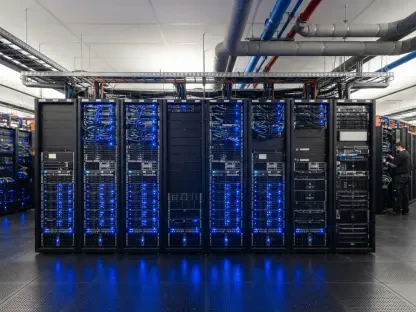

As genomic laboratories across the globe pivot toward a future defined by massive data outputs, the infrastructure supporting this biological information has become as critical as the sequencing chemistry itself. The five foundational pillars of the hub—streaming, monitoring, conversion, management, and collaboration—bridge the gap between physical hardware and digital results. This cloud-native environment allows for a frictionless transition from the moment a nucleotide is identified to the final clinical report. By removing the traditional bottlenecks of manual data transfer and siloed local storage, the platform empowers researchers to focus on biological insights rather than IT maintenance. The integration of real-time streaming ensures that data is available for analysis almost immediately, which is essential for time-sensitive applications in precision medicine. As the industry standards for data throughput continue to rise in 2026, such centralized management systems remain indispensable for maintaining the integrity of complex workflows and ensuring that metadata is preserved alongside raw genetic signals.
Strategic Architecture: Regional Governance and Sovereignty
Global Infrastructure: Data Sovereignty and Compliance
To ensure compliance with international data residency laws and optimize network performance, Illumina maintains several geographically distinct instances of the BaseSpace Hub. These regions span the globe, including dedicated hubs in North America, Europe, Asia Pacific, and the Middle East. Strategic placements in cities such as Sydney, Frankfurt, Tokyo, and London allow labs to anchor their genomic information within specific legal jurisdictions. This setup is powered by Amazon Web Services infrastructure, providing the high availability and redundancy required for sensitive biological files. By selecting a local instance, institutions minimize latency during the massive data uploads associated with high-throughput sequencing.
The strategic necessity of maintaining these regional instances is deeply tied to the complex web of national health data regulations that vary across borders. For example, clinical laboratories operating in the European Union must adhere to strict guidelines regarding where patient genetic data is stored to remain in compliance with local privacy standards. By providing a dedicated instance in Frankfurt, the platform allows these organizations to meet their legal obligations without sacrificing the benefits of a modern cloud workflow. Similarly, the existence of hubs in regions like the Middle East ensures that researchers can leverage high-speed local connections while keeping sensitive biological information within their borders.
Regional Silos: The Impact of Data Isolation
A critical technical nuance of this cloud architecture is the complete isolation of regional instances, which effectively creates distinct data islands for users. While a researcher may use the same login credentials across the entire global network, the data stored in the European Union instance is not natively accessible or transferable to the United States or Japanese instances. This lack of interoperability means that lab managers must exercise significant foresight when initially setting up their accounts, as subscriptions and promotional credits are often bound to the region of activation. Moving datasets between these regions is not a simple toggle in the settings; it is a manual and heavy process.
Moving large datasets between these regions requires downloading files and then re-uploading them to a different regional hub. This process can be exceptionally time-consuming and costly, given the multi-terabyte scale of modern genomic projects. For international consortia, this architecture necessitates a coordinated strategy to ensure all contributors are operating within the same regional instance from the start. This isolation serves a vital security purpose by preventing unauthorized cross-border data flow, yet it also places the responsibility for architectural planning squarely on the user. Laboratories must prioritize this structural understanding to avoid the high costs of future data migration.
Workflow Integration: Digital Units and Analytical Apps
Logical Containers: Organizational Units and Metadata
Day-to-day operations within the Hub are organized around specific digital containers that streamline the management of complex metadata. Projects serve as the primary organizational units, acting as folders that house all related sequencing runs, biosamples, and analytical results. Within these projects, Biosamples function as the digital records that carry essential metadata throughout the entire sequencing workflow, from initial library preparation to final variant calling. This structured approach ensures that every piece of genomic data is contextualized, making it easier for researchers to track the provenance of their results over time and maintain a high level of scientific transparency.
By centralizing these records, the platform reduces the likelihood of data loss or misidentification that often plagues local storage systems. The interface provides a clear overview of the sequencing status, allowing users to move seamlessly between different stages of a study without losing track of sample identities. This systematic organization is particularly beneficial for large-scale operations where hundreds of samples are processed simultaneously. The integration of metadata directly into the workflow ensures that downstream analysis tools have the necessary information to perform accurate alignment and variant calling, which is vital for clinical diagnostic accuracy and research reliability.
Computational Power: Apps and Programmatic Access
The actual computational work is performed using a diverse library of modular tools known as Apps, which handle a wide range of bioinformatic tasks. These applications range from standard alignment to highly specialized tools for oncology, microbiology, and rare disease research. By using these cloud-based apps, laboratories can execute sophisticated pipelines without the need to invest in or maintain expensive on-site server hardware. The modular design allows for a plug-and-play approach to bioinformatics, where users can choose the most appropriate tool for their specific biological question. This provides a flexible environment where researchers can utilize the latest industry-standard algorithms.
For power users who require more control, the platform offers robust programmatic tools like the Command Line Interface and specialized APIs. Technical users utilize these to automate repetitive tasks and integrate cloud-based data directly into their own custom scripts. This capability is essential for high-throughput labs that need to process thousands of samples with minimal manual intervention. Additionally, tools like Basemount allow cloud storage to be mounted as a local file system, bridging the gap between local computing resources and cloud storage. This seamless integration facilitates hybrid workflows where initial processing occurs in the cloud, but bespoke analysis is handled on local infrastructure.
Economic Models: Storage Tiers and Retention Risks
Tiered Access: Subscriptions and Storage Caps
The economic model of the platform is built upon a tiered system that dictates both the storage capacity and the available functionality for different types of users. New accounts typically begin with a free trial that offers 1 TB of storage for a limited period, which eventually converts to a Basic tier if a subscription is not established. Maintaining a Basic account requires a high degree of vigilance regarding storage limits, as the 1 TB cap is strictly enforced. If a user exceeds this limit, the platform restricts certain capabilities, such as the ability to share results or launch new analytical apps. If storage remains over the limit for too long, data may be subject to automatic deletion.
In contrast, Professional and Enterprise subscriptions provide the expanded storage and administrative controls necessary for large workgroups and institutional environments. These tiers allow for multi-user access and more robust data sharing options across a laboratory or department. While the storage quotas are significantly higher, they still operate on a model that encourages efficient data management through a combination of flat fees and usage-based costs. The Enterprise level offers the highest degree of oversight, allowing administrators to monitor usage across many users and ensure that the institution is meeting its internal data governance standards while balancing the high costs of data growth.
Retention Protocols: Strategic Data Management Steps
To maximize the utility of these advanced tools, laboratories established rigorous internal protocols that included the maintenance of independent, local copies of all raw sequencing data. This strategy ensured that primary research assets remained protected even if cloud accounts became inactive or exceeded their storage limits. Researchers utilized the Hub primarily as an engine for rapid primary and secondary analysis while relying on institutional repositories for the long-term preservation of their digital records. By treating the platform as a temporary processing workspace, labs avoided the logistical pitfalls of regional silos and the high costs of permanent cloud storage for every byte generated.
Managers also implemented regular data audits to ensure that important projects were transferred to archival systems well before any deletion thresholds were reached. This proactive management allowed teams to leverage the full analytical power of the cloud without sacrificing the security and longevity of their genomic discoveries. They specifically monitored the 180-day inactivity rule to prevent the automatic purging of stale accounts that were no longer being utilized. These steps successfully bridged the gap between raw data and actionable insight, proving that a hybrid approach to cloud and local storage was the most sustainable model for modern genomics. This strategy allowed researchers to maintain control over their data lifecycle.