


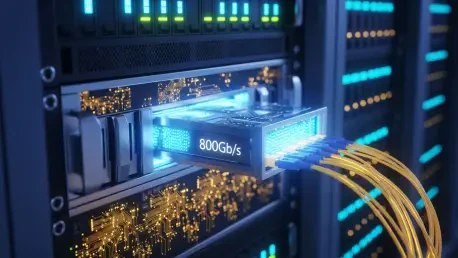

Modern data centers are currently grappling with the astronomical demands of generative artificial intelligence models that require instantaneous access to petabytes of encrypted data without compromising the overall system performance or security integrity. As these infrastructures evolve into specialized AI factories, the traditional bottleneck created by centralized processing units has necessitated a radical shift toward decentralized, high-performance silicon solutions. The introduction of the BlueField-4 STX represents a pivotal moment in this evolution, merging unprecedented 800Gb/s networking capabilities with a dedicated secure storage engine. This hardware is specifically engineered to handle the massive input-output operations per second required by contemporary large language models while ensuring that every byte of data remains protected from the moment it leaves the drive until it reaches the compute cluster. By integrating the new Vera architecture, the platform provides a hardware-based foundation for secure multi-tenant environments that were previously vulnerable to lateral movement.
Performance Architecture: Enhancing Data Throughput for AI
Vera Engine: Hardware Acceleration for Storage Offloading
The technical core of this release lies in its ability to synchronize the Vera storage engine with the high-speed processing capabilities of the BlueField-4 DPU. This synchronization allows for the direct offloading of complex storage protocols that traditionally consumed a significant portion of a server’s general-purpose CPU cycles. By utilizing advanced hardware logic, the system can stream data from enterprise storage arrays directly into GPU memory with minimal latency. This bypass mechanism is critical for maintaining the high utilization rates of modern accelerator clusters, which often sit idle while waiting for data fetching and decryption tasks to complete. Furthermore, the integration of ARM-based computing cores allows the BlueField-4 STX to perform real-time data filtering and pre-processing. This means that only the most relevant tokens and datasets are sent to the primary compute nodes, effectively reducing the overall bandwidth required for large-scale training sessions and significantly improving the total power efficiency of the data center fabric.
Network Fabric: High-Speed Connectivity for Large Clusters
Beyond simple data movement, the STX designation indicates a sophisticated storage transformer capability that manages the translation between disparate storage formats and protocols in real-time. This specialized hardware logic supports native NVMe-over-Fabrics at scale, enabling data centers to treat geographically distributed storage units as if they were locally attached components. The result is a highly fluid resource pool where data can be dynamically allocated to specific AI workloads based on priority and security classification. For enterprises running proprietary datasets, this means the ability to implement fine-grained access controls directly at the silicon level, ensuring that data never exists in an unencrypted state within the system’s memory fabric. The architecture also incorporates a high-performance compression engine that can shrink datasets by up to eighty percent without impacting throughput. This functionality is essential as the volume of training data continues to grow from 2026 to 2028, demanding more efficient use of physical storage capacity.
Security Protocols: Implementing Zero Trust for Storage
Secure Enclaves: Protecting Data in Multi-Tenant Environments
Security in the age of autonomous infrastructure requires more than just perimeter defense; it demands a hardware-rooted zero trust architecture that validates every interaction within the data center. The BlueField-4 STX addresses this by embedding a secure enclave that manages cryptographic keys and identity verification for all incoming and outgoing storage traffic. This ensures that even if a host operating system is compromised, the data stored on the network remains inaccessible to unauthorized actors. The Vera architecture specifically hardens the storage control plane, preventing the type of low-level exploits that have targeted traditional firmware in the past. Moreover, the hardware supports line-rate encryption for both TLS and IPsec, allowing organizations to maintain full security compliance without the massive performance penalties that previously plagued high-bandwidth connections. This level of protection is becoming a mandatory requirement for government and healthcare organizations that are increasingly deploying private AI instances.
Strategic Integration: Future-Proofing the Enterprise Infrastructure
Implementing these advanced storage and security technologies required a strategic re-evaluation of existing data center designs to fully leverage the BlueField-4 STX ecosystem. Organizations that prioritized the integration of these DPUs into their core fabric were able to achieve a more resilient and scalable posture while reducing the total cost of ownership for their AI hardware investments. The transition involved upgrading network switch fabrics to support 800Gb/s standards and adopting software-defined storage platforms that could interface directly with the Vera management API. Infrastructure architects were encouraged to audit their current storage latencies and security vulnerabilities to identify where computational offloading would provide the most immediate return. By shifting the focus from simple capacity to secure throughput, IT departments successfully mitigated the risks associated with rapid AI expansion. These proactive steps ensured that the infrastructure remained both agile and secure as the demand for intelligent processing continued to accelerate.







