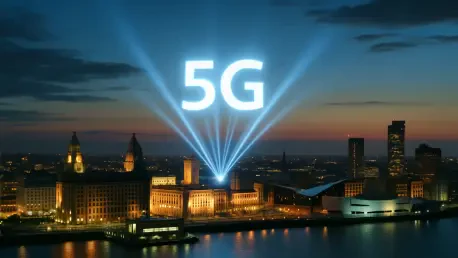

The rapid evolution of mobile infrastructure has reached a pivotal turning point in the United Kingdom as Virgin Media O2 introduces its advanced standalone 5G+ network to the expansive Merseyside region. This deployment is not merely an incremental update but a fundamental shift in how residents and businesses in 37 distinct locations interact with digital services on a daily basis. From the historic Liverpool waterfront to the industrial hubs of St. Helens and the quiet suburban streets of Maghull, the service now reaches over half a million people. By decoupling 5G from the legacy 4G core, this new architecture provides the groundwork for next-generation applications that require instantaneous response times and massive data throughput. The integration of this technology into the local landscape ensures that Merseyside remains at the forefront of the digital economy, bridging the gap between urban centers and rural communities. This infrastructure is a cornerstone for the region’s current growth.
Technical Specifications of the Network Transformation
The initiative is fueled by a comprehensive £700 million Mobile Transformation Plan scheduled throughout 2026, which prioritizes the transition to a standalone network architecture. Unlike traditional 5G deployments that often utilize existing 4G infrastructure to handle signaling, the standalone 5G+ version operates entirely on its own dedicated core. This technical independence allows for significantly lower latency, which is essential for real-time applications such as cloud gaming, augmented reality, and automated industrial processes. By removing the dependencies on older technology, O2 has created a more efficient and resilient environment for mobile data. This upgrade is being delivered to consumers with compatible devices at no extra cost, reflecting a strategy aimed at maximizing user adoption and network efficiency. While some users might need to update their physical SIM cards or move to digital eSIMs, the barrier to entry remains low to encourage immediate use.
Beyond the core software upgrades, the physical infrastructure across Liverpool and its surrounding boroughs has undergone a massive overhaul to support the increased bandwidth requirements. This physical expansion includes the strategic placement of new cell towers and the deployment of small cells in high-density areas where traditional signal penetration might struggle. Furthermore, the use of advanced spectrum automation allows the network to dynamically allocate resources based on real-time demand, ensuring consistent performance even during large-scale events at the waterfront or city center. This sophisticated management of radio frequencies ensures that the network remains robust under heavy loads, providing a reliable foundation for the millions of devices connected simultaneously. The engineering focus has been placed on capacity-first deployment, which targets both speed and the ability to maintain a connection in crowded urban environments. Such improvements are critical for long-term regional stability.
Socio-Economic Advantages and Regional Integration
The geographic scope of this rollout encompasses 37 distinct locations, creating a blanket of high-speed connectivity that extends far beyond the central business district of Liverpool. By including areas such as Southport, Kirkby, and Prescot, the network provider is addressing the historical discrepancy between major metropolitan centers and peripheral urban hubs. This expansion is a vital component of a larger commitment to digital equity, ensuring that residents in smaller villages like Haydock and Melling have access to the same technological advantages as those in the city core. For local businesses, this means the ability to operate cloud-based systems with the same efficiency regardless of their physical address. The broader Merseyside region now benefits from a unified communications standard that supports everything from remote medical consultations to sophisticated logistical operations. This comprehensive approach prevents the formation of digital deserts and fosters an inclusive environment for everyone.
The successful integration of standalone 5G+ across Merseyside established a vital blueprint for the ongoing modernization of the national digital landscape. Stakeholders focused on maximizing these benefits prioritized the adoption of compatible hardware and the transition to eSIM technology to fully unlock the potential of the new core architecture. This proactive approach ensured that the region moved past legacy constraints and embraced a future defined by ubiquitous, high-speed access. As data demands continued to surge from 2026 onwards, the emphasis shifted toward maintaining the momentum of infrastructure investment to prevent future bottlenecks in connectivity. Future considerations for regional planners included the integration of this robust network into smart city initiatives and public transportation systems to further enhance urban efficiency. By securing this technological foundation, the region stayed prepared for the next phase of mobile evolution, which promised even deeper integration of digital systems.