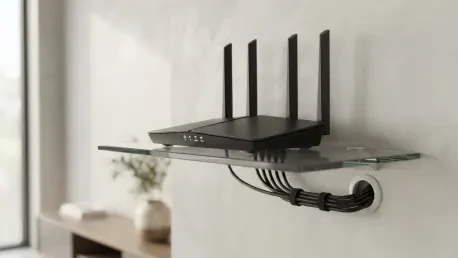

High-performance routers for 2026 are evolving into robust infrastructures that treat the home network as a professional-grade communication system. This shift is driven by the increasing prevalence of gigabit-speed fiber connections and the arrival of highly demanding consumer technologies, such as 8K video streaming and massive-scale smart home integration. For power users, a basic wireless signal is no longer sufficient; they require hardware capable of managing dozens of simultaneous high-bandwidth streams while maintaining ultra-low latency for remote professional workflows and real-time data synchronization. The baseline for elite performance has firmly moved toward Wi-Fi 7, which introduces game-changing capabilities like Multi-Link Operation and 320 MHz channels. These advancements allow the local network to finally match the raw throughput offered by modern internet service providers, creating a seamless bridge between external fiber speeds and internal device performance.
Leading Hardware for Maximum Throughput
Part 1: The Prosumer Choice and Futuristic Flagships
The Asus ROG Rapture GT-BE19000 has established itself as a cornerstone of the prosumer market by delivering a massive 19 Gbps of aggregate throughput across its tri-band architecture. This device is not merely a gaming peripheral but a sophisticated networking hub powered by a 2.6 GHz quad-core processor and 2GB of high-speed RAM. Its physical connectivity is a primary draw for power users, offering two 10-gigabit Ethernet ports that are essential for handling multi-gigabit fiber feeds and high-capacity network-attached storage. The inclusion of four 2.5-gigabit LAN ports ensures that secondary devices, such as workstation PCs or high-end game consoles, are never throttled by outdated cabling standards. This hardware density allows the router to manage complex tasks like deep packet inspection and encrypted traffic shaping without any perceptible impact on network speed or responsiveness.
Beyond the raw hardware specifications, the GT-BE19000 excels in software flexibility through features like VPN Fusion and Guest Network Pro. These tools allow administrators to run multiple VPN tunnels simultaneously, enabling specific devices to bypass regional restrictions or maintain high levels of encryption while others access the internet directly. This level of control is vital for households where professional security requirements coexist with recreational streaming and gaming. Furthermore, the ability to implement isolated VLAN tagging ensures that less secure internet-of-things devices are kept on a separate logical network from sensitive corporate workstations. This professional-grade approach to home networking provides a layer of security and efficiency that was previously reserved for enterprise-level server rooms, making it a definitive choice for those who view their home network as a critical utility.
The TP-Link Archer BE900 stands as a significant departure from traditional router design, utilizing a sleek vertical tower that houses a sophisticated internal antenna array. This quad-band Wi-Fi 7 flagship is capable of reaching a staggering 24.4 Gbps of aggregate speed, specifically targeting environments where device density is at its highest. A standout feature is the integrated touchscreen and customizable LED grid, which provides real-time diagnostics and status updates without the need for a separate mobile application. This physical interface allows power users to monitor bandwidth consumption, system temperatures, and connection health at a glance. Connectivity is similarly robust, featuring a flexible SFP+/RJ45 combo port alongside a dedicated 10 Gbps WAN/LAN port. This configuration is particularly beneficial for media professionals who frequently transfer terabytes of data between localized editing suites and high-speed external servers.
In practice, the BE900 serves as a high-capacity gateway that manages the complex radio environment of a modern home with ease. The quad-band configuration provides additional lanes of communication, effectively reducing congestion even when hundreds of smart home sensors and cameras are active. By utilizing the 6 GHz band alongside traditional frequencies, the router ensures that high-priority tasks like 8K video rendering or low-latency remote desktop operations remain unhindered by interference. While the advanced security features often require a subscription, the sheer hardware capabilities of the BE900 make it a future-proof investment for those who prioritize massive throughput and an intuitive physical interface. This device represents a shift toward “lifestyle” professional hardware that blends aesthetic appeal with extreme technical performance, catering to users who want their high-end technology to be visible but not visually disruptive.
Part 2: Streamlined Performance and Stability
The Netgear Nighthawk RS700S offers a more refined, minimalist approach to high-performance networking while retaining the elite speed of the Wi-Fi 7 standard. Delivering up to 19 Gbps of throughput, this router is engineered for users who demand the latest technology in a compact, vertical form factor that optimizes thermal management and signal propagation. Its dedicated 10-gigabit WAN port is a critical inclusion for homeowners subscribing to the fastest fiber internet plans, ensuring that the router itself is never a bottleneck for incoming data. The internal antenna configuration is specifically calibrated to cover up to 2,500 square feet, providing a concentrated and powerful signal that can penetrate standard building materials more effectively than traditional external antennas. This focus on raw performance and coverage makes it a viable solution for high-density smart homes containing up to 200 connected devices.
Efficiency in the RS700S is further enhanced by its vertical design, which promotes natural convection to keep the internal components cool during periods of intense data transfer. This thermal efficiency is crucial for maintaining long-term hardware health and preventing the thermal throttling that can plague older, horizontal router designs. The software environment is streamlined to prioritize speed and reliability, though it also includes robust parental controls and security suites for those who require them. For the power user who wants the performance of a 10-gigabit network without the aggressive aesthetic of gaming-branded hardware, the RS700S provides a professional alternative. It successfully bridges the gap between consumer ease of use and enterprise-grade throughput, making it one of the most capable standalone routers for users who have moved past gigabit limitations and are embracing the next generation of fiber connectivity.
While Wi-Fi 7 is the current benchmark for speed, the Ubiquiti AmpliFi Alien remains a top recommendation for users who value consistent stability and specialized software over raw theoretical throughput. Operating on a highly refined Wi-Fi 6 architecture, the Alien focuses on the “set and forget” experience that many prosumers desire when managing complex home environments. It features a unique 16-spatial stream tri-band design that provides an exceptionally stable wireless environment, particularly in homes where signal reliability is more important than achieving multi-gigabit wireless speeds. The device is built around a vibrant touchscreen that offers instant feedback on network health, which has become a preferred feature for users who want to troubleshoot their connection without navigating deep menu structures. Even without Wi-Fi 7, its 7.68 Gbps capacity remains more than sufficient for most 4K streaming and professional remote work scenarios.
The primary competitive advantage of the AmpliFi Alien lies in its proprietary Teleport VPN feature, which allows users to create a secure tunnel back to their home network from any location in the world with zero configuration. This is a game-changer for frequent travelers or remote professionals who need to access local files, secure their public Wi-Fi connections, or bypass geographical content restrictions while appearing as if they are on their home network. This software-driven value proposition, combined with a highly aesthetic design and an easy-to-use mesh expansion system, makes the Alien a favorite for users who prioritize software utility and rock-solid uptime. It serves as a reminder that for many power users, the most advanced router is the one that provides the most reliable and useful features for their specific lifestyle, even if it does not occupy the very top of the technical speed charts.
Advanced Networking Architectures and Trends
Part 3: Mesh Innovation for Large Scale Coverage
For estates and multi-story environments where a single access point is insufficient, the Asus ZenWiFi BQ16 Pro has redefined the expectations for mesh networking. This quad-band Wi-Fi 7 system utilizes Multi-Link Operation to establish a dedicated, high-speed backhaul between nodes, effectively creating a “virtual wire” that maintains maximum speed throughout a large property. Unlike older mesh systems that suffered from significant speed degradation as the signal moved from the main router to satellite nodes, the BQ16 Pro ensures that users experience near-parity speeds regardless of their physical location. With a total capacity of 30 Gbps and the inclusion of 10-gigabit ports on every node, this system allows for a wired backbone that can support the most demanding local network activities, such as massive file transfers between a workstation and a NAS.
The sophistication of the ZenWiFi BQ16 Pro extends to its management of diverse network traffic through features like Smart Home Master. This allows users to create up to five separate, isolated SSIDs, which is essential for maintaining security in a modern high-end home. One SSID can be dedicated entirely to insecure IoT devices, another to guest access, and a third to a secure home office environment, ensuring that a vulnerability in a smart lightbulb cannot be used to compromise a professional workstation. This level of network segmentation was once the exclusive domain of enterprise IT departments, but it is now a standard requirement for power users in 2026. The ability to manage these complex configurations through a single, unified interface makes the BQ16 Pro a premier choice for those who need to blanket a massive area with professional-grade connectivity while maintaining a high security posture.
The evolution of these networking devices has solidified the reality that 10-Gigabit Ethernet is the new standard for the modern power user. As fiber internet providers have successfully pushed past the 1 Gbps barrier, the internal infrastructure of the home has become the primary bottleneck. Routers in 2026 are increasingly judged by the quality and quantity of their multi-gigabit ports, as wired connections remain the only way to guarantee the full speed of a fiber connection for high-priority devices. This shift toward high-speed wired backbones has led to a resurgence in home cabling and the use of multi-gigabit switches to distribute bandwidth. Hardware manufacturers have responded by making 10 Gbps WAN and LAN ports a standard feature on all flagship models, reflecting a broader trend where the internal local area network is expected to match or exceed the speed of the external internet connection.
This push for 10-gigabit connectivity also reflects the changing nature of digital media and work. High-resolution video production, large-scale cloud synchronization, and the use of localized AI processing all require massive amounts of bandwidth that 1-gigabit ports simply cannot provide. By integrating 10-gigabit standards into consumer hardware, manufacturers are enabling a new class of digital productivity where the physical location of data—whether on a local drive or a cloud server—becomes indistinguishable in terms of access speed. For the power user, this means that the router has transitioned from being a simple gateway to being the central nervous system of a high-speed data ecosystem. As external bandwidth continues to expand toward 20-gigabit and 50-gigabit standards, these 10-gigabit-equipped routers serve as the necessary foundation for the next several years of technological growth.
Part 4: Network Segmentation and Security Models
The rise of the Internet of Things has transformed network segmentation from a niche technical strategy into a mandatory security practice for the average power user. With hundreds of potentially vulnerable devices—ranging from smart appliances to security cameras—connected to the same network as sensitive financial and professional data, the risk of cross-device compromise has never been higher. Modern high-performance routers address this by offering robust VLAN support and isolated guest networks that are easy to configure. This allows users to “jail” their smart devices in a dedicated segment of the network where they can communicate with the internet but cannot “see” or interact with the main workstations or storage servers. This proactive security model is essential for protecting the integrity of the primary network without sacrificing the convenience of a fully automated smart home.
The current market also sees a fundamental divide in how manufacturers approach the “Total Cost of Ownership” through various security models. Companies like Asus and Ubiquiti have built significant brand loyalty by including their most advanced security features, such as real-time threat protection and VPN services, as lifetime inclusions without recurring fees. In contrast, other major players like TP-Link and Netgear often utilize a subscription-based model for their premium security and parental control suites. For a power user, this distinction is often more important than the initial purchase price, as the long-term cost of a subscription can quickly exceed the cost of the hardware itself. This has led to a more discerning consumer base that evaluates hardware not just on its speeds and feeds, but on the transparency and value of its software ecosystem over several years of operation.
Professional-grade security in the home also involves the use of advanced encryption standards and sophisticated traffic management. Wi-Fi 7 routers have widely adopted WPA3 as the standard for wireless security, providing much stronger protection against brute-force attacks than previous generations. Furthermore, features like deep packet inspection allow the router to identify and block malicious traffic before it ever reaches a device, acting as a hardware-level firewall that protects the entire household. Power users are increasingly looking for these features as they become more aware of the sophisticated cyber threats targeting home networks. By integrating enterprise-level security protocols into consumer-facing interfaces, router manufacturers have made it possible for non-experts to maintain a security posture that would have required a dedicated IT staff only a few years ago.
This democratization of advanced security is also visible in the implementation of “one-tap” VPN solutions and automated security updates. Modern routers are designed to update their firmware and threat databases automatically, ensuring that the network is always protected against the latest vulnerabilities. For the power user, this means less time spent on manual maintenance and more time utilizing the high-speed connection for productive or creative tasks. The transition toward these robust, self-managing security models represents the final step in the evolution of the home router from a simple utility to a professional-grade infrastructure component. As the digital landscape becomes increasingly complex, the ability of a router to provide both extreme speed and uncompromising security has become the ultimate metric of its quality.
Part 5: Design Integration and Aesthetic Shifts
The physical appearance of high-performance networking hardware has undergone a radical transformation, moving away from the aggressive, multi-antenna “spider” look toward more integrated and aesthetic designs. Power users now prefer sleek, vertical towers that utilize internal antenna arrays to provide superior signal coverage without cluttering the visual environment of a modern home or office. This shift is not merely about looks; vertical designs offer significant advantages in terms of thermal management and antenna positioning. By placing the antennas higher up and utilizing the vertical space for better heat dissipation, these routers can maintain peak performance for longer periods without the need for loud cooling fans or large, unsightly heatsinks. This allows high-performance hardware to fit naturally into high-end interior designs, rather than being hidden away in closets where their signal strength would be compromised.
Internal antenna technology has advanced to the point where it can equal or surpass the performance of traditional external antennas through the use of sophisticated beamforming and signal processing. These modern arrays are engineered to focus the wireless signal specifically toward active devices, reducing interference and maximizing throughput. This intelligent signal management is a hallmark of Wi-Fi 7, which uses advanced spatial multiplexing to handle multiple data streams more efficiently. For the power user, this means that the router can be placed in a central, open location to provide the best possible coverage while remaining a visually appealing part of the room. The transition to internal antennas also makes the hardware more durable and easier to handle, as there are no delicate external parts to break or misalign during setup or cleaning.
The materials used in router construction have also evolved, with manufacturers increasingly utilizing high-quality plastics, metal accents, and integrated displays to signal the premium nature of the hardware. Features like the LED status grids found on flagship models provide a futuristic aesthetic while serving a practical purpose, giving the user immediate visual feedback on network activity. This focus on “functional beauty” reflects a broader trend in consumer electronics where high-performance tools are expected to be as well-designed as they are technically capable. For the user who has invested heavily in a professional home office or a high-end media room, the router is no longer a piece of equipment to be ashamed of, but a center-piece that reflects their commitment to the latest technology.
Ultimately, the aesthetic integration of these devices is a response to the way power users interact with their technology. Networking hardware is no longer a static utility that is set up once and forgotten; it is an active part of the digital lifestyle that requires occasional monitoring and interaction. By making routers more visually accessible and easier to integrate into living spaces, manufacturers have ensured that users can maintain a high-quality connection without sacrificing the aesthetic integrity of their homes. This balance of form and function is the defining characteristic of the 2026 router market, where the most powerful hardware is also the most elegantly designed. As the technology continues to mature, the distinction between professional infrastructure and consumer electronics will continue to blur, resulting in devices that are as beautiful as they are powerful.
Strategic Implementation and Network Longevity
The analysis of high-performance networking in 2026 identified a clear shift toward treating the home network as a mission-critical infrastructure rather than a simple consumer convenience. Power users successfully transitioned to Wi-Fi 7 and 10-gigabit standards, effectively eliminating the bottlenecks that previously hindered high-bandwidth activities like 8K rendering and massive data synchronization. The most effective deployments utilized a combination of raw throughput and sophisticated software controls, such as VLAN segmentation and specialized VPN tunnels, to create secure and efficient environments for both professional work and high-end entertainment. Manufacturers responded to these demands by providing hardware that balanced extreme technical specifications with refined, vertical aesthetics that optimized signal propagation and thermal health.
Moving forward, the primary focus for those seeking elite connectivity should be the “Total Cost of Ownership” and the flexibility of the software ecosystem. While the initial hardware investment remains high, the long-term value of a network is determined by its stability, security updates, and the absence of restrictive subscription fees. Users who prioritized platforms with free lifetime security features and open VPN configurations found themselves better positioned to adapt to new security threats and changing professional requirements. As fiber speeds continue to scale beyond current 10-gigabit limits, the infrastructure established today—centered around high-capacity wired backbones and advanced wireless frequency management—provided the necessary longevity to support the next several years of digital innovation. The final takeaway for the modern power user is that the best network was not just the fastest, but the one that offered the greatest degree of control, security, and physical reliability.