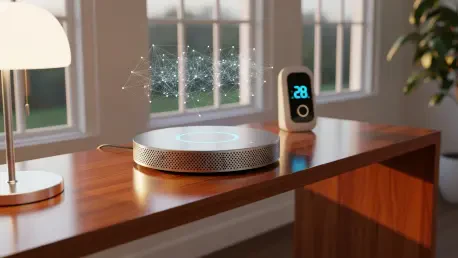

The mounting frustration surrounding smart home environments that fail to respond during minor internet outages has catalyzed a significant shift toward local artificial intelligence as users demand greater reliability and autonomy from their connected devices. This transition represents a fundamental departure from the cloud-centric model that dominated the previous decade, where every voice command and sensor trigger had to travel to a remote data center before an action could be executed. Modern residences are increasingly equipped with powerful local hubs and edge computing hardware capable of processing complex algorithms without an external connection. This change is not merely a technical preference but a response to the inherent vulnerabilities of relying on third-party servers for basic household functions like turning on lights or adjusting thermostats. As the ecosystem matures, the focus has moved from simple remote control to sophisticated, autonomous systems that operate with a level of speed and stability that the cloud could never consistently provide for every single user globally.
The Evolution: From Remote Servers to Local Silicon
Optimizing Response Times with On-Device Processing
The primary driver for the adoption of local AI is the drastic reduction in latency that occurs when processing happens at the edge of the network rather than in a distant server farm. When a homeowner interacts with a smart switch or a voice assistant, the round-trip journey to a cloud provider can introduce delays ranging from several hundred milliseconds to several seconds depending on network congestion. By integrating dedicated Neural Processing Units directly into smart hubs and appliances, manufacturers have enabled near-instantaneous execution of complex tasks. This localized approach allows for advanced motion detection and facial recognition to occur in real time, ensuring that security alerts are triggered and lights are activated the moment they are needed. Furthermore, the use of protocols like Thread and Matter 1.3 has standardized how these devices communicate locally, creating a mesh network that remains functional even if the primary internet gateway is disabled or experiences a significant slowdown during peak usage hours.
Building on the technical advantages of reduced latency, the integration of local large language models has transformed the user interface of the modern smart home into a more natural and fluid experience. Previous iterations of voice control relied on rigid syntax and cloud-based natural language processing, which often failed if the internet connection was unstable or if the provider’s servers were overloaded. Current hardware now supports compact yet powerful AI models that reside entirely on the local network, allowing for nuanced conversations and complex automation routines without data ever leaving the premises. This localized intelligence can learn a household’s specific patterns and preferences with greater precision because it has continuous access to sensor data without the bottleneck of upload speeds. Consequently, the smart home has evolved from a collection of reactive gadgets into a proactive environment that anticipates needs while maintaining a level of responsiveness that feels physical rather than digital, effectively bridging the gap between intention and action.
Managing Data Traffic and Subscription Fatigue
Another significant factor pushing the industry toward local AI is the increasing economic and technical burden of streaming massive amounts of data to the cloud for analysis. High-definition security cameras and continuous environmental sensors generate terabytes of data that can saturate residential upload bandwidth and lead to significant monthly costs for cloud storage subscriptions. By shifting the heavy lifting of video analytics and pattern recognition to local Network Attached Storage devices or specialized AI hubs, consumers can eliminate these recurring fees while freeing up their internet connection for other critical tasks like teleconferencing or high-speed gaming. This shift has also benefited manufacturers, who no longer need to maintain expensive server infrastructures to support millions of devices, allowing them to focus on hardware quality and local software optimization. The result is a more sustainable business model that prioritizes the longevity of the physical product over the ongoing monetization of user data.
This move toward local processing has also addressed the growing issue of “cloud death,” where smart devices become useless bricks when a manufacturer decides to shut down its servers or goes out of business entirely. By prioritizing local control and open-source standards, homeowners are securing their investments against the volatility of the technology market and the whims of corporate decision-making. Local AI systems provide a layer of permanence that was previously absent in the smart home sector, as the intelligence required to run the home is contained within the walls of the building itself. This architectural shift encourages a more modular approach to home automation, where different brands can interact seamlessly through local APIs without requiring a handshake in the cloud. As a result, the ecosystem has become more resilient and user-centric, fostering an environment where technology serves the occupant rather than the service provider, ultimately leading to a more reliable and cost-effective domestic infrastructure for everyone.
The Sovereignty: Privacy and Hardware Longevity
Strengthening Domestic Security Through Local Data Storage
Privacy concerns have reached a tipping point, leading many consumers to reject devices that require constant audio or video streaming to external servers for the sake of functionality. Local AI addresses these concerns by ensuring that sensitive biometric data, voice recordings, and activity logs never leave the local network, effectively creating a digital fortress around the home. This “privacy by design” approach has become a major selling point for premium smart home systems, as it mitigates the risk of large-scale data breaches that have historically compromised the personal lives of millions of users. When processing occurs locally, the surface area for cyberattacks is significantly reduced, as there is no central repository of sensitive household data for malicious actors to target. This shift empowers individuals to reclaim ownership of their digital footprints, providing peace of mind that their most private moments remain confined to their own hardware and are not being analyzed for advertising purposes.
The implementation of localized security measures has also allowed for more sophisticated and personalized safety protocols that do not rely on a persistent connection to a monitoring center. Local AI can distinguish between a family member and an intruder using encrypted local databases, triggering immediate lockdowns or alerts without the delay of a remote verification process. This autonomy is particularly crucial in regions with unreliable infrastructure or during emergency situations where external communications might be compromised. By keeping the intelligence domestic, the system remains fully operational during power outages or localized network failures, provided there is a battery backup or a local power source. This transition has redefined the concept of the “secure home,” moving away from a model of outsourced surveillance toward one of self-contained, intelligent protection that respects the boundaries of the household while offering superior performance and reliability compared to its cloud-based predecessors.
Ensuring Longevity Through Decentralized Infrastructure
The transition toward decentralized smart home systems finally resolved the long-standing problem of hardware obsolescence and the fragility of service-dependent electronics. Homeowners who invested in local AI solutions found that their devices continued to receive updates and maintain peak performance regardless of the financial health of the original manufacturer. This shift encouraged the development of more durable and repairable hardware, as the software was no longer tied to a proprietary cloud backend that could be altered or removed at any time. By adopting standardized local protocols, the industry moved toward a more circular economy where devices could be repurposed or integrated into new systems with minimal effort. This stability allowed for the creation of complex, multi-generational automation setups that grew with the family, rather than needing a complete overhaul every few years. The focus on local intelligence ultimately fostered a more mature market where value was measured by the reliability and longevity of the physical system in place.
Advancements in edge computing and local machine learning provided the necessary tools for users to take full control of their digital environments without sacrificing the convenience of modern technology. Those who prioritized local processing observed that their homes were not only faster and more private but also significantly more resilient to the external fluctuations of the global internet landscape. This move toward digital sovereignty became a blueprint for other sectors of the consumer electronics industry, demonstrating that high-performance AI did not have to come at the cost of personal data or long-term stability. Manufacturers who embraced this philosophy gained significant consumer trust, leading to a new era of innovation where the user’s autonomy was the primary design objective. The resulting landscape was one where technology integrated seamlessly into the background of daily life, providing intelligent support without the constant oversight of a remote third party, ensuring that the smart home remained a private sanctuary for its occupants.