
The rapid expansion of Fifth Generation wireless networks is fundamentally rewriting the operational protocols of the international agricultural sector by bridging the gap between raw data and real-time execution. This transformation is not merely a matter of convenience but a critical response to the pressing demands of a rising global population and increasingly volatile climatic patterns that threaten traditional crop cycles. As of today, 5G serves as the essential backbone for a new era of smart farming, providing the massive bandwidth and ultra-low latency required to synchronize thousands of distinct data points across vast rural landscapes. By establishing a digital nervous system within the soil and sky, this technology allows for the seamless integration of autonomous machinery and biological monitoring. This connectivity ensures that farmers no longer operate on estimates or seasonal intuition but instead rely on a precise, continuous stream of information that optimizes every single harvest.
Economic Expansion: The Rise of the Data-Driven Market
The financial trajectory of 5G integration within the agricultural domain reflects an unprecedented surge in capital investment and technological adoption across the globe. Industry forecasts suggest that the market value for these specialized telecommunications services will escalate from approximately $3.88 billion in the current period to over $15 billion by the end of 2030. Such massive growth is primarily fueled by the urgent need for infrastructure that can support the high-density data requirements of modern food production facilities. Large-scale farming enterprises are increasingly shifting their budgets toward digital transformation to remain competitive in an environment where efficiency is the primary driver of profitability. This economic movement is further bolstered by government subsidies aimed at modernizing rural connectivity, recognizing that food security is inherently linked to the technological capabilities of the agricultural workforce.
Precision agriculture has emerged as the leading force behind this economic shift, as growers seek to move away from uniform field management in favor of granular, site-specific interventions. By utilizing Internet of Things (IoT) devices that communicate over 5G frequencies, farmers can obtain immediate insights into crop health, nitrogen levels, and moisture content. This level of detail allows for a significant reduction in the waste of expensive inputs such as fertilizer, fuel, and water, which directly improves the bottom line for both small-scale and industrial operations. As the cost of 5G-ready sensors continues to decline, the barriers to entry are lowering, enabling a broader range of participants to join the digital ecosystem. The resulting increase in yields and decrease in environmental impact create a compelling financial case for the continued expansion of high-speed networks into the farthest reaches of the world’s arable land.
Hardware Integration: Connecting Machinery and Biology
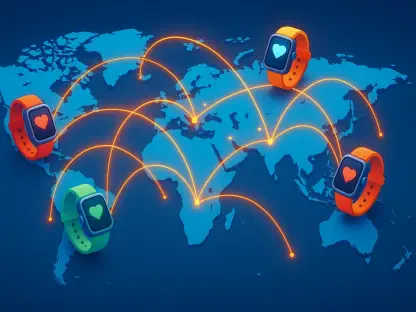
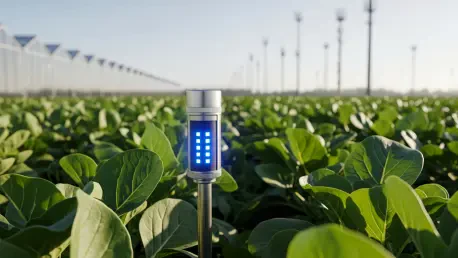
The physical manifestation of the 5G revolution on the farm is found in a diverse array of advanced hardware designed to automate labor-intensive tasks with extreme accuracy. Autonomous drones equipped with high-resolution multispectral cameras now patrol fields to identify pest infestations or nutrient deficiencies before they become visible to the human eye. These aerial units rely on the near-instant response times of 5G to navigate complex terrain and coordinate with ground-based robotic weeders that can laser-target invasive plants. Simultaneously, soil sensors buried deep within the earth transmit continuous readings of subterranean conditions, ensuring that irrigation systems only activate when the root zone reaches a specific dryness threshold. Even livestock management has been revolutionized through the use of biometric wearables that monitor the heart rate and location of cattle, allowing for the early detection of illness in large herds.
While the hardware serves as the tactile component of the operation, cloud-based software platforms act as the centralized intelligence that interprets the massive influx of raw data. These sophisticated analytics tools utilize artificial intelligence to process information gathered from 5G-connected devices, turning it into actionable instructions for farm managers. Instead of applying water or chemicals to an entire section of land, a farmer can now instruct an automated sprayer to treat a single square meter that requires attention. This transition from macro-management to micro-management represents a paradigm shift in how human labor is allocated, moving people from the field into supervisory roles where they manage digital workflows. The synergy between high-speed connectivity and edge computing ensures that these decisions happen in seconds, allowing the farm to function as an agile, self-correcting entity.
Global Distribution: Regional Adoption and Strategic Growth
The adoption of 5G technology in agriculture follows distinct patterns based on regional economic priorities and existing infrastructure capabilities. North America currently holds a dominant position in the market, largely due to its vast tracts of industrial farmland and a history of integrating satellite and GPS technologies into planting and harvesting cycles. The presence of major telecommunications providers and equipment manufacturers has facilitated a smoother transition to 5G, as these entities collaborate to build private networks for corporate farms. This concentrated investment allows for the testing of cutting-edge applications, such as fully autonomous harvest fleets that operate around the clock without human intervention. The focus in this region remains on maximizing the scale of production and optimizing the supply chain to meet the high demands of both domestic and international export markets.
In contrast, the Asia-Pacific region represents the most rapidly expanding market for agricultural 5G, driven by the dual pressures of limited arable land and massive population growth. Countries such as China and India are aggressively implementing national strategies to digitize their farming sectors, often bypassing older connectivity standards in favor of immediate 5G deployment. These efforts are frequently supported by public-private partnerships that aim to empower smallholder farmers with mobile-based platforms for crop monitoring and market access. By utilizing high-speed networks, these regions can more effectively manage water resources in drought-prone areas and reduce the post-harvest losses that have historically plagued their food systems. This regional push is not only about increasing local food supplies but also about establishing a technological footprint that could redefine the global standards for sustainable tropical and subtropical farming.
Implementation Roadmaps: Addressing Hurdles and Future Resilience
The transition toward a fully 5G-enabled agricultural landscape required significant strategic planning to overcome the inherent logistical challenges of rural connectivity. Stakeholders addressed the high cost of equipment upgrades by forming cooperatives that shared the financial burden of installing base stations in remote areas. Telecommunications firms and agricultural machinery manufacturers collaborated to ensure that new hardware was backward-compatible with existing digital frameworks, reducing the friction of adoption for traditional farmers. These partnerships focused on building localized mesh networks that could maintain operational integrity even when the primary connection to the global web was intermittent. This collaborative approach proved essential for establishing the foundational infrastructure needed to support a resilient food system capable of withstanding both economic fluctuations and environmental stresses.
Moving forward, the primary objective shifted toward the universal standardization of data protocols to ensure that sensors from different manufacturers could communicate seamlessly. Decision-makers prioritized the training of a new generation of agricultural technicians who possessed the skills to maintain both biological crops and digital systems. They implemented rigorous cybersecurity measures to protect sensitive farm data from unauthorized access, recognizing that a connected farm is also a vulnerable one. Governments and private entities also invested in research to lower the power consumption of 5G devices, ensuring that solar-powered sensors could operate indefinitely without manual intervention. By taking these practical steps, the industry successfully bridged the gap between traditional practices and modern demands, creating a stable environment where technology and nature worked in a synchronized and sustainable manner.