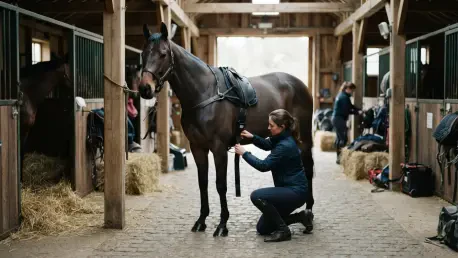

Even racing camels in Dubai have become part of a global trend toward using wearable technology to optimize performance and monitor cardiovascular health. This movement signals a profound shift in how the racing industry approaches the well-being of its high-stakes athletes, transitioning from subjective observations to precise, data-driven analysis. Historically, the conditioning and internal health of a Thoroughbred were judged through the “horsemanship” and intuition of those closest to the animal. While the keen eye of a trainer remains indispensable, it cannot peer into the electrical rhythmic patterns of a heart under extreme duress. Modern wearable devices are closing this gap, offering a window into physiological states that were previously hidden from view. As technology becomes more integrated into the daily routines of the stables, the focus is expanding beyond mere speed to encompass the prevention of catastrophic health failures during competition.
Evolution of Equine Cardiovascular Monitoring
The digital transformation of equine health is characterized by a move from static clinical snapshots to dynamic, continuous monitoring. In the standard veterinary practice of the past, a horse’s heart was typically examined while the animal was sedentary or in a controlled hospital environment. These brief examinations often failed to capture the subtle irregularities that only manifest when a horse is performing at its absolute physiological limit. By utilizing advanced equipment like the Arioneo Equimetre or the Equimetrics V-Pro, handlers are now able to record a continuous film of cardiac activity during training gallops. These lightweight fitness trackers are designed to withstand the rigors of high-speed movement while providing a high-fidelity electrocardiogram stream. This capability allows medical professionals to observe how the heart behaves under the specific stresses of a race, identifying markers of potential failure before they escalate into an emergency.
Integrating these tools into the regulatory framework of the sport represents the next stage of this technological evolution. The British Horseracing Authority has initiated pilot programs to formalize the use of heart rate and rhythm monitors during official race meetings, moving the technology out of private training sessions and onto the public stage. This transition was accelerated by recent successes where trainers used real-time heart data to manage their horses’ workloads with unprecedented precision. The data collected during these races provides a comprehensive baseline for each athlete, allowing for the creation of individualized health profiles. By standardizing the use of biometric wearables, the industry is creating a robust safety net that protects the integrity of the competition and the welfare of the animals. This shift toward a data-centric model ensures that every participant has access to objective health metrics.
Artificial Intelligence as a Diagnostic Filter
The massive volume of biometric data generated by thousands of horses during training and racing is far too expansive for human experts to manually analyze in a timely fashion. Artificial intelligence has emerged as the critical filter necessary to process this information, screening millions of heartbeats to identify specific patterns of concern. By training machine learning algorithms on vast libraries of equine electrocardiogram data, researchers have developed systems capable of flagging atrial fibrillation and other exercise-associated arrhythmias with remarkable accuracy. These AI tools act as a proactive screening mechanism, similar to the health alerts found on consumer smartwatches but calibrated for the extreme cardiac output of a galloping Thoroughbred. The ability to isolate these irregularities in real time allows for immediate intervention, potentially preventing a horse with a silent condition from ever reaching the starting gate.
Collaborative research efforts between institutions like the University of Surrey and veterinary centers in Minnesota and Pennsylvania are refining these predictive capabilities. The goal is to build an early warning system that can calculate a risk score for each animal based on historical and real-time cardiac performance. By analyzing how a heart recovers after exertion or how its rhythm fluctuates during peak stress, AI can pinpoint horses that may be predisposed to sudden collapse. This research moves the industry toward a model of preventive care, where data-driven insights replace reactive post-mortem examinations. As these algorithms become more sophisticated, they are beginning to unlock the black box of the horse’s heart, offering answers to long-standing questions about why seemingly healthy animals experience sudden cardiac death. This deep understanding is essential for developing new training protocols and medical treatments tailored to elite equine athletes.
Enhancing Racetrack Safety and Risk Mitigation
Although sudden cardiac death occurs in a small percentage of the racing population, it represents a significant portion of all on-track fatalities. These events are not only tragic losses of life but also pose a severe threat to the safety of jockeys, stable staff, and spectators. A horse that collapses at high speed can cause catastrophic multi-horse accidents or veer uncontrollably toward the railings, creating a dangerous environment for everyone involved. Implementing wearable technology during competition serves as a vital risk mitigation strategy, providing a layer of protection that was previously absent. By identifying horses at high risk of cardiac failure, officials can make informed decisions to withdraw them from a race, thereby preventing potential disasters. The presence of these monitors also provides peace of mind to the riding community, knowing that the physical condition of their mounts is being monitored by advanced diagnostic tools.
This trend toward biometric monitoring is not localized to a single region but has become a global phenomenon across major racing hubs. From the prestigious stables in Kentucky to the expansive training centers in Melbourne, the adoption of equine wearables has become a benchmark for modern athletic management. This global synchronization of technology allows for a shared database of equine health, which is invaluable for researchers looking to understand breed-wide physiological trends. Even in unconventional racing environments like the camel circuits of Dubai, the use of these sensors highlights a universal commitment to animal welfare and performance optimization. The technology effectively acts as a flight recorder for the animal, providing granular data that can be reviewed long after a race is over. This wealth of information is transforming the sport from one based on traditional lore to one grounded in the application of science.
Balancing Technology with Traditional Expertise
Despite the undeniable precision of digital monitors, the racing industry remains mindful that technology is a supplement to, rather than a replacement for, traditional expertise. Trainers emphasize that the eye of an experienced horsemanship professional is still the most critical tool for assessing a horse’s psychological state, gait, and overall enthusiasm for the task. There is a healthy skepticism regarding an over-dependence on automated systems, as a sensor may not always capture the nuance of a horse’s temperament or a subtle change in its demeanor. Therefore, the most effective approach involves a synergy between high-tech data and human intuition. When a pulse graph on a smartphone is viewed in the context of the trainer’s physical observation, it provides a holistic picture of the animal’s health. This balanced methodology ensures that the ancient bond between human and horse remains the foundation of the sport.
The integration of AI and wearables also streamlines the management of multi-million-dollar equine athletes by providing objective benchmarks for their conditioning. In the past, deciding when to push a horse harder or when to mandate a period of rest was often a matter of educated guesswork. Today, these decisions are increasingly guided by heart rate recovery times and cardiac stress levels recorded by wearable sensors. This data-driven management allows for more efficient training cycles and helps prevent the overexertion that can lead to long-term physical issues. By providing a clear record of an animal’s physiological response to various workloads, technology empowers trainers to tailor their programs to the specific needs of each individual. This personalized approach not only optimizes performance but also ensures that the horse’s health is prioritized at every stage of its career. The result is a more professionalized industry that values the longevity of its star athletes.
Overcoming Barriers and Strategic Future
Perfecting the use of wearables in a racing environment requires overcoming several significant technical hurdles. One of the primary challenges is distinguishing actual cardiac signals from the electrical noise generated by the physical movement of a galloping horse and the friction between the sensors and the coat. Engineers are continuously refining sensor placement and signal-processing algorithms to ensure that the data remains accurate even at high speeds. While the industry is making great strides, the goal of achieving instantaneous, one-hundred-percent reliable real-time alerts remains a work in progress. These refinements are necessary to prevent false positives that could lead to unnecessary scratches from races or cause undue concern for owners. As hardware becomes more durable and software becomes more adept at filtering out interference, the reliability of these tools will continue to improve.
The implementation of these advanced systems represented a decisive step toward modernizing the racing industry and securing its social license to operate. Stakeholders recognized that maintaining public trust required a visible commitment to animal safety and the proactive prevention of preventable tragedies. The focus shifted toward creating actionable protocols where AI-driven alerts triggered mandatory veterinary reviews, ensuring that no horse competed while harboring an undiagnosed cardiac risk. Moving forward, the industry prioritized the development of non-invasive sensors that integrated seamlessly into standard racing tack, minimizing any potential discomfort for the animals. These initiatives established a new standard for equine welfare, where data was no longer just a training luxury but a fundamental requirement for entry into competition. By embracing these technological solutions, the racing world took meaningful steps to protect its future, ensuring that animal health remained the central priority.